Beer and Beards in the Field: The Story of SP4 Reed Earl “Soupy†Campbell
SP4 Reed Earl “Soupy†Campbell, a drafted Utah infantryman with the 196th Light Infantry Brigade, was killed in Vietnam at age 20 by an enemy explosive device. His story reflects the quiet courage of the infantry war.
December 12, 2025

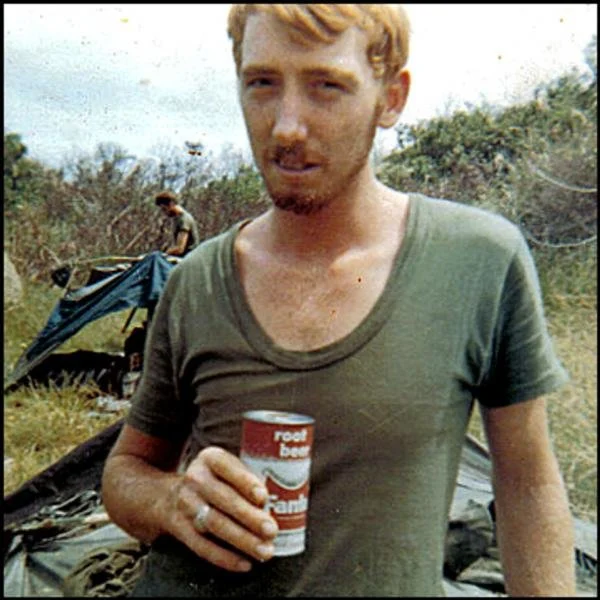 Beer and Beards in the Field
 Beer and Beards in the Field
The Story of SP4 Reed Earl “Soupy†Campbell
Some soldiers carried nicknames that followed them everywhere — reminders of youth, laughter, and the humanity that survived even in war. They were the names shouted across firebases, scribbled on helmets, or spoken quietly after a long patrol. Specialist Four Reed Earl “Soupy†Campbell was one of those men.
To his family back in Utah, he was Reed — a farm kid, a son, a young man still becoming himself. To the Army, he was a Light Weapons Infantryman. To the men who walked beside him through the jungles of Vietnam, he was “Soupy†— a name that hinted at humor, warmth, and a presence that made the weight of war just a little easier to carry.
That presence was gone far too soon.
A Utah Beginning
Reed Earl Campbell was born on April 4, 1949, in Slaterville, Utah, a small rural community shaped by open land, hard work, and close ties. It was the kind of place where neighbors knew one another, where responsibility came early, and where young men learned the value of showing up — for family, for work, for the people around them.
Like many young men of his generation, Reed came of age during a turbulent era. Vietnam dominated headlines and living rooms alike, even in places far removed from the war itself. By the late 1960s, the conflict had reached deep into American communities, touching farms, towns, and families that had little connection to Southeast Asia but were now bound to it by the draft.
Reed was drafted into the United States Army through the Selective Service System, a fate shared by thousands of young Americans who did not choose the war but answered the call nonetheless. He did not arrive in uniform as a career soldier or volunteer warrior — he arrived as a citizen obligated to serve, like so many others whose names now fill memorial walls.
Becoming an Infantryman
After induction, Campbell underwent basic and advanced training that transformed civilians into infantrymen — a process both physically brutal and emotionally disorienting. The infantry bore the heaviest burden of the Vietnam War, and young draftees like Reed were molded quickly into men expected to operate under relentless stress.
He was trained as a Light Weapons Infantryman, one of the most dangerous specialties in the conflict. This role meant patrolling on foot, moving through hostile terrain, carrying heavy loads, and engaging an enemy that often remained invisible until the moment of contact.
Infantrymen were expected to walk into uncertainty every day.
In July 1969, Reed was sent halfway around the world.
Vietnam: Quang Tin Province
On July 21, 1969, SP4 Campbell arrived in the Republic of Vietnam and was assigned to B Company, 2nd Battalion, 1st Infantry Regiment, 196th Light Infantry Brigade.
The 196th LIB operated primarily in Quang Tin Province, a rugged, jungle-choked region south of Da Nang. The terrain was unforgiving — steep hills, dense vegetation, narrow trails, and villages that blurred into the jungle itself. This was not a war of sweeping advances but one of patrols, ambushes, and sudden violence.
The enemy rarely announced themselves.
The 196th fought a grinding counterinsurgency war. Their mission was to disrupt enemy movement, secure villages, interdict supply routes, and deny the Viet Cong and North Vietnamese Army control of the countryside. These tasks were carried out almost entirely on foot, often in oppressive heat and humidity.
For infantrymen like “Soupy,†this meant daily patrols, sweeps through booby-trapped terrain, and the constant awareness that death might not come from a firefight, but from the ground beneath their boots.
Mines, Traps, and the Invisible Enemy
By 1969, the war in Vietnam had become increasingly dominated by enemy mines and explosive devices. These weapons were devastating not only for their lethality, but for the psychological toll they inflicted.
Tripwires. Pressure plates. Buried artillery shells. Hand-fashioned explosives hidden in trails, rice paddies, and jungle paths.
They could not be seen.
They could not be outrun.
They offered no chance to fight back.
For infantry units, these devices were among the deadliest threats of the war. Entire patrols could be shattered in an instant. A single step could end a life.
And yet, soldiers still walked point.
They still cleared trails.
They still moved forward.
Beer and Beards in the Field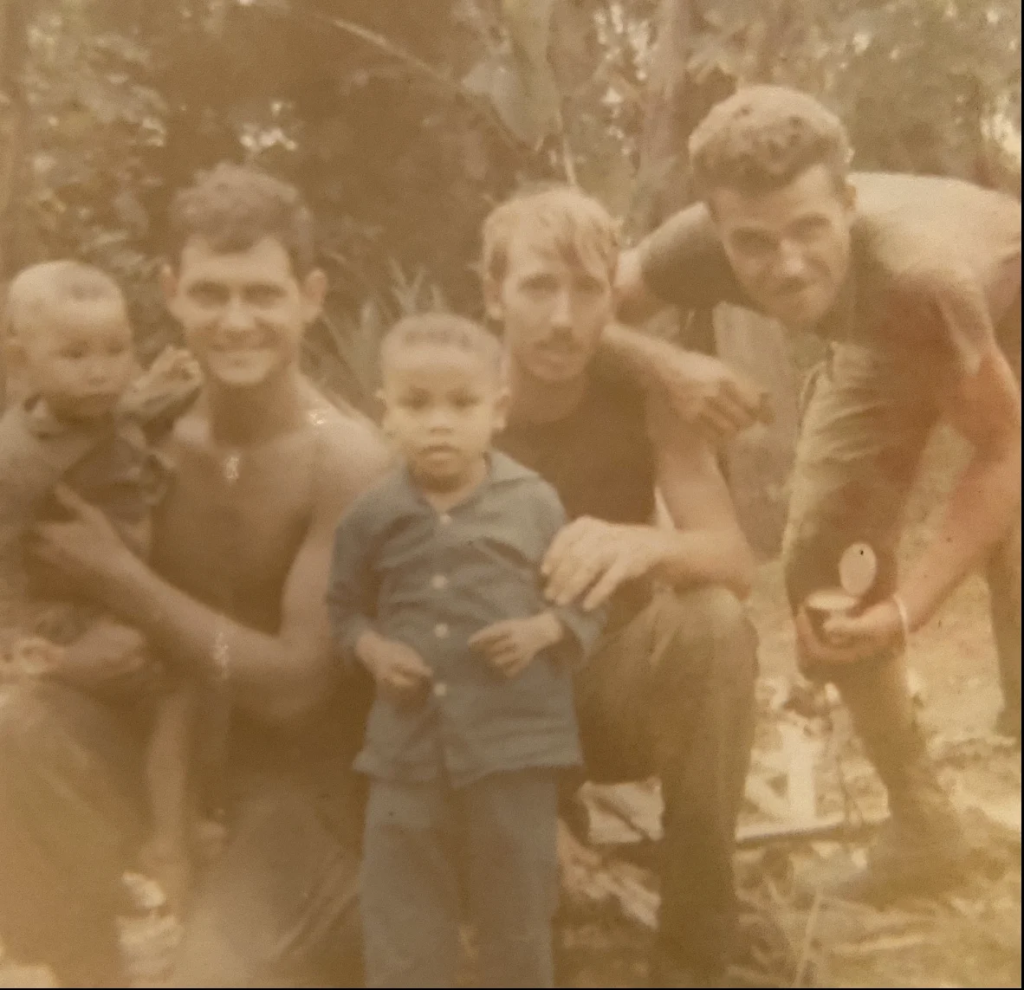
Amid this constant danger, soldiers found small ways to reclaim their humanity.
Nicknames like “Soupy†mattered. They reminded men that they were still individuals, still young, still human. They joked, they laughed when they could, they grew beards in the field when regulations loosened, and they dreamed of beer back home — cold, familiar, and far removed from jungle patrols.
These moments did not erase the war, but they helped soldiers endure it.
For men like Campbell, camaraderie was survival. Brotherhood filled the spaces where fear threatened to take over. In foxholes, on patrol halts, and during exhausted conversations at dusk, these young soldiers leaned on one another.
It is in those spaces — unrecorded, undocumented — that Reed Earl “Soupy†Campbell truly lived his service.
December 13, 1969
On December 13, 1969, just months into his tour, SP4 Reed Earl Campbell was killed in action.
The cause was an enemy explosive device.
There was no firefight.
No chance to return fire.
No enemy face to remember.
One step. One moment.
He was 20 years old.
Like so many infantry casualties of the Vietnam War, Campbell never saw the enemy who killed him. His death reflects the experience of thousands of soldiers whose sacrifice came not in dramatic battles, but in sudden, unforgiving silence.
The Cost of the Infantry War
The infantry bore the greatest burden of the Vietnam War. Light Weapons Infantrymen like Campbell lived at the sharp edge of the conflict, walking into danger day after day with limited protection and little warning.
They were not shielded by armor.
They were not removed from the fight.
They carried the war on their backs.
The loss of a single soldier rippled through a unit — empty bunk spaces, quiet moments where laughter once lived, patrols conducted with one fewer man watching a sector.
For the families back home, the loss was absolute.
A son who would never come home.
A future erased.
A name spoken in the past tense far too soon.
Remembering “Soupyâ€
Today, Reed Earl “Soupy†Campbell is remembered not just as a casualty statistic, but as a young man who lived, laughed, and served.
He was a Utah son.
An infantryman of the 196th Light Infantry Brigade.
A drafted Soldier who did his duty without hesitation.
His nickname reminds us that even in war, humanity persists. That soldiers were more than ranks and MOS codes — they were people with jokes, habits, friendships, and dreams.
Reed served in a war he did not choose, in conditions few can imagine, and he paid the ultimate price.
Why We Remember
At Ghosts of the Battlefield, we tell these stories because they matter.
Because history is not only made by generals and strategies, but by young men like “Soupy†Campbell — whose names are rarely remembered unless someone speaks them aloud.
His story reminds us:
-
That the Vietnam War was fought one patrol at a time
-
That unseen dangers claimed countless lives
-
That courage often looked like simply taking the next step
Reed Earl Campbell did not live to see adulthood beyond 20. He did not return to Utah. He did not grow old.
But his service endures.
Final Watch
Today, we remember Specialist Four Reed Earl “Soupy†Campbell.