Airborne to the End: The Legacy of Specialist Michael Daniel Griffis
From Philadelphia to the peaks of Lam Dong Province, Griffis embodied the spirit of the 173rd — fearless, disciplined, and unbreakable. His sacrifice stands as a testament to every Sky Soldier who never came home.
December 11, 2025

 Specialist Four Michael Daniel Griffis — Sky Soldier of the 173rd
 Specialist Four Michael Daniel Griffis — Sky Soldier of the 173rd
Some warriors are born into airborne units — others earn their wings in the crucible of combat. Specialist Four Michael Daniel Griffis was one of those sky soldiers, a young Philadelphian who stepped forward, earned the right to wear the patch of the 173rd Airborne Brigade, and carried that legacy into the jungles and highlands of Vietnam.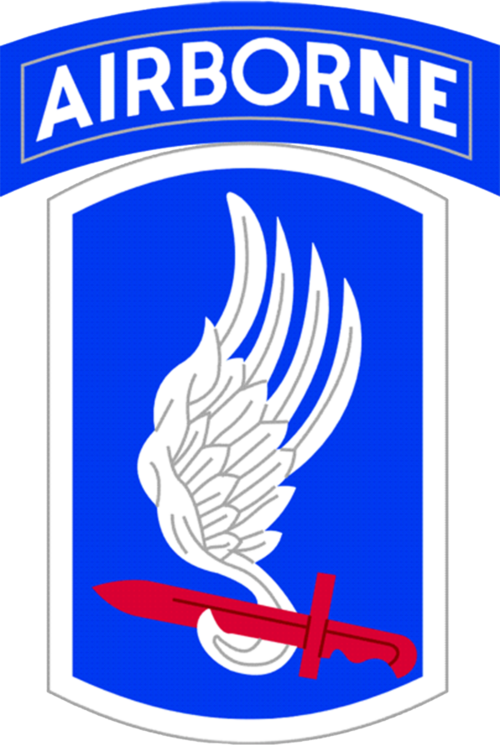
Born December 12, 1948, Griffis enlisted in the United States Army because he believed in serving with purpose. But he wanted more than simply to serve — he wanted the challenge of becoming a paratrooper. That decision alone set him on a path few young Americans chose. Airborne school was not a place for the uncertain. It was a place where fear met discipline, where hesitation met gravity, and where those who continued forward earned the right to call themselves Sky Soldiers.
Griffis earned it.
And he carried that airborne spirit all the way to Vietnam.
Into the Sky, Into the Fight
 The 173rd Airborne Brigade was the first major Army combat unit deployed to Vietnam, establishing a reputation early for toughness, mobility, and fighting spirit. By the time Griffis reached Vietnam on October 3, 1967, the Brigade had already fought in the Iron Triangle, defended Dak To, and confronted enemy forces in battles that pushed paratroopers to the limit. The 173rd prided itself on being where the fight was hottest, where the terrain was worst, and where the mission demanded speed, aggression, and absolute trust between soldiers.
Griffis was assigned to Bravo Company, 3rd Battalion, 503rd Infantry Regiment — an airborne infantry battalion known for carrying the heaviest loads, walking the longest distances, and facing the enemy in remote corners of the Central Highlands. For a young enlisted man only 18 going on 19, this was not simply a job. It was a calling.
Light weapons infantrymen like Griffis were the backbone of the Brigade. They walked point. They secured landing zones. They hunted enemy movement across ridgelines, mountains, valleys, and jungles that felt endless. Every Sky Soldier knew the truth: once the boots hit the ground, the airborne advantage ended, and survival depended on skill, teamwork, and raw endurance.
Griffis embraced that reality without hesitation.
Life in the Central Highlands
Lam Dong Province, where Griffis would fall, was part of the vast Central Highlands — a region that alternated between breathtaking beauty and overwhelming danger. Towering trees choked out the light. Slopes rose into sharp, unforgiving ridgelines. Valleys hid movement. Hilltops offered little advantage because the enemy knew the terrain just as well, and sometimes better.
The Central Highlands were the enemy's country.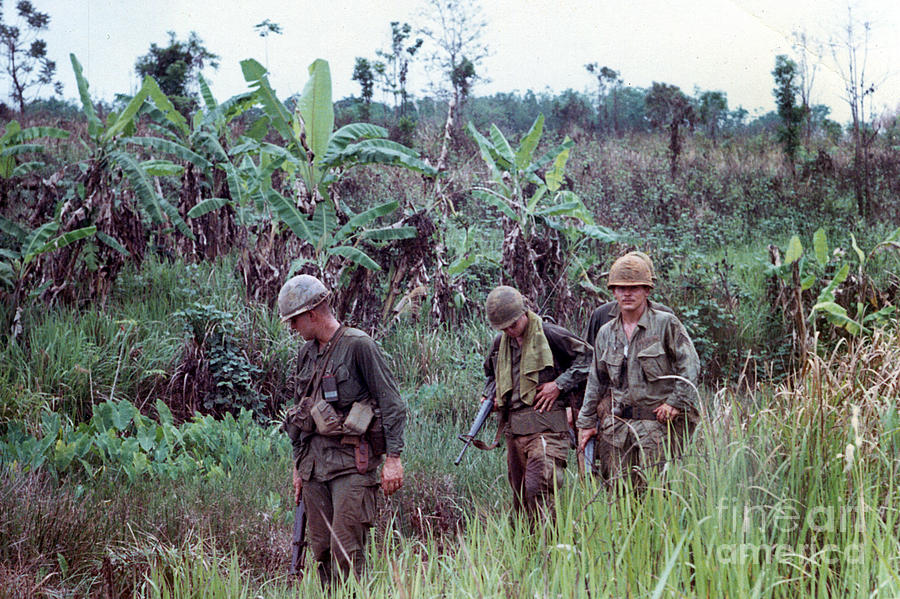
It was here that North Vietnamese Army units moved in shadow — disciplined, patient, and deadly. They waited for the right moment, the right angle, the right second when an American patrol stepped into a kill zone. For paratroopers accustomed to mobility and shock action, the jungle could feel like a cage. The enemy dictated distance. The enemy dictated rhythm. The enemy dictated when the fight began.
Sky Soldiers learned quickly that every ridge, every saddle, every streambed could erupt into violence.
Those who served with Griffis remembered how Bravo Company moved through the highlands: slow, deliberate, senses straining. The enemy might be ten yards away and completely invisible. Radio calls were hushed. Conversations were minimal. The only sounds were the creak of gear, the dull thud of boots in mud, and the wind whispering in the canopy overhead.
Griffis carried his weapon always ready — not just as a firearm, but as an extension of his training and his will to keep his brothers alive.
The Weight of the Airborne Legacy
The 173rd Airborne Brigade carried a legacy that stretched back through Korea and World War II — the legacy of men who dropped behind enemy lines, who seized ground against impossible odds, who lived by the airborne code of speed, violence of action, and unbreakable resolve. Every Sky Soldier understood that wearing the airborne patch meant representing the paratroopers who came before them.
Griffis never took that lightly.
He had trained to jump from perfectly good airplanes so he could reach the battlefield faster than the enemy expected. He had learned how to land hard, recover instantly, and fight with whatever weapon was available. He had learned how to trust his equipment, his leaders, and the soldier to his left and right.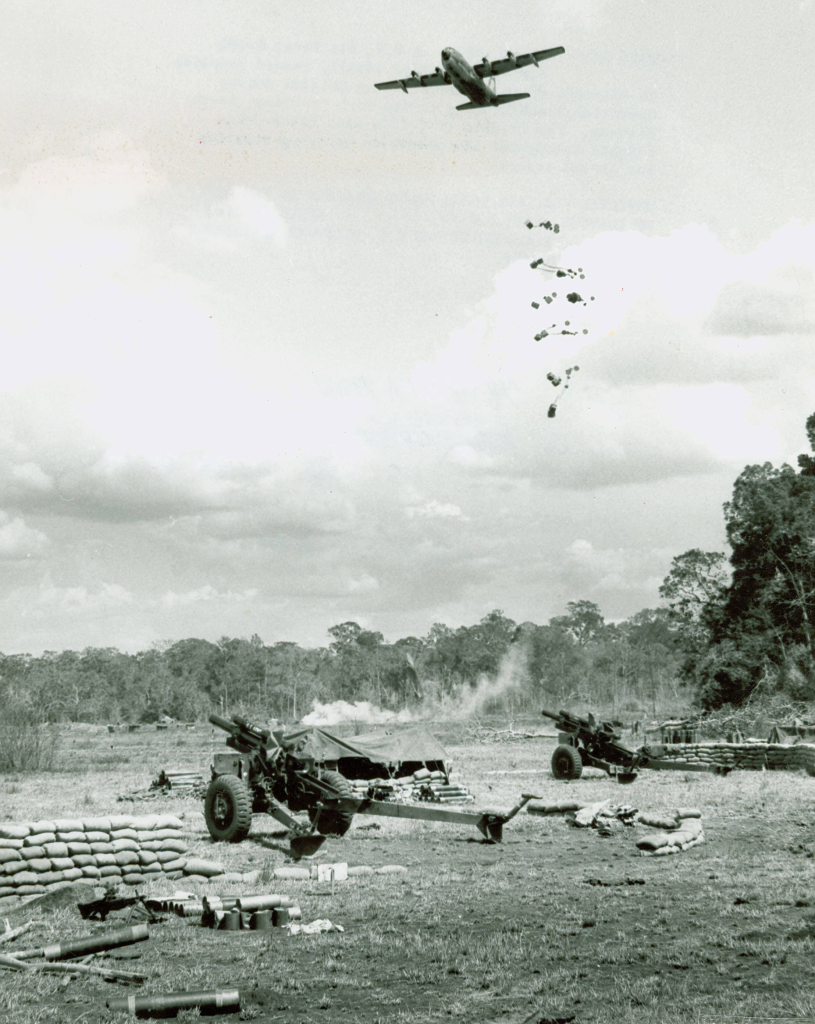
His brothers in Bravo Company knew they could rely on him — not because of rank or experience, but because he carried himself with the quiet confidence of a man who understood the meaning of the word Airborne.
1968 Turns to 1969 — and the War Changes
By early 1969, the war was shifting. The massive Tet Offensive of 1968 had left South Vietnam reeling but had also exposed the strength of American rapid-response units like the 173rd. Griffis and his battalion were constantly moving — searching for enemy units regrouping in remote highland regions, disrupting supply routes, and maintaining pressure along infiltration corridors.
Fighting became more dispersed. Contacts were sharp, violent, and often brief. The enemy rarely stayed long enough for large-scale engagements. Instead, they struck from concealment, fired from treeline edges, and disappeared before artillery or aviation could respond.
This was the war Griffis fought — a war of sudden contact and immediate danger.
Every patrol required vigilance.
Every ridge crossing required preparation.
Every step required courage.
April 7, 1969 — The Final Fight
On April 7, 1969, during operations in Lam Dong Province, SP4 Michael Daniel Griffis encountered the enemy in exactly the kind of violent and unexpected contact the Central Highlands were known for. The terrain offered no mercy — steep angles, thick foliage, and visibility measured in inches rather than yards.
The enemy struck with small-arms fire.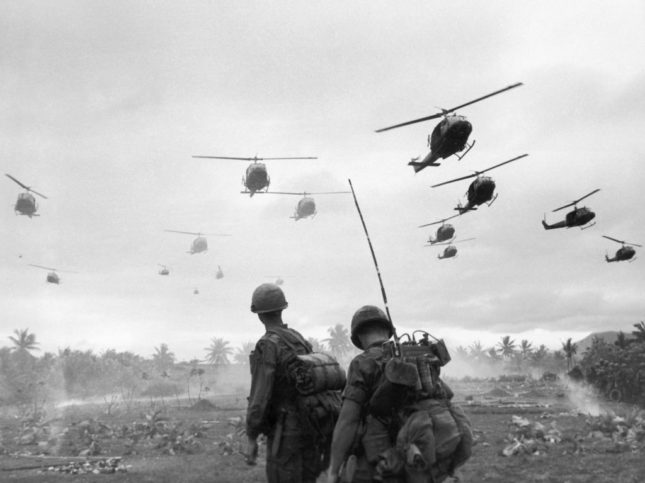
In the chaos of those first moments — when soldiers react before they think, when instinct and training decide survival — Griffis was mortally wounded. His brothers returned fire, taking the fight directly to the attackers, refusing to yield ground. Medics worked frantically. Radios crackled with urgency. But the wound was too severe.
Michael Griffis fell on that mountainside, serving exactly as he had lived — as a Sky Soldier at the front, carrying his weapon, bearing his responsibility, fulfilling his duty.
He was only 20 years old.
His loss shook Bravo Company. Paratroopers mourned in motion — they still had a mission to finish, terrain to secure, enemy to pursue. But the weight of losing a brother lingered long after the gunfire faded.
The Human Cost Behind the Patch
To understand Griffis' sacrifice is to understand the real meaning of airborne service in Vietnam. Hollywood captures the glamour of the jump, the roar of the aircraft, the silhouette of paratroopers exiting into open sky. But the war in Vietnam rarely involved parachute drops. Airborne soldiers fought primarily on foot — and they fought hard.
What made them airborne wasn't the jump.
It was the mindset.
Aggressive.
Fearless.
Disciplined.
Committed to the mission no matter how remote the terrain or how steep the cost.
Griffis embodied that spirit.
He wore the airborne patch not as decoration, but as identity.
A Philadelphia Son in a Faraway War
Back home in Philadelphia, news of his death carried the same heartbreak felt by thousands of families during the Vietnam War. A knock on the door. A uniformed soldier with solemn eyes. A telegram that could not possibly capture the depth of the loss.
Michael Griffis had left home as a teenager and become a paratrooper in one of the Army's most elite units. His journey had taken him from city streets to airborne training grounds to some of the most forbidding terrain in Southeast Asia. And though his life ended far from home, his story returned to Philadelphia through the memories of those who loved him and the legacy of those who served beside him.
Remembered by His Brigade
The 173rd Airborne Brigade never forgot its fallen. Reunions, memorial services, battlefield anniversaries — the names of men like Griffis are spoken aloud, honored, and preserved. The Brigade's motto, "Sky Soldiers", is not just a titl e. It is a brotherhood that crosses decades.
Those who fought with him remembered his steadiness, his commitment, his willingness to step into danger. They remembered the weight of his absence when patrols formed with one fewer man, when his spot in formation stood empty.
For the 173rd, remembering their fallen is not optional. It is sacred duty.
More Than a Statistic — A Legacy of Courage
In the official rolls of the Vietnam War, SP4 Michael Daniel Griffis is listed among the more than 58,000 Americans who never came home. But numbers cannot tell his story.
They do not capture the grit it takes for a teenager to volunteer for airborne school.
They do not show the courage required to walk point through the Central Highlands.
They do not reveal the bonds formed in Bravo Company, where each man's survival depended on the next.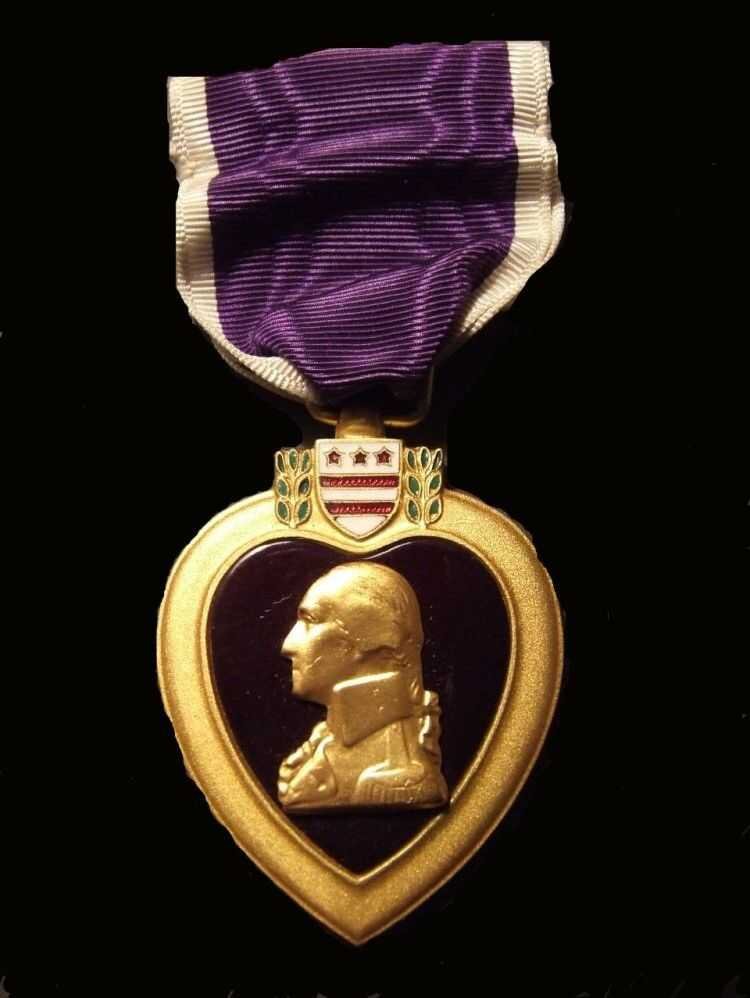
They do not show the bravery of a young paratrooper who faced the enemy head-on in the final moments of his life.
Griffis was not a statistic.
He was a Sky Soldier.
A brother.
A fighter.
A young American who lived with purpose and died with honor.
“Airborne, All the Wayâ€
Today, we say his name with pride:
Specialist Michael Daniel Griffis
Sky Soldier
Airborne Infantryman
Never Forgotten
His story lives in the history of the 173rd, in the memories of the men who served with him, and now in the work of preserving the legacy of the Vietnam War's fallen through your museum.
His courage endures.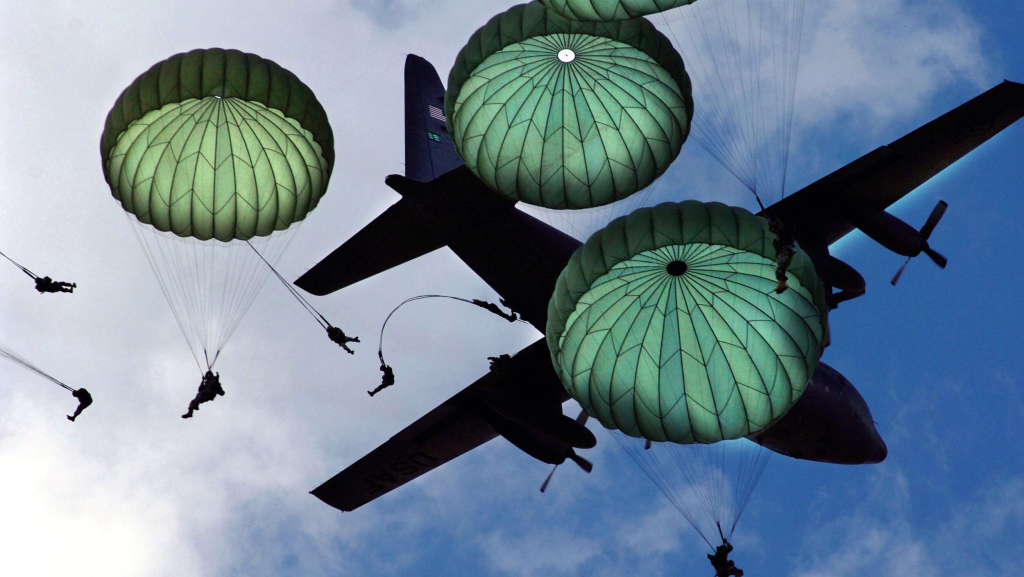
His sacrifice endures.
His legacy endures.
Airborne — all the way.