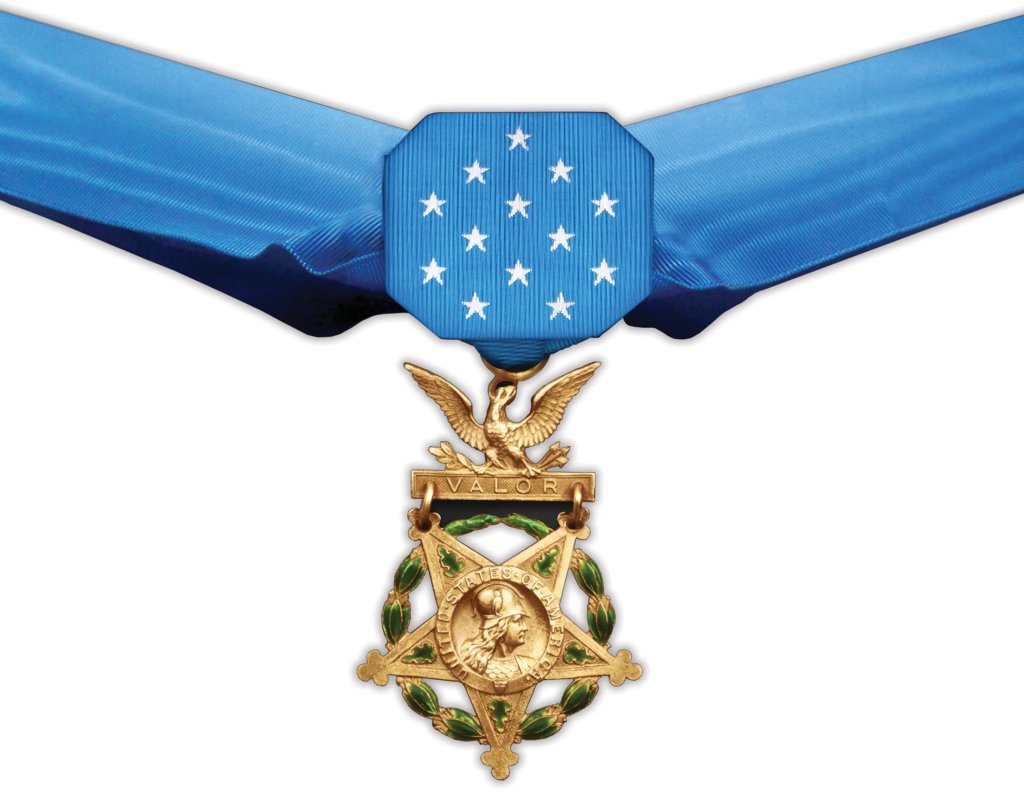
Medal of Honor: William J. O'Brien – World War II – June 20 to July 7, 1944
During Saipan’s final massive assault, one battalion commander refused to leave the front lines. He fought in the open with pistols and a .50-caliber machine gun until he was overwhelmed.
July 7, 2026

N ame: William J. O'Brien
Rank: Lieutenant Colonel
Branch: U.S. Army
War: World War II
Unit: 1st Battalion, 105th Infantry Regiment, 27th Infantry Division
Date of Action: June 20 – July 7, 1944
Location: Saipan, Mariana Islands
Summary of Action
During the Battle of Saipan, Lieutenant Colonel William J. O'Brien repeatedly demonstrated extraordinary courage and battlefield leadership while commanding the 1st Battalion, 105th Infantry Regiment.
Early in the campaign, one of his assault companies was pinned down by intense Japanese fire from a fortified strongpoint.
To break the stalemate, O'Brien ordered three tanks forward.
Enemy fire forced the tanks' crews to close their turrets, causing them to lose direction and begin firing dangerously close to friendly troops.
Without hesitation, O'Brien ran into the open under enemy fire, climbed onto the lead tank, and personally directed it toward the enemy position until the strongpoint was destroyed.
On 28 June 1944, while attacking a heavily defended ridge near Donnay, he devised a double-envelopment attack using two battalions.
Determined to ensure its success, he crossed approximately 1,200 yards of sniper-infested terrain alone to reach a stalled platoon.
Leaving men to contain the enemy, he personally led four soldiers through a narrow ravine behind the Japanese position.
The assault drove the defenders from the strongpoint and resulted in the capture of five machine guns and one 77mm field gun.
O'Brien then organized the newly captured position for defense and successfully directed his men through repeated Japanese counterattacks.
On 7 July 1944, during the largest banzai attack of the Pacific War, between 3,000 and 5,000 Japanese soldiers launched a desperate assault against American positions.
As intense hand-to-hand fighting erupted across the battlefield and ammunition ran dangerously low, O'Brien refused to leave the front lines.
Moving calmly among his soldiers, he fired a pistol in each hand while encouraging his men to continue resisting.
His fearless example strengthened the resolve of the exhausted defenders during the most critical moments of the battle.
Even after being seriously wounded, he refused evacuation.
When his pistol ammunition was exhausted, he mounted a jeep and manned its .50-caliber machine gun, continuing to fire into the advancing enemy.
He was last seen standing behind the weapon, still engaging the attacking Japanese as they closed around his position.
Later, his body was found surrounded by enemy soldiers he had killed in his final stand.
Lieutenant Colonel William J. O'Brien's extraordinary courage, inspiring leadership, and unwavering devotion to duty reflected the highest traditions of the United States Army.
Medal of Honor Citation
O'BRIEN, WILLIAM J.
Rank and organization: Lieutenant Colonel, U.S. Army, 1st Battalion, 105th Infantry Regiment, 27th Infantry Division.
Place and date: Saipan, Mariana Islands, 20 June through 7 July 1944.
Entered service at: Troy, New York.
Birth: Troy, New York.
G.O. No.: 35, 9 May 1945.
Citation:
For conspicuous gallantry and intrepidity at the risk of his life above and beyond the call of duty at Saipan, Mariana Islands, from 20 June through 7 July 1944.
When assault elements of his battalion were held up by intense enemy fire, Lieutenant Colonel O'Brien ordered three tanks to precede the assault companies in an attempt to knock out the strongpoint.
Due to direct enemy fire, the tanks' turrets were closed, causing the tanks to lose direction and fire into friendly troops.
With complete disregard for his own safety, Lieutenant Colonel O'Brien dashed into full view of the enemy, ran to the lead tank, pounded on it with his pistol butt to attract the crew, mounted the tank while fully exposed to enemy fire, and personally directed the assault until the enemy strongpoint had been destroyed.
On 28 June 1944, while his battalion was attempting to capture a bitterly defended ridge near Donnay, Lieutenant Colonel O'Brien arranged a double-envelopment attack using two combat battalions and personally directed the maneuver.
Crossing 1,200 yards of sniper-infested underbrush alone, he reached a platoon that had been halted by enemy resistance.
Leaving some men to contain the enemy, he personally led four soldiers through a narrow ravine behind the Japanese position and killed or drove off the defenders.
In this action, five machine guns and one 77mm field gun were captured.
Lieutenant Colonel O'Brien then organized the captured positions for night defense and successfully directed his men against repeated enemy counterattacks.
On 7 July 1944, his battalion and another battalion were attacked by an overwhelming Japanese force estimated at between 3,000 and 5,000 soldiers.
As bloody hand-to-hand fighting spread across the front and American positions were overrun by the weight of the assault, Lieutenant Colonel O'Brien refused to leave the front lines.
Striding along the defensive positions, he fired at the enemy with a pistol in each hand, inspiring his men by his courage and determination.
Even after being seriously wounded, he refused evacuation.
When his pistol ammunition was exhausted, he manned a .50-caliber machine gun mounted on a jeep and continued firing into the advancing enemy.
He was last seen standing upright behind the weapon as Japanese soldiers enveloped his position.
Later, his body was found surrounded by enemy dead.
His extraordinary valor was consistent with the highest traditions of the United States Army.