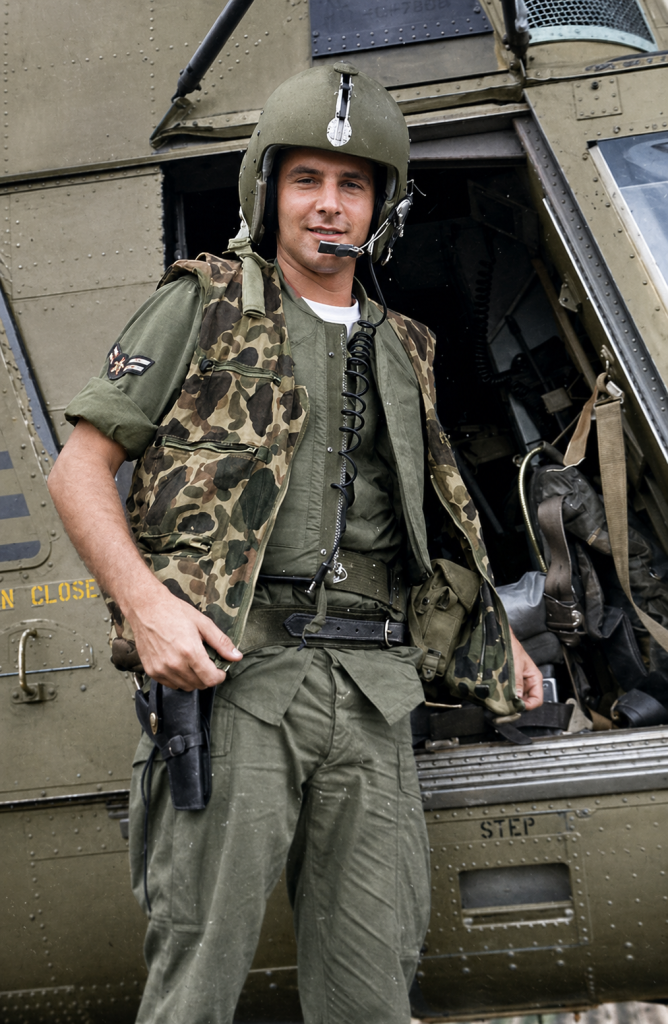
 Name: William H. Pitsenbarger
Rank: Airman First Class
Branch: U.S. Air Force
War: Vietnam War
Unit: Pararescue Crew Member, Detachment 6, 38th Aerospace Rescue and Recovery Squadron
Date of Action: April 11, 1966
Location: Near Cam My, Republic of Vietnam
Summary of Action
On 11 April 1966, Airman First Class William H. Pitsenbarger distinguished himself near Cam My, Republic of Vietnam.
Assigned as a pararescue crew member, he was aboard a rescue helicopter responding to evacuate casualties from an intense firefight between soldiers of the U.S. Army's 1st Infantry Division and a large enemy force east of Saigon.
With complete disregard for his own safety, Pitsenbarger volunteered to descend by hoist more than one hundred feet through the jungle canopy to the ground below.
Once on the battlefield, he immediately organized rescue efforts, treated the wounded, prepared casualties for evacuation, and ensured the operation continued smoothly under fire.
Because of his actions, wounded soldiers were evacuated rapidly.
As each casualty was lifted out, Pitsenbarger repeatedly refused evacuation for himself so more wounded men could be saved.
After several pickups, one of the rescue helicopters was struck by enemy fire and forced to depart.
Pitsenbarger remained behind on the ground.
Soon afterward, the area came under sniper and mortar fire, followed by a major assault from a large Viet Cong force.
With evacuation impossible, he took up arms alongside the surrounded infantrymen.
He braved intense gunfire to gather and distribute ammunition, repeatedly exposed himself to enemy fire to rescue wounded soldiers, dragged men from the line of fire, rendered medical aid, and returned fire whenever possible.
During the battle he was wounded three times.
He continued fighting and treating the injured despite his wounds.
As the American perimeter was breached and casualties mounted, Pitsenbarger was fatally wounded.
He knowingly remained in mortal danger to save others and died beside the men he had chosen not to abandon.
His courage, sacrifice, and devotion to duty reflected the highest traditions of the United States Air Force.
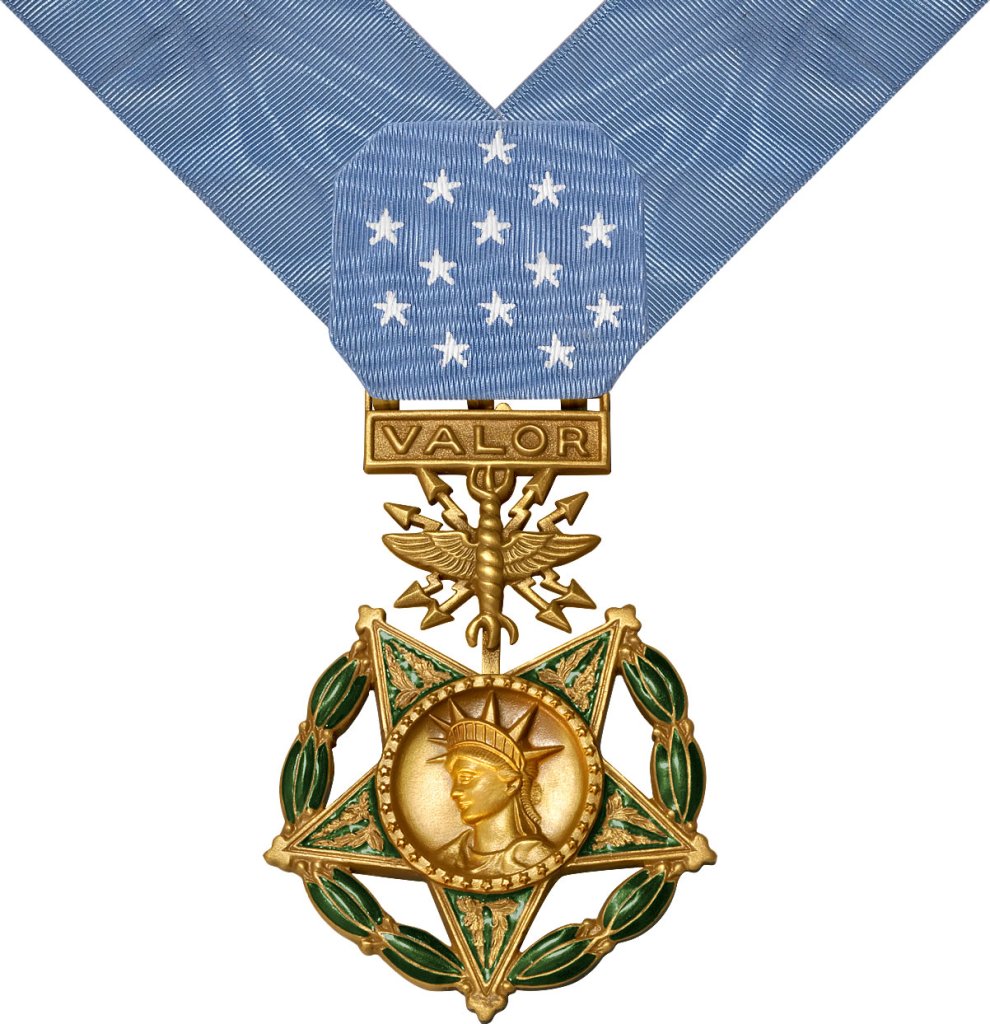
Medal of Honor Citation
PITSENBARGER, WILLIAM H.
Rank and organization: Airman First Class, U.S. Air Force.
Place and date: Near Cam My, Republic of Vietnam, 11 April 1966.
Unit: Pararescue Crew Member, Detachment 6, 38th Aerospace Rescue and Recovery Squadron.
Citation:
For conspicuous gallantry and intrepidity at the risk of his life above and beyond the call of duty. Airman First Class Pitsenbarger distinguished himself by extreme valor on 11 April 1966 near Cam My, Republic of Vietnam, while assigned as a Pararescue Crew Member, Detachment 6, 38th Aerospace Rescue and Recovery Squadron. On that date, Airman Pitsenbarger was aboard a rescue helicopter responding to a call for evacuation of casualties incurred in an ongoing firefight between elements of the United States Army's 1st Infantry Division and a sizeable enemy force approximately 35 miles east of Saigon. With complete disregard for personal safety, Airman Pitsenbarger volunteered to ride a hoist more than one hundred feet through the jungle, to the ground. On the ground, he organized and coordinated rescue efforts, cared for the wounded, prepared casualties for evacuation, and insured that the recovery operation continued in a smooth and orderly fashion. Through his personal efforts, the evacuation of the wounded was greatly expedited. As each of the nine casualties evacuated that day was recovered, Airman Pitsenbarger refused evacuation in order to get more wounded soldiers to safety. After several pick-ups, one of the two rescue helicopters involved in the evacuation was struck by heavy enemy ground fire and was forced to leave the scene for an emergency landing. Airman Pitsenbarger stayed behind on the ground to perform medical duties. Shortly thereafter, the area came under sniper and mortar fire. During a subsequent attempt to evacuate the site, American forces came under heavy assault by a large Viet Cong force. When the enemy launched the assault, the evacuation was called off and Airman Pitsenbarger took up arms with the besieged infantrymen. He courageously resisted the enemy, braving intense gunfire to gather and distribute vital ammunition to American defenders. As the battle raged on, he repeatedly exposed himself to enemy fire to care for the wounded, pull them out of the line of fire, and return fire whenever he could, during which time he was wounded three times. Despite his wounds, he valiantly fought on, simultaneously treating as many wounded as possible. In the vicious fighting that followed, the American forces suffered 80 percent casualties as their perimeter was breached, and Airman Pitsenbarger was fatally wounded. Airman Pitsenbarger exposed himself to almost certain death by staying on the ground, and perished while saving the lives of wounded infantrymen. His bravery and determination exemplify the highest professional standards and traditions of military service and reflect great credit upon himself, his unit, and the United States Air Force.
Tagged:
US Air Force
Vietnam

 Name: William H. Pitsenbarger
