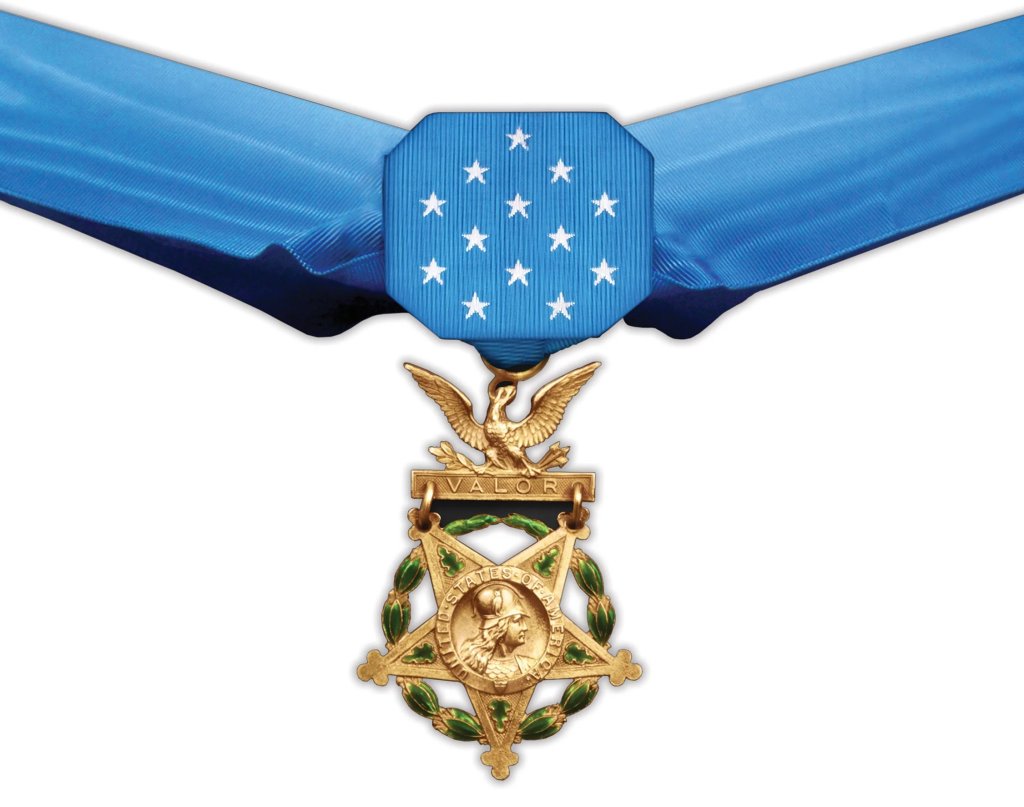
Medal of Honor: Wataru Nakamura – Korean War – May 18, 1951
At first light on a cold Korean hillside, a young soldier set out to repair a communications line. Instead, he found enemy troops breaking through the defenses — and charged them alone with rifle and bayonet.
July 15, 2026

 Name: Wataru Nakamura
Rank: Private First Class (highest rank attained)
Branch: United States Army
War: Korean War
Unit: Company I, 3rd Battalion, 38th Infantry Regiment, 2nd Infantry Division
Date of Action: May 18, 1951
Location: Vicinity of P'ungch'on-ni, Republic of Korea
Summary of Action
By the spring of 1951, the Korean War had become a brutal contest for hills, ridgelines, and strategic positions across the Korean peninsula. Enemy forces frequently infiltrated American defensive lines under cover of darkness, launching surprise attacks in the predawn hours when visibility was limited and confusion reigned.
At approximately daybreak on May 18, 1951, Private First Class Wataru Nakamura volunteered to inspect and repair a communications line connecting his platoon with the company command post near P'ungch'on-ni.
As he made his way through the dim morning light, Nakamura suddenly came under enemy fire.
Chinese forces had successfully infiltrated friendly positions during the night and now occupied several bunkers that threatened to overrun Company I's defensive line. The enemy machine guns and rifle fire posed an immediate danger to the entire company.
Faced with overwhelming odds and entirely alone, Nakamura made an extraordinary decision.
Without waiting for reinforcements or seeking cover, he fixed his bayonet and charged directly into the enemy positions.
In a furious single-handed assault, he destroyed an enemy machine-gun nest and drove hostile soldiers from several captured bunkers. His sudden and violent attack disrupted the enemy assault and bought precious time for the American defenders.
Eventually, after expending all of his ammunition while fighting at close range, Nakamura was forced to withdraw under intense enemy fire.
Many soldiers would have considered their mission complete at that point. Nakamura did not.
As he moved down the hill, he encountered an ammunition resupply party making its way toward the front lines. Quickly briefing the officer in charge about the situation, he rearmed himself and immediately returned to the fight.
Covered by the fire of two comrades and the accompanying officer, Nakamura once again charged the enemy positions.
In one bunker, he killed three enemy soldiers in fierce close combat. Moving on to the final enemy-held position, he killed one enemy soldier and seriously wounded another while continuing his relentless assault.
Determined to eliminate the remaining enemy resistance threatening his company, Nakamura pressed forward one final time.
It was during this final attack that he was mortally wounded by an enemy grenade.
Private First Class Wataru Nakamura sacrificed his life defending his fellow soldiers and preventing a potentially disastrous enemy breakthrough. His actions shattered the enemy assault at a critical moment and exemplified the highest ideals of courage, selflessness, and devotion to duty.
His story serves as a reminder that some of the Korean War's greatest acts of heroism were performed not by generals or commanders, but by ordinary soldiers who chose to do extraordinary things when their comrades' lives depended upon it.
Medal of Honor Citation
WATARU NAKAMURA
Rank and organization: Private First Class, United States Army.
Unit: Company I, 3rd Battalion, 38th Infantry Regiment, 2nd Infantry Division.
Place and date: Vicinity of P'ungch'on-ni, Korea, May 18, 1951.
Citation:
Private First Class Wataru Nakamura distinguished himself by acts of gallantry and intrepidity above and beyond the call of duty while serving with Company I, 38th Infantry Regiment, 2nd Infantry Division in the vicinity of P'ungch'on-ni, Korea, on May 18, 1951.
At about daybreak of that date, Private First Class Nakamura volunteered to check and repair a communications line between his platoon and the command post. As he made his way along the line in the early morning half-light, he was brought under fire by an enemy force that had surrounded friendly positions and were threatening to break the company defense lines.
Immediately, without regard for his own safety and without waiting for help, Private First Class Nakamura rushed the enemy with fixed bayonet engaged. Single-handedly he attacked and destroyed a hostile machine-gun nest and drove the enemy from several of the bunkers they had captured.
When his ammunition was depleted, he withdrew under intense enemy fire. Then he met an ammunition party ascending the hill. Quickly briefing the officer in charge, Private First Class Nakamura rearmed himself and, covered by the fire of the officer and two comrades, returned to the attack.
In a fierce charge he killed three of the enemy in one bunker, and killed and seriously wounded another in the last enemy-held bunker. Continuing to press the attack, he fell mortally wounded by an enemy grenade.
Private First Class Nakamura's extraordinary heroism and selflessness above and beyond the call of duty were in keeping with the highest traditions of military service and reflect great credit upon himself, his unit, and the United States Army.
The ghosts of the battlefield are counting on us to remember them. Help preserve their stories.