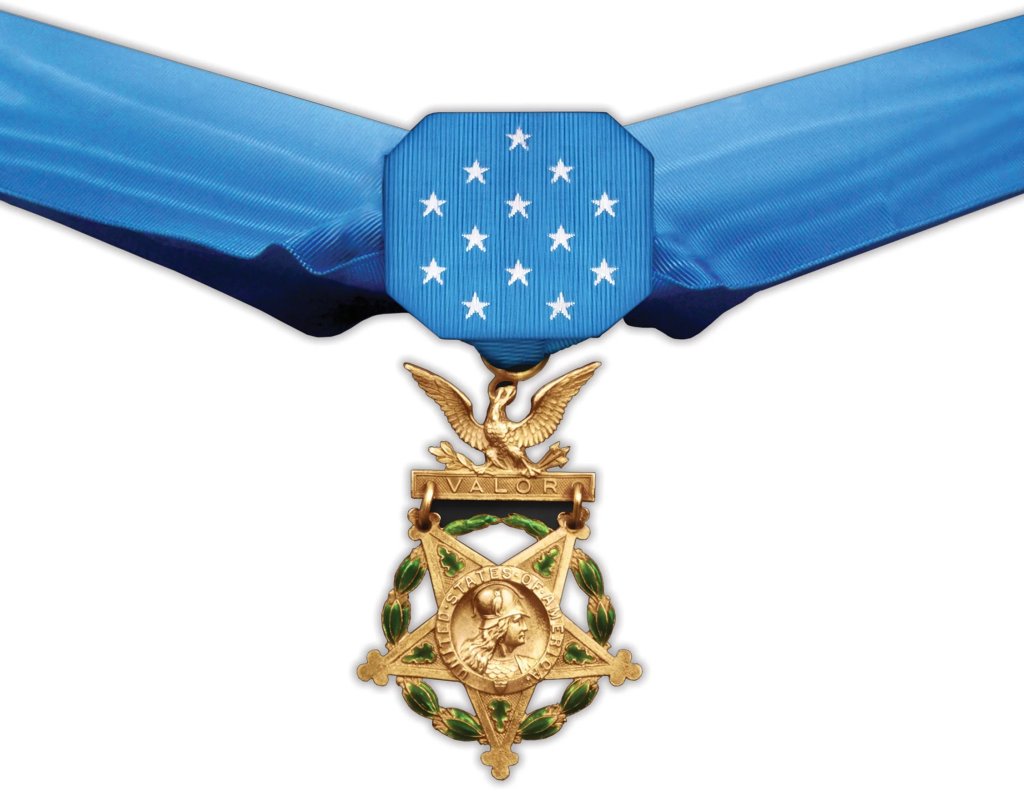
Medal of Honor: Riley L. Pitts - Vietnam War - October 31, 1967
When his men were trapped by fire from three sides in the jungles of Vietnam, Captain Riley L. Pitts refused to fall back—he charged forward, rifle and grenade launcher in hand, until his final breath.
October 31, 2025

 Name: Riley L. Pitts
Rank: Captain
War: Vietnam War
Date of Action: October 31, 1967
Unit: Company C, 2nd Battalion, 27th Infantry Regiment, 25th Infantry Division
Born: October 15, 1937 - Fallis, Oklahoma
Entered Service At: Wichita, Kansas
Summary of Action
Captain Riley L. Pitts had already served a decade in the U.S. Army when he arrived in Vietnam as commander of Company C, 27th Infantry—the “Wolfhounds.†On October 31, 1967, his unit was inserted by helicopter near Ap Dong and immediately came under fire from concealed Viet Cong positions. Leading from the front, Pitts organized an assault that overran the enemy lines.
Moments later, his company was ordered to reinforce another unit under siege. As they moved through the dense jungle, they were caught in a deadly crossfire from three directions, including four enemy bunkers just yards away. Realizing his men could not maneuver, Pitts grabbed an M-79 grenade launcher and began targeting the bunkers himself. When a captured enemy grenade bounced back toward him, he threw himself on it without hesitation—it failed to detonate, and he rose again to keep fighting.
Under relentless fire, he directed his men, repositioned them for artillery support, and continued to attack—advancing alone toward the enemy to draw fire and mark targets for his soldiers. Still shouting orders, still firing, he was struck down in action. His extraordinary courage and selfless leadership turned chaos into order, giving his men the strength to fight on.
Captain Pitts was the first African American officer to receive the Medal of Honor for service in Vietnam—a leader whose calm under fire and devotion to his soldiers remain a timeless example of valor.
Medal of Honor Citation
Place and date: Ap Dong, Republic of Vietnam, 31 October 1967.
Entered service at: Wichita, Kans.
Born: 15 October 1937, Fallis, Okla.
Citation:
Distinguishing himself by exceptional heroism while serving as company commander during an airmobile assault. Immediately after his company landed in the area, several Viet Cong opened fire with automatic weapons. Despite the enemy fire, Capt. Pitts forcefully led an assault which overran the enemy positions. Shortly thereafter, Capt. Pitts was ordered to move his unit to the north to reinforce another company heavily engaged against a strong enemy force. As Capt. Pitts' company moved forward to engage the enemy, intense fire was received from 3 directions, including fire from 4 enemy bunkers, 2 of which were within 15 meters of Capt. Pitts' position. The severity of the incoming fire prevented Capt. Pitts from maneuvering his company. His rifle fire proving ineffective against the enemy due to the dense jungle foliage, he picked up an M-79 grenade launcher and began pinpointing the targets. Seizing a Chinese Communist grenade which had been taken from a captured Viet Cong's web gear, Capt. Pitts lobbed the grenade at a bunker to his front, but it hit the dense jungle foliage and rebounded. Without hesitation, Capt. Pitts threw himself on top of the grenade which, fortunately, failed to explode. Capt. Pitts then directed the repositioning of the company to permit friendly artillery to be fired. Upon completion of the artillery fire mission, Capt. Pitts again led his men toward the enemy positions, personally killing at least 1 more Viet Cong. The jungle growth still prevented effective fire to be placed on the enemy bunkers. Capt. Pitts, displaying complete disregard for his life and personal safety, quickly moved to a position which permitted him to place effective fire on the enemy. He maintained a continuous fire, pinpointing the enemy's fortified positions, while at the same time directing and urging his men forward, until he was mortally wounded. Capt. Pitts' conspicuous gallantry, extraordinary heroism, and intrepidity at the cost of his life, above and beyond the call of duty, are in the highest traditions of the U.S. Army and reflect great credit upon himself, his unit, and the Armed Forces of his country.