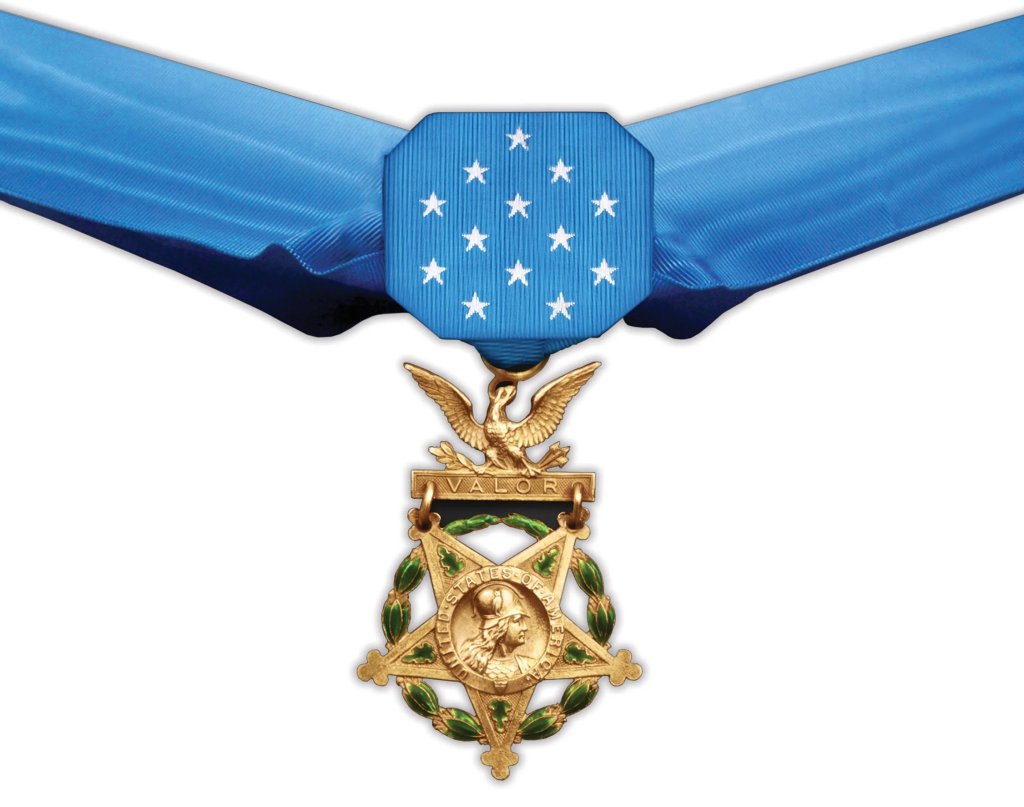
Medal of Honor: Ova A. Kelley - World War II - December 8, 1944
Before dawn on Leyte, one private rose from his foxhole with a stack of grenades and charged alone into entrenched enemy fire—breaking a Japanese strongpoint, inspiring a full-company assault, and turning the tide of the battle.
December 9, 2025

 Name: Ova Arthur Kelley
Rank: Private
Organization: U.S. Army
Unit: Company A, 382nd Infantry Regiment, 96th Infantry Division
Place and Date: Leyte, Philippine Islands - 8 December 1944
Entered Service At: Norwood, Missouri
Born: Norwood, Missouri - 1914
Departed: December 10, 1944 (Died of Wounds)
Accredited To: Missouri
Summary of Action
In the predawn darkness of December 8, 1944, Company A of the 382nd Infantry found itself pinned down near the Buri airstrip on Leyte. Japanese riflemen and machine gunners, dug into bomb craters and a drainage ditch less than 100 yards away, poured accurate fire into the American line, halting all movement and threatening to break the company entirely.
A mortar concentration destroyed one machine gun but failed to dislodge the core enemy force. The situation remained dire.
At that critical moment, Private Ova A. Kelley acted on his own initiative. Grabbing an armload of hand grenades, he left the safety of his shallow foxhole and began a one-man assault directly into the teeth of the Japanese positions. Moving steadily forward under fire, he threw grenades with deadly accuracy—killing or wounding five enemy soldiers and driving the rest into a panicked retreat.
Seizing the moment, Kelley picked up an abandoned M1 rifle and fired into the fleeing troops, killing three more. Discarding the empty weapon, he took up a carbine and killed three additional Japanese soldiers as they attempted to regroup.
His courage electrified the company. Inspired by Kelley's audacity, the men rose and charged, overrunning the position and destroying the entire enemy force—34 enlisted men and 2 officers—while capturing multiple machine guns.
Kelley pressed the attack all the way to the airstrip, where a sniper shot him grievously. He succumbed to his wounds two days later.
His solitary charge shattered the Japanese defenses, saved his company, and helped secure the vital Buri airfield.
Medal of Honor Citation