Medal of Honor: Oscar G. Johnson, World War II, September 16-18, 1944
One soldier, alone on a ridgeline, held back wave after wave of German paratroopers. For two days, Oscar Johnson stood firm, saving his company’s flank and forcing the enemy to break.
September 19, 2025

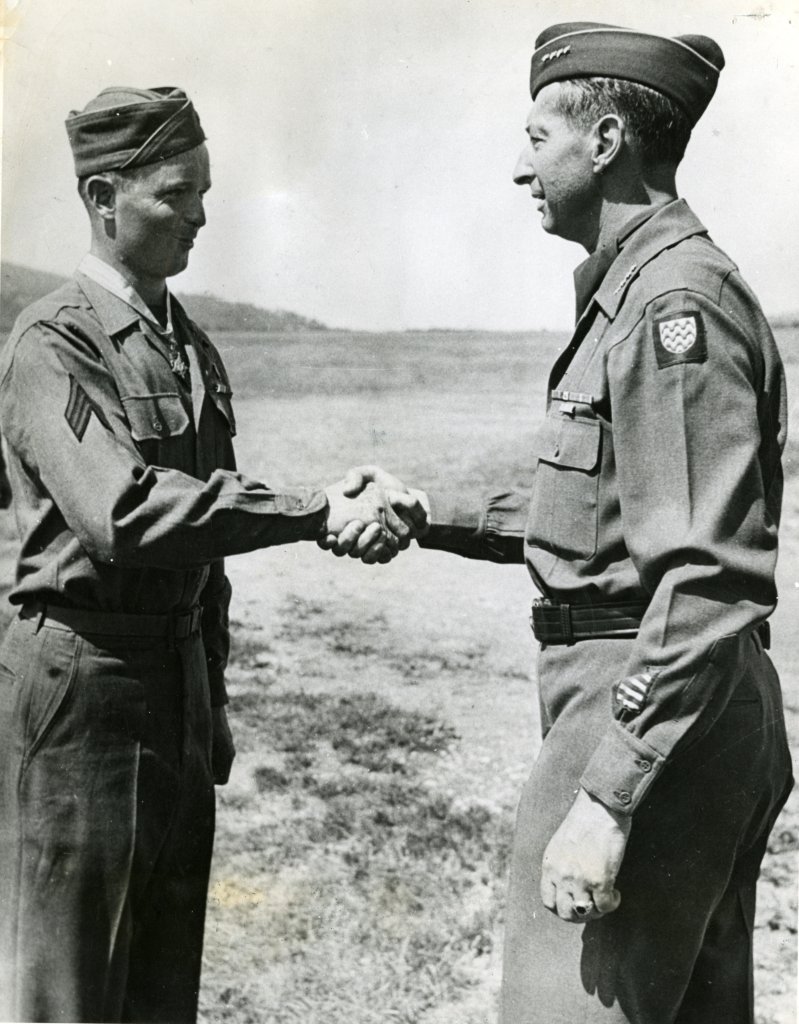 Name: Oscar G. Johnson
 Name:
Name:
Rank: Sergeant (then Private First Class)
War: World War II
Date of Action: September 16-18, 1944
Unit: Company B, 363rd Infantry, 91st Infantry Division
Place: Near Scarperia, Italy
Born: Foster City, Michigan
Summary of Action
In September 1944, during the Allied drive to break through the German Gothic Line in Italy, Sgt. Oscar G. Johnson’s company found itself under relentless attack near Monticelli Ridge. Assigned to protect the far left flank with a squad of seven men, Johnson quickly found himself alone—his entire squad killed or wounded in the opening counterattacks.
Gathering weapons and ammunition from his fallen comrades, he stood his ground under constant artillery, mortar, and machine-gun fire. Several times German soldiers advanced close enough to hurl grenades, but Johnson refused to yield. Through the night of September 16-17, he single-handedly repelled infiltration attempts, throwing grenades and firing from his shallow trench despite the shelling and machine-gun bursts that tore around him.
By the next day, his stand had so unnerved the attackers that 25 German soldiers surrendered directly to him. Even then, Johnson risked his life to rescue two badly wounded reinforcements caught in a devastating barrage, dragging them to safety and covering their evacuation. When relief finally arrived, twenty enemy dead lay in front of his foxhole, testament to his courage. His solitary defense had held the company’s flank, preventing a German breakthrough and preserving the line.
Official Medal of Honor Citation
(then Pfc.) He practically single-handed protected the left flank of his company’s position in the offensive to break the German’s gothic line. Company B was the extreme left assault unit of the corps. The advance was stopped by heavy fire from Monticelli Ridge, and the company took cover behind an embankment. Sgt. Johnson, a mortar gunner, having expended his ammunition, assumed the duties of a rifleman. As leader of a squad of 7 men he was ordered to establish a combat post 50 yards to the left of the company to cover its exposed flank. Repeated enemy counterattacks, supported by artillery, mortar, and machinegun fire from the high ground to his front, had by the afternoon of 16 September killed or wounded all his men. Collecting weapons and ammunition from his fallen comrades, in the face of hostile fire, he held his exposed position and inflicted heavy casualties upon the enemy, who several times came close enough to throw hand grenades. On the night of 1617 September, the enemy launched his heaviest attack on Company B, putting his greatest pressure against the lone defender of the left flank. In spite of mortar fire which crashed about him and machinegun bullets which whipped the crest of his shallow trench, Sgt. Johnson stood erect and repulsed the attack with grenades and small arms fire. He remained awake and on the alert throughout the night, frustrating all attempts at infiltration. On 17 September, 25 German soldiers surrendered to him. Two men, sent to reinforce him that afternoon, were caught in a devastating mortar and artillery barrage. With no thought of his own safety, Sgt. Johnson rushed to the shell hole where they lay half buried and seriously wounded, covered their position by his fire, and assisted a Medical Corpsman in rendering aid. That night he secured their removal to the rear and remained on watch until his company was relieved. Five companies of a German paratroop regiment had been repeatedly committed to the attack on Company B without success. Twenty dead Germans were found in front of his position. By his heroic stand and utter disregard for personal safety, Sgt. Johnson was in a large measure responsible for defeating the enemy’s attempts to turn the exposed left flank.
