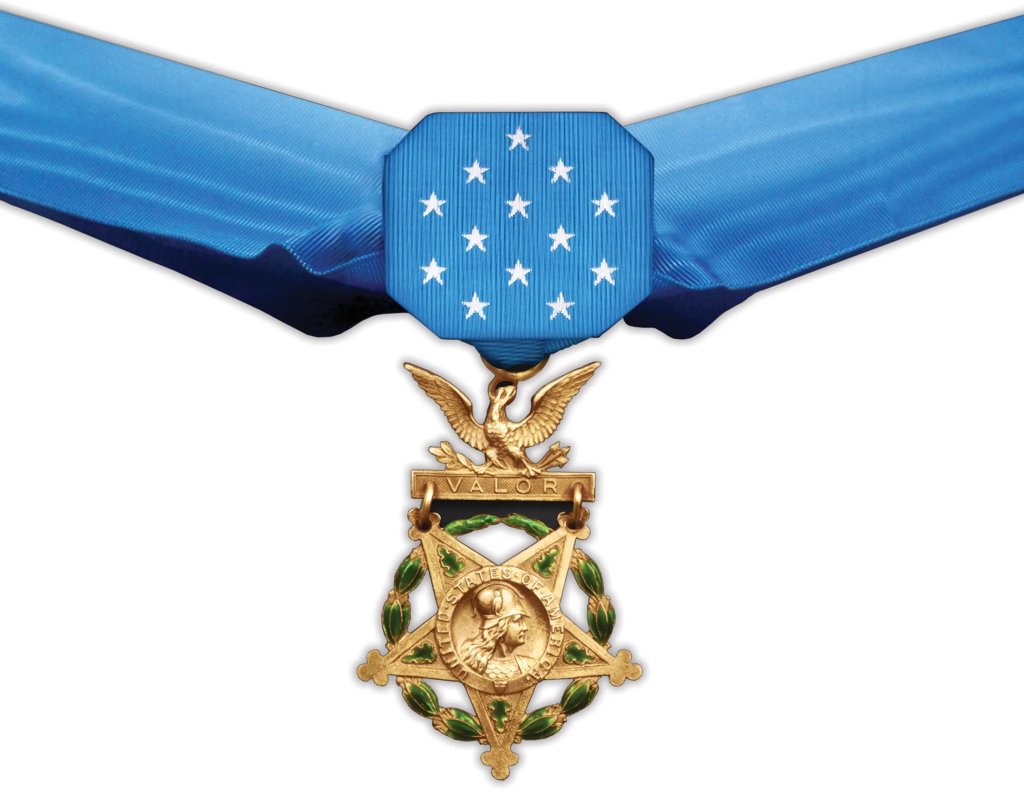
Medal of Honor: Matthew O. Williams – War on Terror – April 6, 2008
In Afghanistan’s Shok Valley, a Special Forces team was pinned down on a near-vertical mountainside. One Green Beret charged through enemy fire, rescued the wounded, rallied Afghan commandos, and led the counterattacks that saved the force.
July 14, 2026

 Name: Matthew O. Williams
Rank: Sergeant (Highest Rank: Command Sergeant Major)
Branch: U.S. Army
War: War on Terror (Operation Enduring Freedom)
Unit: Operational Detachment Alpha 3336, Company C, 3rd Battalion, Special Operations Task Force-33, Combined Joint Special Operations Task Force-Afghanistan
Date of Action: April 6, 2008
Location: Shok Valley, Nuristan Province, Afghanistan
Summary of Action
On April 6, 2008, Sergeant Matthew O. Williams was serving as a Weapons Sergeant with Operational Detachment Alpha 3336 during combat operations in Afghanistan's remote and mountainous Shok Valley.
Shortly after being inserted by helicopter alongside fellow Green Berets and Afghan commandos, the assault force began climbing toward its objective when it was suddenly met by devastating enemy fire. Machine guns, snipers, and rocket-propelled grenades rained down upon the Americans from elevated enemy positions concealed along the mountainside.
The lead element of the assault force, which included the ground commander, sustained multiple casualties and became pinned down on the steep and unforgiving terrain.
Learning that the lead element was wounded and in danger of being overrun, Sergeant Williams immediately volunteered to lead a counterattack.
To reach his comrades, Williams and his Afghan commandos crossed a valley filled with ice-covered boulders before plunging through a fast-moving, waist-deep river of freezing water—all while under enemy fire. They then fought their way up the terraced mountainside toward the embattled assault element.
Upon reaching the wounded soldiers, Sergeant Williams rapidly organized his Afghan commandos into supporting positions and directed suppressive fire that prevented enemy fighters from overrunning the American position.
When the team's senior enlisted leader, the Team Sergeant, was wounded, Williams once again exposed himself to enemy fire to provide emergency medical aid before carrying and assisting him down the near-vertical mountainside to the casualty collection point.
Rather than remaining with the wounded, Sergeant Williams immediately began climbing back up the mountain to rejoin the fight.
Returning to the lead element, he directed suppressive fire while repeatedly exposing himself to enemy fire in order to restore critical satellite radio communications that had been lost during the battle.
With communications reestablished and casualties continuing to mount, Williams helped move wounded soldiers down the mountainside to safety.
Soon afterward, enemy fighters threatened to overrun the casualty collection point itself.
Recognizing the danger, Sergeant Williams once again took the offensive. Leading his Afghan commandos, he launched a counterattack against the advancing enemy that lasted for several hours and successfully prevented the insurgents from overrunning the wounded Americans.
When evacuation helicopters finally arrived, the battle was still raging.
Ignoring enemy fire, Sergeant Williams repeatedly moved into exposed positions to carry wounded soldiers to the aircraft and load casualties aboard while simultaneously directing suppressive fire from his Afghan commandos against numerous enemy fighting positions.
His leadership and courage ensured that every wounded and fallen American was successfully evacuated without additional casualties.
The Battle of Shok Valley produced multiple Medal of Honor recipients, including Staff Sergeant Ronald J. Shurer II and Sergeant Matthew O. Williams, whose extraordinary heroism exemplified the courage and selflessness of America's Special Forces soldiers operating in some of the world's most hostile terrain.
Through repeated acts of valor, complete disregard for his own safety, and unwavering devotion to his teammates, Sergeant Matthew O. Williams saved the lives of critically wounded soldiers and prevented his fellow Green Berets from being overrun on that mountainside in Afghanistan.
Medal of Honor Citation
MATTHEW O. WILLIAMS
Rank and organization: Sergeant, United States Army.
Unit: Operational Detachment Alpha 3336, Company C, 3rd Battalion, Special Operations Task Force-33, Combined Joint Special Operations Task Force-Afghanistan.
Place and date: Shok Valley, Nuristan Province, Afghanistan, April 6, 2008.
Citation:
Sergeant Matthew O. Williams distinguished himself by acts of gallantry and intrepidity above and beyond the call of duty on April 6, 2008, while serving as a Weapons Sergeant, Special Forces Operational Detachment Alpha 3336, Special Operations Task Force-33, in support of Operation ENDURING FREEDOM.
Sergeant Williams was part of an assault element inserted by helicopter into a location in Afghanistan. As the assault element was moving up a mountain toward its objective, it was engaged by intense enemy machine gun, sniper, and rocket-propelled grenade fire.
The lead portion of the assault element, which included the ground commander, sustained several casualties and became pinned down on the sheer mountainside.
Sergeant Williams, upon hearing that the lead element had sustained casualties and was in danger of being overrun, braved intense enemy fire to lead a counterattack across a valley of ice-covered boulders and a fast-moving, ice cold, and waist-deep river.
Under withering fire, Sergeant Williams and his local national commandos fought up the terraced mountainside to the besieged element. Arriving at the lead element's position, Sergeant Williams arrayed his Afghan commandos to provide suppressive fire, which kept the insurgent fighters from overrunning the position.
When the Team Sergeant was wounded, Sergeant Williams braved enemy fire once again to provide buddy-aid and to move the Team Sergeant down the sheer mountainside to the casualty collection point.
Sergeant Williams then fought and climbed his way back up the mountainside to help defend the lead assault element that still had several serious casualties in need of evacuation.
Sergeant Williams directed suppressive fire and exposed himself to enemy fire in order to reestablish the team's critical satellite radio communications. He then assisted with moving the wounded down the near-vertical mountainside to the casualty collection point.
Noting that the collection point was about to be overrun by enemy fighters, Sergeant Williams led the Afghan commandos in a counterattack that lasted for several hours.
When helicopters arrived to evacuate the wounded, Sergeant Williams again exposed himself to enemy fire, carrying and loading casualties onto the helicopters while continuing to direct commando firepower to suppress numerous insurgent positions.
His actions enabled the patrol to evacuate wounded and dead comrades without further casualties.
Sergeant Williams' complete disregard for his own safety and his concern for the safety of his teammates ensured the survival of four critically wounded soldiers and prevented the lead element of the assault force from being overrun by the enemy.
Sergeant Williams' actions are in keeping with the finest traditions of military service and reflect great credit upon himself, Combined Joint Special Operations Task Force-Afghanistan, Special Operations Command Central, and the United States Army.