Medal of Honor: Lieutenant Colonel Matt Urban, World War II, June 14 to September 3, 1944
He was called “The Ghost†by the Germans, a man who seemed impossible to kill. Wounded again and again, Matt Urban refused evacuation, returned to the fight, and led from the very front.
September 3, 2025

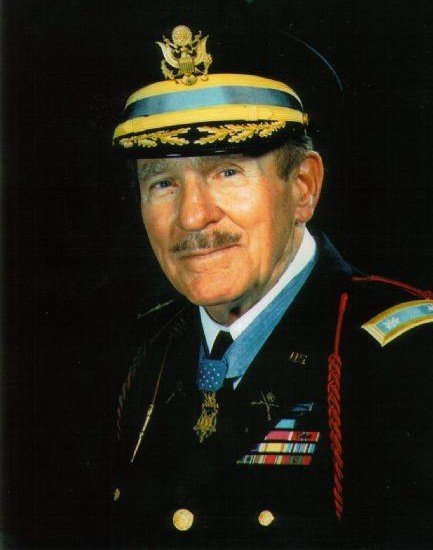 Lieutenant Colonel Matt Urban
 Lieutenant Colonel Matt Urban
World War II - June 14 to September 3, 1944 - France and Belgium
Summary of Action
From the hedgerows of Normandy to the banks of the Meuse River, Captain (later Lieutenant Colonel) Matt Urban lived through one of the most incredible streaks of combat heroism in American military history. His Medal of Honor citation recounts not one moment, but a series of actions across nearly three months that showcased his unbreakable spirit.
On June 14, 1944, near Renouf, France, Urban’s company came under devastating German fire, pinned by tanks that threatened to annihilate them. Refusing to let his unit be crushed, he grabbed a bazooka, crawled forward through the hedgerows under a storm of fire, and destroyed both enemy tanks. His audacity sparked his men to attack, routing the Germans. Later that same day, wounded by direct tank fire in his leg, he still refused evacuation, limped forward, and continued to lead his company into the night.
At Orglandes the following morning, he led another assault despite two wounds, until he was struck again. Only then, barely able to walk, was he evacuated to England. But Urban could not stay away. Hearing of his unit’s severe casualties during the desperate hedgerow battles, he left the hospital, hitchhiked back to Normandy, and rejoined his men at St. Lô on July 25. Still limping from his leg wound, he found his company stalled under heavy fire. Spotting an abandoned tank, he mounted it in full view of the enemy, manned its machine gun himself, and drove it forward, blasting German positions until the battalion surged ahead. His reckless bravery turned paralysis into victory.
Again and again, Urban was wounded—in the chest on August 2, in another engagement on August 15—but every time he refused evacuation, pressing on to lead his soldiers. His men followed him without hesitation, inspired by his refusal to yield.
On September 3, 1944, as the 2d Battalion advanced toward the Meuse River crossing at Heer, Belgium, German fire halted the attack. Urban, now commanding the battalion, left his command post and moved to the very front. Rallying his men, he personally led a charge across open ground under artillery, mortar, and small-arms fire. Midway through the assault, he was struck in the neck by a round that nearly killed him. Even unable to speak above a whisper, bleeding heavily, he refused evacuation until his men had secured the crossing.
Matt Urban’s actions were not a single blaze of heroism, but a sustained campaign of sacrifice. Wounded seven times, repeatedly refusing to leave his men, he embodied the relentless will to win. His leadership, ferocity, and personal example earned him a reputation as one of the most fearless combat officers of the Second World War.

Medal of Honor Citation
Citation:
Lieutenant Colonel (then Captain) Matt Urban, 112-22-2414, United States Army, who distinguished himself by a series of bold, heroic actions, exemplified by singularly outstanding combat leadership, personal bravery, and tenacious devotion to duty, during the period 14 June to 3 September 1944 while assigned to the 2d Battalion, 60th Infantry Regiment, 9th Infantry Division. On 14 June, Captain Urban’s company, attacking at Renouf, France, encountered heavy enemy small arms and tank fire. The enemy tanks were unmercifully raking his unit’s positions and inflicting heavy casualties. Captain Urban, realizing that his company was in imminent danger of being decimated, armed himself with a bazooka. He worked his way with an ammo carrier through hedgerows, under a continuing barrage of fire, to a point near the tanks. He brazenly exposed himself to the enemy fire and, firing the bazooka, destroyed both tanks. Responding to Captain Urban’s action, his company moved forward and routed the enemy. Later that same day, still in the attack near Orglandes, Captain Urban was wounded in the leg by direct fire from a 37mm tank-gun. He refused evacuation and continued to lead his company until they moved into defensive positions for the night. At 0500 hours the next day, still in the attack near Orglandes, Captain Urban, though badly wounded, directed his company in another attack. One hour later he was again wounded. Suffering from two wounds, one serious, he was evacuated to England. In mid-July, while recovering from his wounds, he learned of his unit’s severe losses in the hedgerows of Normandy. Realizing his unit’s need for battle-tested leaders, he voluntarily left the hospital and hitchhiked his way back to his unit near St. Lo, France. Arriving at the 2d Battalion Command Post at 1130 hours, 25 July, he found that his unit had jumped-off at 1100 hours in the first attack of Operation Cobra. Still limping from his leg wound, Captain Urban made his way forward to retake command of his company. He found his company held up by strong enemy opposition. Two supporting tanks had been destroyed and another, intact but with no tank commander or gunner, was not moving. He located a lieutenant in charge of the support tanks and directed a plan of attack to eliminate the enemy strong-point. The lieutenant and a sergeant were immediately killed by the heavy enemy fire when they tried to mount the tank. Captain Urban, though physically hampered by his leg wound and knowing quick action had to be taken, dashed through the scathing fire and mounted the tank. With enemy bullets ricocheting from the tank, Captain Urban ordered the tank forward and, completely exposed to the enemy fire, manned the machine gun and placed devastating fire on the enemy. His action, in the face of enemy fire, galvanized the battalion into action and they attacked and destroyed the enemy position. On 2 August, Captain Urban was wounded in the chest by shell fragments and, disregarding the recommendation of the Battalion Surgeon, again refused evacuation. On 6 August, Captain Urban became the commander of the 2d Battalion. On 15 August, he was again wounded but remained with his unit. On 3 September, the 2d Battalion was given the mission of establishing a crossing-point on the Meuse River near Heer, Belgium. The enemy planned to stop the advance of the allied Army by concentrating heavy forces at the Meuse. The 2d Battalion, attacking toward the crossing-point, encountered fierce enemy artillery, small arms and mortar fire which stopped the attack. Captain Urban quickly moved from his command post to the lead position of the battalion. Reorganizing the attacking elements, he personally led a charge toward the enemy’s strong-point. As the charge moved across the open terrain, Captain Urban was seriously wounded in the neck. Although unable to talk above a whisper from the paralyzing neck wound, and in danger of losing his life, he refused to be evacuated until the enemy was routed and his battalion had secured the crossing-point on the Meuse River. Captain Urban’s personal leadership, limitless bravery, and repeated extraordinary exposure to enemy fire served as an inspiration to his entire battalion. His valorous and intrepid actions reflect the utmost credit on him and uphold the noble traditions of the United States.
