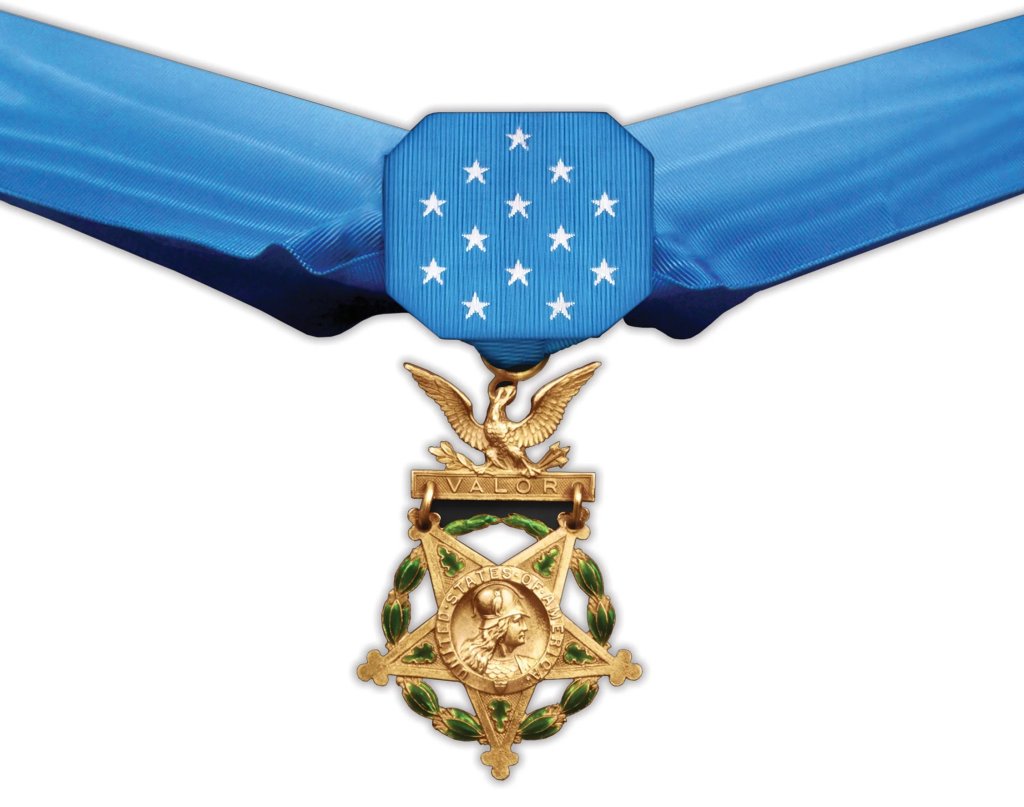
Medal of Honor: Joseph H. Thompson, World War I, October 1, 1918
When two enemy regiments struck, Joseph Thompson braved the fire to hold the line. Then, three times on foot, he led a lone surviving tank forward until the German nest fell.
October 1, 2025

 Name: Joseph H. Thompson
Rank: Major
War: World War I
Date of Action: October 1, 1918
Unit: 110th Infantry, 28th Division
Accredited to: Beaver Falls, Pennsylvania
Summary of Action
Near Apremont, France, Major Thompson's battalion faced a massive counterattack by two German regiments. Constantly exposing himself to fire, he moved among his men, encouraging them and directing the defense. His courage steadied the line and led to the enemy's repulse. Later, when advancing infantry was pinned by a well-defended machine gun nest, Thompson again acted with fearless resolve. With five of six tanks already destroyed, he personally led the last surviving tank forward—on foot—three separate times under heavy machine gun and anti-tank fire. Each time he advanced closer until the enemy nest was destroyed, clearing the way for the assault. His gallantry and cool leadership under fire inspired his men and enabled the infantry to seize their objective.
Medal of Honor Citation
THOMPSON, JOSEPH H.
Rank and organization: Major, U.S. Army, 110th Infantry, 28th Division. Place and date: Near Apremont, France, 1 October 1918. Entered service at: Beaver Falls, Pa. Born: 26 September 1871, Kilkeel, County Down, Ireland. G.O. No.: 21, W.D., 1925. Citation: Counterattacked by 2 regiments of the enemy, Maj. Thompson encouraged his battalion in the front line of constantly braving the hazardous fire of machineguns and artillery. His courage was mainly responsible for the heavy repulse of the enemy. Later in the action, when the advance of his assaulting companies was held up by fire from a hostile machinegun nest and all but 1 of the 6 assaulting tanks were disabled, Maj. Thompson, with great gallantry and coolness, rushed forward on foot 3 separate times in advance of the assaulting line, under heavy machinegun and antitank-gun fire, and led the 1 remaining tank to within a few yards of the enemy machinegun nest, which succeeded in reducing it, thereby making it possible for the infantry to advance.