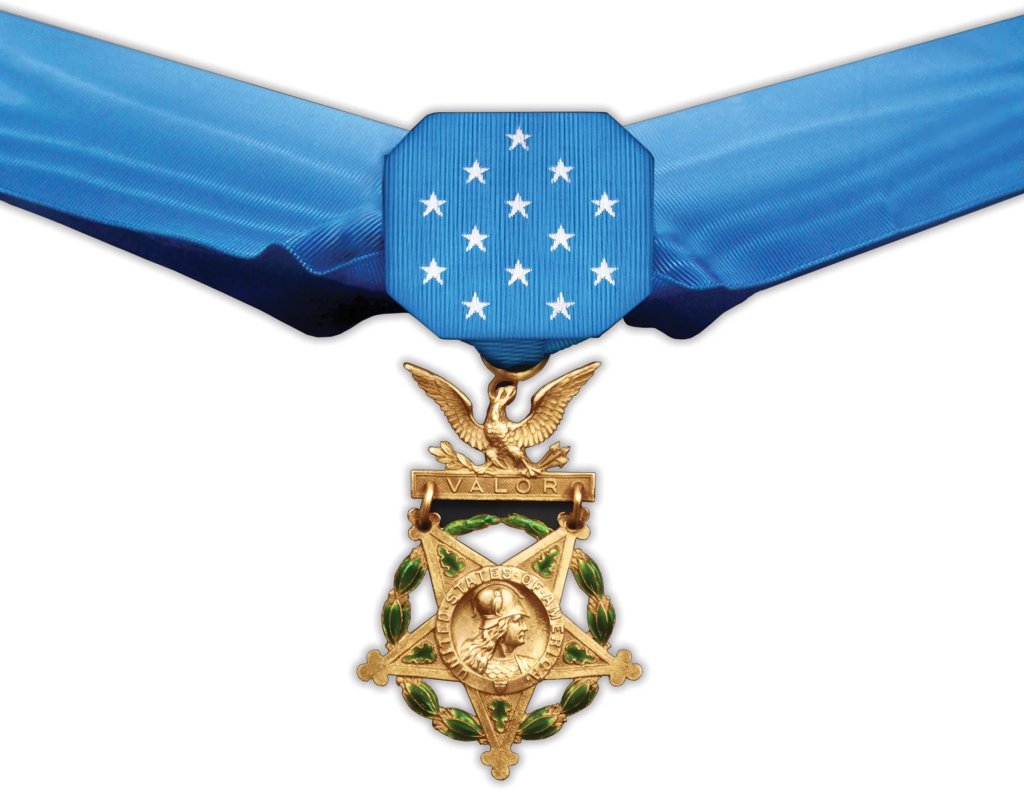
Medal of Honor: Fred E. Smith, World War I, September 29, 1918
Cut down by machine gun fire, Fred Smith rose to his feet and fought on. Mortally wounded, he refused aid—choosing instead to return under fire, pistol in hand, until the last.
September 29, 2025

 Name: Fred E. Smith
Rank: Lieutenant Colonel
War: World War I
Date of Action: September 29, 1918
Unit: 308th Infantry, 77th Division
Accredited to: Bartlett, North Dakota
Summary of Action
Near Binarville, France, communications to the forward post had broken under German infiltration. Lieutenant Colonel Fred Smith, determined to restore the link, personally led two officers and ten men forward with ammunition for the front line. Their guide lost the way, bringing them onto the enemy’s flank. Suddenly, at only 50 yards, German machine guns opened fire. Ordering his men to cover, Smith drew his pistol and stood his ground, firing to protect their withdrawal. A burst struck him down, but he rose, wounded and bleeding, and continued to fire until his men escaped danger. Refusing treatment, he staggered to a grenade dump, determined to renew the attack. As he sought out the enemy nest, Smith was hit again and fell mortally wounded. His courage, defiance, and devotion to his men in the face of certain death embodied the highest traditions of command.
Medal of Honor Citation
SMITH, FRED E.
Rank and organization: Lieutenant Colonel, U.S. Army, 308th Infantry, 77th Division. Place and date: Near Binarville, France, 29 September 1918. Entered service at: Bartlett, N. Dak. Birth: Rockford, Ill. G.O. No.: 49, W.D., 1922. Citation: When communication from the forward regimental post of command to the battalion leading the advance had been interrupted temporarily by the infiltration of small parties of the enemy armed with machineguns, Lt. Col. Smith personally led a party of 2 other officers and 10 soldiers, and went forward to reestablish runner posts and carry ammunition to the front line. The guide became confused and the party strayed to the left flank beyond the outposts of supporting troops, suddenly coming under fire from a group of enemy machineguns only 50 yards away. Shouting to the other members of his party to take cover this officer, in disregard of his danger, drew his pistol and opened fire on the German guncrew. About this time he fell, severely wounded in the side, but regaining his footing, he continued to fire on the enemy until most of the men in his party were out of danger. Refusing first-aid treatment he then made his way in plain view of the enemy to a handgrenade dump and returned under continued heavy machinegun fire for the purpose of making another attack on the enemy emplacements. As he was attempting to ascertain the exact location of the nearest nest, he again fell, mortally wounded.