Medal of Honor: Eugene Bennett Fluckey - U.S. Navy - World War II
Into mined, uncharted, rock-strewn waters he drove his submarine—knowing escape would require a full-speed run through the same deadly channel. He gave the order anyway: “Battle station—torpedoes!â€
February 17, 2026

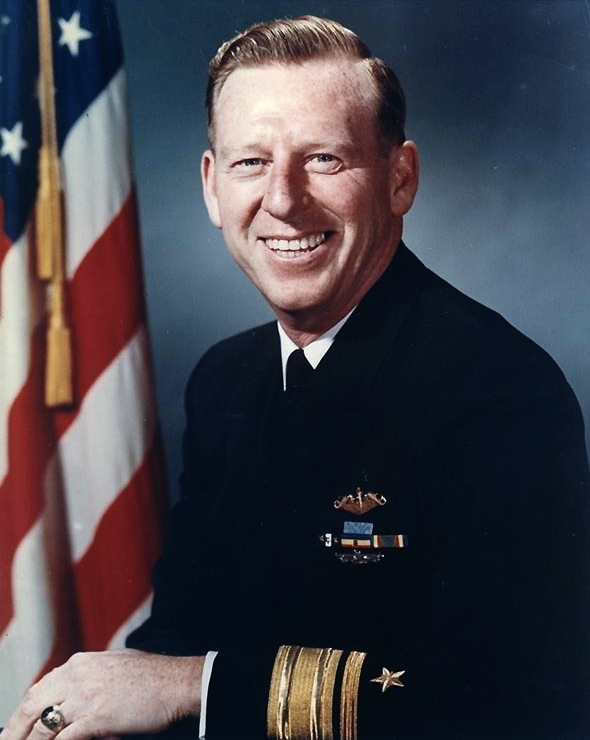 Name: Eugene Bennett Fluckey
Rank: Commander
Branch: U.S. Navy
Unit: Commanding Officer, U.S.S. Barb
Place: Along the coast of China
Entered Service At: Illinois
Born: 5 October 1913, Washington, D.C.
Other Awards: Navy Cross with 3 Gold Stars
Summary of Action
During the U.S.S. Barb's 11th war patrol along the east coast of China, Commander Eugene B. Fluckey demonstrated daring, tactical brilliance, and absolute fearlessness in some of the most hazardous submarine operations of the Pacific War.
On 8 January 1945, after sinking a large enemy ammunition ship and damaging additional tonnage during a fierce two-hour night surface engagement, he continued aggressive patrol operations in heavily defended waters.
On 25 January, through exceptional deduction and bold tracking, he located a concentration of more than 30 enemy vessels anchored deep within Mamkwan Harbor in the lower reaches of the Nankuan Chiang. Fully aware that escape would require a high-speed withdrawal through mined, rock-obstructed, and uncharted shallows, Commander Fluckey nevertheless ordered the attack.
Penetrating the heavy enemy screen in only five fathoms of water, he fired his remaining forward torpedoes from 3,000 yards, then skillfully maneuvered to bring his stern tubes to bear, launching four more torpedoes. The attack achieved eight direct hits on six primary targets, detonating a large ammunition ship and causing catastrophic secondary explosions throughout the harbor.
After clearing the treacherous waters at high speed, he continued operations and four days later sank a large Japanese freighter—capping one of the most audacious submarine patrols of the war.
Medal of Honor Citation
FLUCKEY, EUGENE BENNETT
