Medal of Honor: Col. William A. Jones III Vietnam War - September 1, 1968
One man, one aircraft, and one burning cockpit stood between a fellow airman’s survival and certain death. With his own body consumed by flames, Colonel William A. Jones chose duty over escape.
September 3, 2025

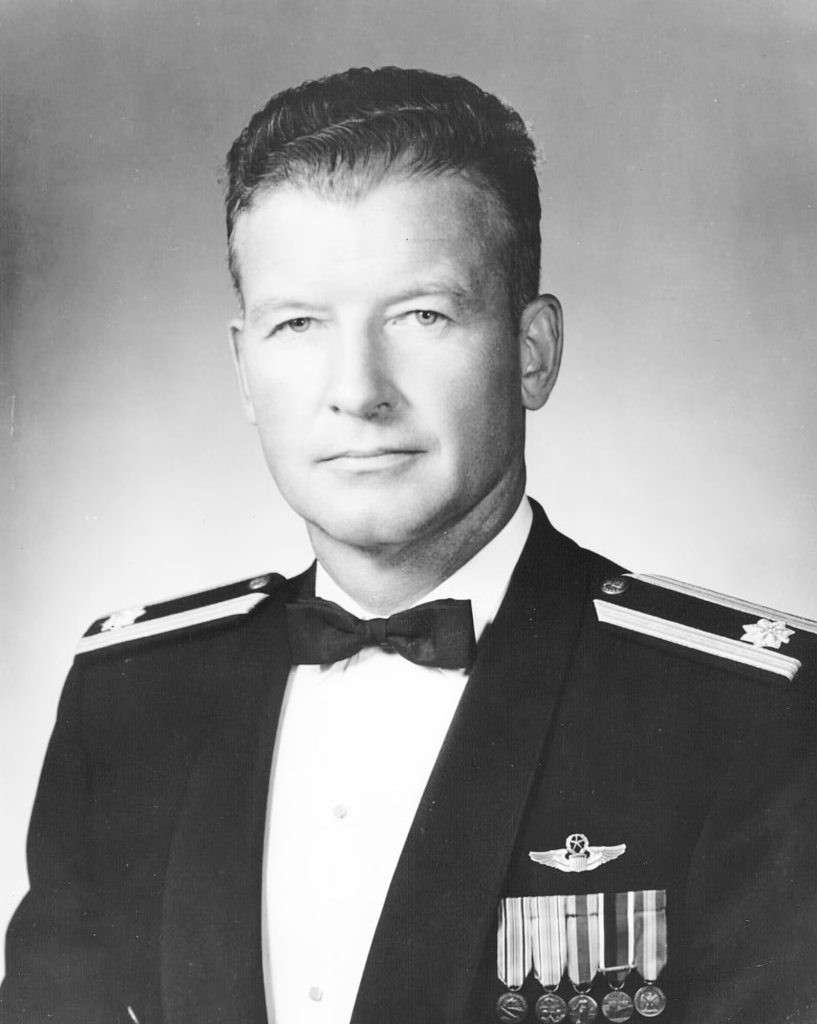 Colonel William A. Jones III
Vietnam War - September 1, 1968
One man, one aircraft, and one burning cockpit stood between a fellow airman’s survival and certain death. With his own body consumed by flames, Colonel William A. Jones chose duty over escape, flying a crippled Skyraider back to base so the rescue could succeed.
Summary of Action
On September 1, 1968, Colonel William A. Jones III, commanding an A-1H Skyraider from the 602d Special Operations Squadron, led a daring rescue mission near Dong Hoi, North Vietnam. Serving as on-scene commander for a downed pilot’s extraction, he braved heavy antiaircraft fire that riddled his aircraft and filled his cockpit with smoke. Though his aircraft burst into flames—engulfing him in fire that burned his arms, face, and shoulders—Colonel Jones refused to abandon his aircraft.
 Spotting both the survivor and the enemy gun emplacement that threatened him, Jones dove again and again, striking the position with rockets and cannon fire, even as his plane threatened to disintegrate. His ejection system failed after the rocket ignited inside the cockpit, leaving him no escape but death or a desperate landing. Still, Jones fought his battered Skyraider back across hostile skies, ignoring his crew’s pleas to bail out, determined to bring back the exact location of the survivor and enemy defenses.
Miraculously, he landed his ruined aircraft and, even as surgeons worked on his burns, delivered the intelligence that allowed his fellow airman to be rescued later that day. His valor and refusal to quit turned certain tragedy into salvation, at the cost of his own suffering.

Medal of Honor Citation
Citation:
For conspicuous gallantry and intrepidity in action at the risk of his life above and beyond the call of duty. Col. Jones distinguished himself as the pilot of an A-1H Skyraider aircraft near Dong Hoi, North Vietnam. On that day, as the on-scene commander in the attempted rescue of a downed U.S. pilot, Col. Jones’ aircraft was repeatedly hit by heavy and accurate antiaircraft fire. On one of his low passes, Col. Jones felt an explosion beneath his aircraft and his cockpit rapidly filled with smoke. With complete disregard of the possibility that his aircraft might still be burning, he unhesitatingly continued his search for the downed pilot. On this pass, he sighted the survivor and a multiple-barrel gun position firing at him from near the top of a karst formation. He could not attack the gun position on that pass for fear he would endanger the downed pilot. Leaving himself exposed to the gun position, Col. Jones attacked the position with cannon and rocket fire on 2 successive passes. On his second pass, the aircraft was hit with multiple rounds of automatic weapons fire. One round impacted the Yankee Extraction System rocket mounted directly behind the headrest, igniting the rocket. His aircraft was observed to burst into flames in the center fuselage section, with flames engulfing the cockpit area. He pulled the extraction handle, jettisoning the canopy. The influx of fresh air made the fire burn with greater intensity for a few moments, but since the rocket motor had already burned, the extraction system did not pull Col. Jones from the aircraft. Despite searing pains from severe burns sustained on his arms, hands, neck, shoulders, and face, Col. Jones pulled his aircraft into a climb and attempted to transmit the location of the downed pilot and the enemy gun position to the other aircraft in the area. His calls were blocked by other aircraft transmissions repeatedly directing him to bail out and within seconds his transmitters were disabled and he could receive only on 1 channel. Completely disregarding his injuries, he elected to fly his crippled aircraft back to his base and pass on essential information for the rescue rather than bail out. Col. Jones successfully landed his heavily damaged aircraft and passed the information to a debriefing officer while on the operating table. As a result of his heroic actions and complete disregard for his personal safety, the downed pilot was rescued later in the day. Col. Jones’ profound concern for his fellow man at the risk of his life, above and beyond the call of duty, are in keeping with the highest traditions of the U.S. Air Force and reflect great credit upon himself and the Armed Forces of his country.
