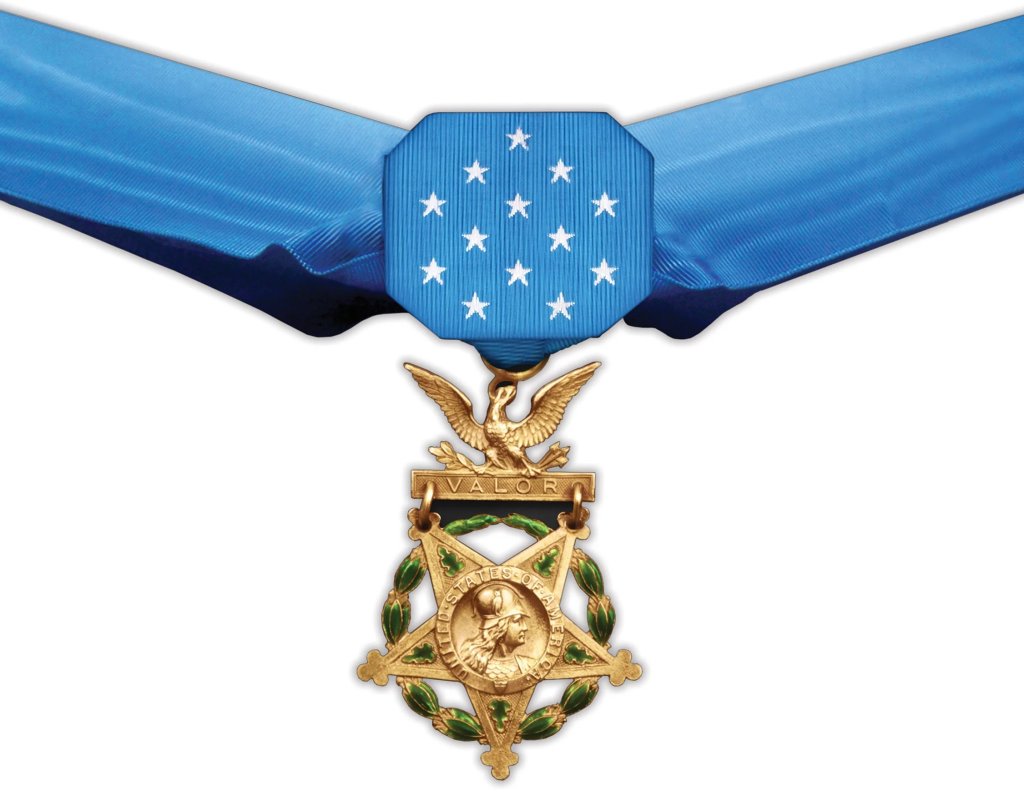
Medal of Honor: Chris Carr. (Karaberis), World War II, October 1-2, 1944
Alone on a rocky Italian ridge, Chris Carr stormed five enemy machine guns. By the time his attack ended, eight Germans were dead, twenty-two captured, and the way cleared for his battalion.
October 2, 2025

 Name: Chris Carr (awarded under his birth name, Christos H. Karaberis)
Rank: Sergeant
War: World War II
Date of Action: October 1-2, 1944
Unit: Company L, 337th Infantry, 85th Infantry Division
Accredited to: Manchester, New Hampshire
Summary of Action
In the Apennine Mountains near Guignola, Italy, Sergeant Chris Carr led his squad up a ridge under murderous mortar, machine gun, and rifle fire. When his platoon was pinned down, he advanced alone along the flank, determined to eliminate the enemy strongpoints. In a lightning assault, he captured eight prisoners at the first gun. He charged a second emplacement under direct fire, killing four and taking another prisoner. Pressing forward, he silenced a third nest with a sudden burst of fire and terrifying shout, forcing four gunners to surrender. On higher ground, two more machine guns raked his company. Carr stormed the first, killing four and capturing three; the second collapsed without resistance, its six-man crew surrendering at once. In all, he destroyed five positions, killed eight enemy soldiers, captured twenty-two, and singlehandedly broke open the German defenses, enabling his battalion to seize vital ground. His lone assault was one of the most audacious feats of courage in the Italian campaign.
Medal of Honor Citation
CARR, CHRIS (name legally changed from CHRISTOS H. KARABERIS, under which name the medal was awarded)
Rank and organization: Sergeant, U.S. Army, Company L, 337th Infantry, 85th Infantry Division. Place and date: Near Guignola, Italy, 1-2 October 1944. Entered service at: Manchester, N.H. Birth: Manchester, N.H. G.O. No.: 97, 1 November 1945. Citation: Leading a squad of Company L, he gallantly cleared the way for his company’s approach along a ridge toward its objective, the Casoni di Remagna. When his platoon was pinned down by heavy fire from enemy mortars, machineguns, machine pistols, and rifles, he climbed in advance of his squad on a maneuver around the left flank to locate and eliminate the enemy gun positions. Undeterred by deadly fire that ricocheted off the barren rocky hillside, he crept to the rear of the first machinegun and charged, firing his submachinegun. In this surprise attack he captured 8 prisoners and turned them over to his squad before striking out alone for a second machinegun. Discovered in his advance and subjected to direct fire from the hostile weapon, he leaped to his feet and ran forward, weaving and crouching, pouring automatic fire into the emplacement that killed 4 of its defenders and forced the surrender of a lone survivor. He again moved forward through heavy fire to attack a third machinegun. When close to the emplacement, he closed with a nerve-shattering shout and burst of fire. Paralyzed by his whirlwind attack, all 4 gunners immediately surrendered. Once more advancing aggressively in the face of a thoroughly alerted enemy, he approached a point of high ground occupied by 2 machineguns which were firing on his company on the slope below. Charging the first of these weapons, he killed 4 of the crew and captured 3 more. The 6 defenders of the adjacent position, cowed by the savagery of his assault, immediately gave up. By his l-man attack, heroically and voluntarily undertaken in the face of tremendous risks, Sgt. Karaberis captured 5 enemy machinegun positions, killed 8 Germans, took 22 prisoners, cleared the ridge leading to his company’s objective, and drove a deep wedge into the enemy line, making it possible for his battalion to occupy important, commanding ground.