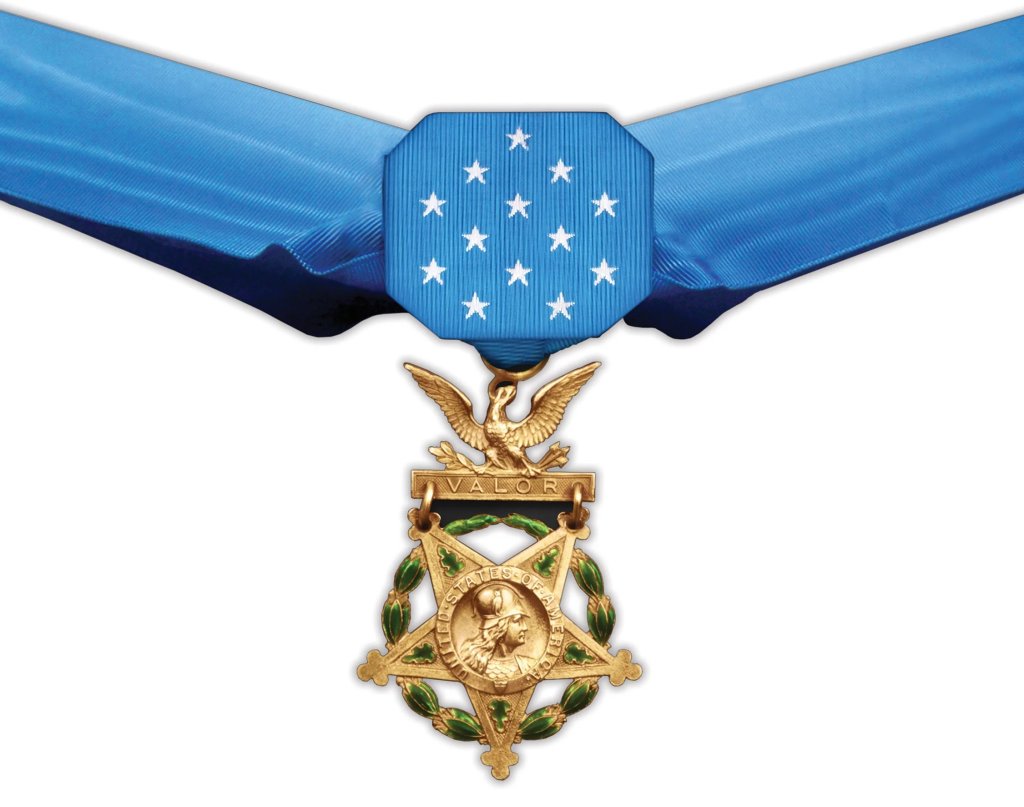
Medal of Honor: Charles P. Murray, Jr. - World War II - December 16, 1944
Facing an enemy force many times his size, one young infantry officer attacked alone—breaking a German counterattack and holding the line despite multiple wounds.
December 16, 2025

 Name: Charles P. Murray, Jr.
Rank: First Lieutenant
Organization: U.S. Army
Unit: Company C, 30th Infantry Regiment, 3d Infantry Division
Place and Date: Near Kaysersberg, France - 16 December 1944
Entered Service At: Wilmington, North Carolina
Born: Baltimore, Maryland
Departed: Survived
Accredited To: North Carolina
Summary of Action
On December 16, 1944, near Kaysersberg, France, First Lieutenant Charles P. Murray, Jr. was leading a reinforced platoon of Company C, 30th Infantry, on a mission deep into enemy-held territory. Descending into a valley below friendly positions, he observed approximately 200 German troops firing mortars, machine guns, bazookas, and small arms into an American battalion holding a ridge above.
Although vastly outnumbered, Murray recognized that the enemy force—concealed in a sunken road—was vulnerable to a flank attack. Crawling forward alone to an exposed observation point, he called for artillery fire and successfully bracketed the enemy. When his radio failed before he could adjust the barrage, Murray returned to his patrol, gathered grenades and a rifle adapted to launch them, and returned alone to his forward position.
As his first grenades revealed his location, the enemy concentrated heavy fire on him. Undeterred, Murray calmly continued firing his missiles into the defile. He then withdrew once more, armed himself with an automatic rifle, and again advanced alone into the open. Firing burst after burst into the packed enemy formation, he killed approximately twenty Germans, wounded many others, and threw the force into complete disarray. He further prevented the removal of enemy mortars by disabling a German truck.
With a mortar now brought forward in support, Murray directed its fire, inflicting additional casualties and confusion. He then called his patrol forward and resumed his original mission—seizing a bridge and establishing a roadblock. Advancing boldly, he captured ten enemy soldiers in foxholes. An eleventh feigned surrender and threw a grenade, knocking Murray to the ground and inflicting eight wounds.
Despite severe bleeding and pain, Murray refused evacuation until he personally selected the site for the roadblock and ensured his men were properly deployed. His lone assault against overwhelming odds stopped a major counterattack, secured critical ground, and provided a powerful example of courage and leadership under fire.
Medal of Honor Citation
Citation:
For commanding Company C, 30th Infantry, displaying supreme courage and heroic initiative near Kaysersberg, France, on 16 December 1944, while leading a reinforced platoon into enemy territory. Descending into a valley beneath hilltop positions held by our troops, he observed a force of 200 Germans pouring deadly mortar, bazooka, machinegun, and small arms fire into an American battalion occupying the crest of the ridge. The enemy's position in a sunken road, though hidden from the ridge, was open to a flank attack by 1st Lt. Murray's patrol but he hesitated to commit so small a force to battle with the superior and strongly disposed enemy. Crawling out ahead of his troops to a vantage point, he called by radio for artillery fire. His shells bracketed the German force, but when he was about to correct the range his radio went dead. He returned to his patrol, secured grenades and a rifle to launch them and went back to his self-appointed outpost. His first shots disclosed his position; the enemy directed heavy fire against him as he methodically fired his missiles into the narrow defile. Again he returned to his patrol. With an automatic rifle and ammunition, he once more moved to his exposed position. Burst after burst he fired into the enemy, killing 20, wounding many others, and completely disorganizing its ranks, which began to withdraw. He prevented the removal of 3 German mortars by knocking out a truck. By that time a mortar had been brought to his support. 1st Lt. Murray directed fire of this weapon, causing further casualties and confusion in the German ranks. Calling on his patrol to follow, he then moved out toward his original objective, possession of a bridge and construction of a roadblock. He captured 10 Germans in foxholes. An eleventh, while pretending to surrender, threw a grenade which knocked him to the ground, inflicting 8 wounds. Though suffering and bleeding profusely, he refused to return to the rear until he had chosen the spot for the block and had seen his men correctly deployed. By his single-handed attack on an overwhelming force and by his intrepid and heroic fighting, 1st Lt. Murray stopped a counterattack, established an advance position against formidable odds, and provided an inspiring example for the men of his command.