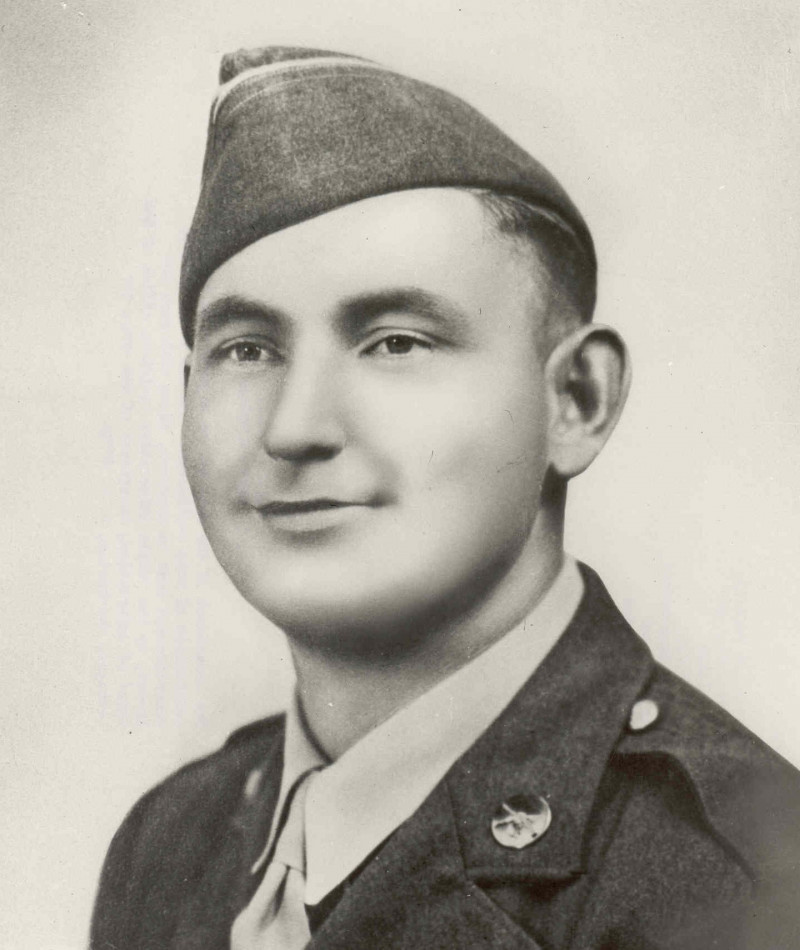
 Name: Andrew Miller
Rank: Staff Sergeant
Organization: U.S. Army
Unit: Company G, 377th Infantry Regiment, 95th Infantry Division
Place and Date: From Woippy, France, through Metz to Kerprich Hemmersdorf, Germany - 16-29 November 1944
Entered Service At: Two Rivers, Wisconsin
Born: August 9, 1916 - Manitowoc, Wisconsin
G.O. No.: 74 (1 September 1945)
Departed: Killed in Action - November 29, 1944
Accredited to: Wisconsin
Summary of Action
During the fierce November push toward the fortified city of Metz, Staff Sergeant Andrew Miller became the driving force behind Company G's advance. For nearly two weeks, he repeatedly volunteered for the most dangerous missions — and delivered results that changed the momentum of entire engagements.
On 16 November in Woippy, enemy machine guns pinned down his squad. Miller ordered his men to stay low, then advanced alone into the kill zone. Storming one position at bayonet point and destroying another with grenades, he captured multiple prisoners and cleared the way forward.
The next day, when friendly tanks pulled back under massive explosions, his platoon began to fall into confusion. Miller stayed behind, facing a German machine gun alone. Trading bursts with the weapon, he silenced it and bought precious time to reorganize the platoon.
On 19 November, leading the assault on a large barracks, he crawled to a window, climbed inside, and captured six riflemen. His squad followed, then the entire company — sweeping the building and seizing seventy-five prisoners.
He wasn't finished. When German Gestapo officers tried to prevent the surrender of troops in another building, Miller volunteered yet again. Dodging machine-gun fire, he entered through a window and — at gunpoint — talked four armed Gestapo agents into surrendering.
The next morning, confronting a machine gun dominating the company's line of advance, he climbed an exposed stairway, was blasted down by a rifle grenade, then got back up and pressed on. Carrying a bazooka to the roof, fully exposed, he fired a perfect shot that shattered the enemy position and triggered mass surrender.
On 29 November, as Company G climbed the hill overlooking Kerprich Hemmersdorf, sudden German fire pinned the unit flat. Miller didn't hesitate. He moved his squad forward past the lead element and began a deliberate advance through the fire. Inspired, the entire platoon rose and followed. Then another platoon. The German resistance collapsed — but S/Sgt. Miller fell in the final moments of victory.
His courage, aggression, and refusal to let others take risks in his place defined one of the most relentless combat records of the European campaign.
Medal of Honor Citation
MILLER, ANDREW
Rank and organization: Staff Sergeant, U.S. Army, Company G, 377th Infantry, 95th Infantry Division.
Place and date: From Woippy, France, through Metz to Kerprich Hemmersdorf, Germany, 16-29 November 1944.
Entered service at: Two Rivers, Wis.
Birth: Manitowoc, Wis.
G.O. No.: 74, 1 September 1945.
Citation:
For performing a series of heroic deeds from 16-29 November 1944, during his company's relentless drive from Woippy, France, through Metz to Kerprich Hemmersdorf, Germany. As he led a rifle squad on 16 November at Woippy, a crossfire from enemy machineguns pinned down his unit. Ordering his men to remain under cover, he went forward alone, entered a building housing 1 of the guns and forced 5 Germans to surrender at bayonet point. He then took the second gun single-handedly by hurling grenades into the enemy position, killing 2, wounding 3 more, and taking 2 additional prisoners. At the outskirts of Metz the next day, when his platoon, confused by heavy explosions and the withdrawal of friendly tanks, retired, he fearlessly remained behind armed with an automatic rifle and exchanged bursts with a German machinegun until he silenced the enemy weapon. His quick action in covering his comrades gave the platoon time to regroup and carry on the fight. On 19 November S/Sgt. Miller led an attack on large enemy barracks. Covered by his squad, he crawled to a barracks window, climbed in and captured 6 riflemen occupying the room. His men, and then the entire company, followed through the window, scoured the building, and took 75 prisoners. S/Sgt. Miller volunteered, with 3 comrades, to capture Gestapo officers who were preventing the surrender of German troops in another building. He ran a gauntlet of machinegun fire and was lifted through a window. Inside, he found himself covered by a machine pistol, but he persuaded the 4 Gestapo agents confronting him to surrender. Early the next morning, when strong hostile forces punished his company with heavy fire, S/Sgt. Miller assumed the task of destroying a well-placed machinegun. He was knocked down by a rifle grenade as he climbed an open stairway in a house, but pressed on with a bazooka to find an advantageous spot from which to launch his rocket. He discovered that he could fire only from the roof, a position where he would draw tremendous enemy fire. Facing the risk, he moved into the open, coolly took aim and scored a direct hit on the hostile emplacement, wreaking such havoc that the enemy troops became completely demoralized and began surrendering by the score. The following day, in Metz, he captured 12 more prisoners and silenced an enemy machinegun after volunteering for a hazardous mission in advance of his company's position. On 29 November, as Company G climbed a hill overlooking Kerprich Hemmersdorf, enemy fire pinned the unit to the ground. S/Sgt. Miller, on his own initiative, pressed ahead with his squad past the company's leading element to meet the surprise resistance. His men stood up and advanced deliberately, firing as they went. Inspired by S/Sgt. Miller's leadership, the platoon followed, and then another platoon arose and grimly closed with the Germans. The enemy action was smothered, but at the cost of S/Sgt. Miller's life. His tenacious devotion to the attack, his gallant choice to expose himself to enemy action rather than endanger his men, his limitless bravery, assured the success of Company G.

 Name: Andrew Miller
