Ghost of Belvedere: The Nisei Who Broke the Mountain
In the cold smoke of Mount Belvedere, a quiet Nisei soldier advanced alone, carving a path through fire so that others could live.
November 21, 2025

 Yukio Okutsu was born on November 3, 1921, in the misty, rain-soaked landscapes of Hilo, on the Big Island of Hawai‘i. He grew up surrounded by the volcanic shadows of Mauna Loa and the whispering cane fields that swayed under the Pacific wind. His parents had crossed the ocean from Japan with nothing but resilience and hope, and from them Yakio inherited a quiet strength—a stillness that, even in childhood, held something deeper than shyness. He was the boy who watched before speaking, who studied before acting, and whose silence never suggested fear but instead promised a kind of unshakable resolve. When the Second World War erupted and suspicion against Japanese Americans swept across the nation like a storm, Okutsu felt no confusion about where he stood. America was the soil he was born on, the land that shaped his childhood, and the country he intended to defend. And so, while others questioned the loyalty of people who looked like him, he stepped forward and volunteered.
When he entered the 442nd Regimental Combat Team—a unit composed primarily of Japanese American Nisei soldiers—Okutsu found himself among men who shared his burden and his determination. The 442nd would become the most decorated unit for its size and length of service in U.S. military history, known for its fierce courage and the motto “Go For Broke.†Yet even among such extraordinary soldiers, Yukio stood apart. His comrades came to know him as a man of few words, someone who preferred to observe rather than boast, a soldier whose calm steadiness grew sharper under pressure. When bullets began flying and panic seized the untested, Okutsu did not lose himself in the chaos. Instead, he became something focused, almost surgical—a quiet blade cutting through fear with precision and purpose.
His defining moment came on April 7, 1945, among the cold, rocky ridges of Italy's Mount Belvedere. The Gothic Line—Germany's last major defensive barrier in northern Italy—cut across the mountains like a scar. The enemy had dug into the high ground with interlocking machine-gun nests and expertly concealed rifle pits. Their fire poured down the slopes in devastating torrents, pinning the American troops beneath a storm of metal. Progress was impossible; casualties grew; the advance faltered. Every soldier on that hillside understood the grim truth: unless someone broke the stalemate, no one would leave that mountain alive. It was there, in that deadly pause between despair and action, that Yukio Okutsu stepped forward.
Without raising his voice, he informed his squad that he would try to flank the nearest gun position alone. Then he slipped into the ravines and folds of the mountain terrain, crawling where he had to, sprinting where he could, letting instinct and discipline guide him through the lattice of enemy fire. Bullets snapped past his ears and chewed up the soil around him, but he pressed on, inch by inch, until he reached the blind spot of the first machine-gun nest. With one quick motion, he primed a grenade and hurled it into the fortification, destroying the gun and scattering the German crew. As he withdrew from the smoking crater, three enemy soldiers suddenly charged down on him, rifles raised and shouting across the ridge. Calmly—almost eerily—Okutsu turned, fired, and dropped all three before they could fire a shot. Another man might have stopped there, catching his breath or waiting for reinforcements. But not Yukio.
He continued his advance up the slope, using every contour of the ground as if he had walked that mountain all his life. He reached the second machine-gun nest, again slipping into its dead angle, and silenced it with another grenade. Smoke and dust spiraled upward as he moved on, charging toward the third position—by then the last major obstacle blocking his company's advance. Enemy fire tore past him, ripping bark from trees and shredding the earth, but he did not slow. He reached the position, tossed a final grenade, and wiped out the gun team in a single decisive strike. In the span of minutes, one quiet Nisei soldier had dismantled the enemy's defensive line almost entirely by himself. His actions opened the mountain to the 442nd, allowing them to surge forward and shatter the German hold on Belvedere. The course of the battle—indeed, the fate of the men behind him—shifted because one silent warrior refused to yield.
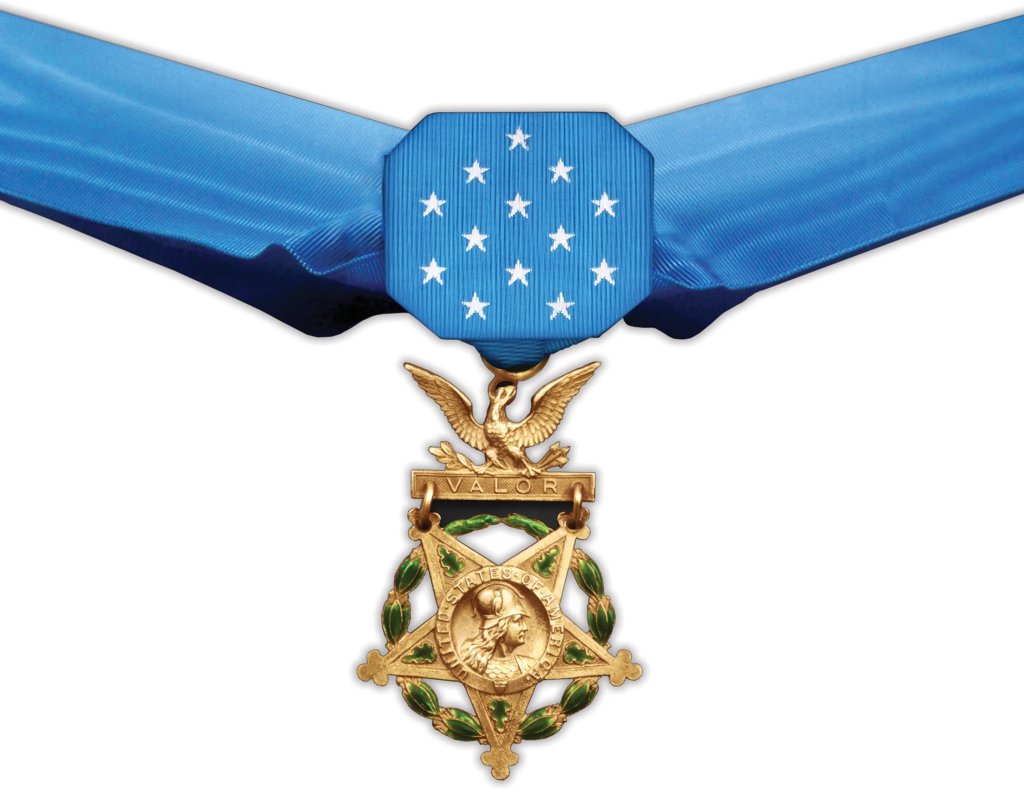
After the war, Okutsu returned to Hawai‘i not as a triumphant hero but as a man who had seen too much to glorify it. He lived humbly, rejecting praise, speaking rarely about his wartime experiences. When he looked at his medals, he saw not his own accomplishments but the faces of the men who never returned home. Like so many Nisei soldiers, he carried the memory of fallen comrades with a quiet reverence that defined the rest of his life. In 2000, when the United States finally revisited the wartime records of Japanese American soldiers—correcting decades of injustice and prejudice—Okutsu was awarded the Medal of Honor. He accepted it with a modest smile, the same quiet grace he had shown on the battlefield, as though the medal belonged not to him alone but to every Nisei who had fought and bled beside him.
Yukio Okutsu's story is not one of loud triumph or flamboyant heroism. His legacy is built on silence—the steady silence of a man who acted when action meant death, who stepped forward when others hesitated, who cut a path not for glory but so his brothers-in-arms could survive. Today, his name lives on in Hawai‘i, etched into the walls of the Yukio Okutsu State Veterans Home, but more importantly, his spirit stands as one of the brightest lights in the long, proud saga of the 442nd Regimental Combat Team. He remains the silent blade that carved through the chaos of war, a symbol of unspoken courage, unwavering duty, and the quiet, unbreakable strength of the Nisei soldier.
Medal of Honor citation
His official Medal of Honor citation reads:
Technical Sergeant Yukio Okutsu distinguished himself by extraordinary heroism in action on 7 April 1945, on Mount Belvedere, Italy. While his platoon was halted by the crossfire of three machine guns, Technical Sergeant Okutsu boldly crawled to within 30 yards of the nearest enemy emplacement through heavy fire. He destroyed the position with two accurately placed hand grenades, killing three machine gunners. Crawling and dashing from cover to cover, he threw another grenade, silencing a second machine gun, wounding two enemy soldiers, and forcing two others to surrender. Seeing a third machine gun, which obstructed his platoon's advance, he moved forward through heavy small arms fire and was stunned momentarily by rifle fire, which glanced off his helmet. Recovering, he bravely charged several enemy riflemen with his submachine gun, forcing them to withdraw from their positions. Then, rushing the machine gun nest, he captured the weapon and its entire crew of four. By these single-handed actions he enabled his platoon to resume its assault on a vital objective. The courageous performance of Technical Sergeant Okutsu against formidable odds was an inspiration to all. Technical Sergeant Okutsu's extraordinary heroism and devotion to duty are in keeping with the highest traditions of military service and reflect great credit on him, his unit, and the United States Army.
The ghosts of the battlefield are counting on us to remember them. Help preserve their stories.