The Radio in the 1940s The Heart of the Family and the Home
In the 1940s, the radio united families, crossed class lines, and became the heart of the home—bringing news, stories, and connection to daily life.
March 25, 2026

 In the 1940s, the radio was more than just a piece of technology—it was the center of the household. Positioned carefully in the living space, it wasn't tucked away or treated as background noise. It was placed where it could be heard, where people could gather, and where it became part of daily life.
Families didn't simply turn on the radio—they gathered around it.
Evenings often followed a familiar rhythm. Dinner would end, the house would quiet, and family members would settle in close. Chairs would be pulled nearer, children might sit on the floor, and the radio would come to life. It became the voice of the home, filling the room with stories, music, laughter, and sometimes moments of tension that held everyone still.
By this time, the radio had moved beyond being a luxury. What had once been a new and somewhat expensive technology in the 1920s had, by the 1940s, become something found in the majority of American homes. It crossed class lines in a way few technologies had before. Wealthier families might have large, beautifully crafted console sets, while working-class homes often had smaller tabletop radios—but the experience was the same. Across cities and rural communities alike, families were listening to the same voices, the same music, the same news. In many ways, the radio had become something close to a necessity—not for survival, but for connection.
During World War II, that connection became even more important. The radio served as a lifeline to the outside world. News bulletins carried updates from overseas, bringing the realities of the war directly into American homes. For many families, those broadcasts weren't just information—they were personal. Somewhere in those distant reports could be the fate of a loved one. The voice on the radio carried weight, urgency, and sometimes reassurance in uncertain times.
Beyond the news, the radio was the primary source of entertainment. Programs were not casually consumed—they were anticipated. Families knew the schedule and planned their evenings around it. Dramas, comedies, mysteries, and music programs became shared experiences. Without visuals, listeners relied on imagination, creating scenes in their minds that often felt more vivid than anything seen on a screen.
Something so small became such a significant part of the household. In many ways, it almost became another member of the family. It had a presence. It had a voice. It was something everyone listened to, reacted to, and shared together. It wasn't just an object—it was part of the rhythm of life inside the home.
At Ghosts of the Battlefield, we try to capture exactly that feeling in our displays. It's not just about showing a radio—it's about showing how it lived. Placed on a table, surrounded by everyday items, it tells the story of a family gathered nearby, listening together. Just like with so many artifacts, we balance preserving the object itself with preserving the story around it—the human experience that gave it meaning.
The radio didn't stop life—it gathered it. People played games, read, or worked on small tasks, all within earshot. It created a shared space where individual activities blended into a collective experience. Everyone in the room was connected, not just to the broadcast, but to each other.
That is what made the radio the heart of the home.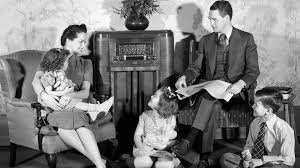
It wasn't simply about what came through the speaker—it was about what formed around it. In a time before screens pulled people apart, the radio pulled them together. It created shared moments, shared emotions, and a shared understanding of the world beyond the front door. Rich or poor, city or countryside, families sat within earshot of the same voices, living the same stories in real time. For a generation shaped by hardship and war, that mattered. The radio didn't just fill a room with sound—it filled a home with connection.