The Gun That Was Never Meant to Last: The FP-45 Liberator Comes to Ghosts of the Battlefield
Designed to arm resistance fighters and undermine tyranny with a single shot, the FP-45 Liberator is one of the most fascinating and unconventional weapons of World War II—and we are incredibly proud to add to our gallery.
July 19, 2026

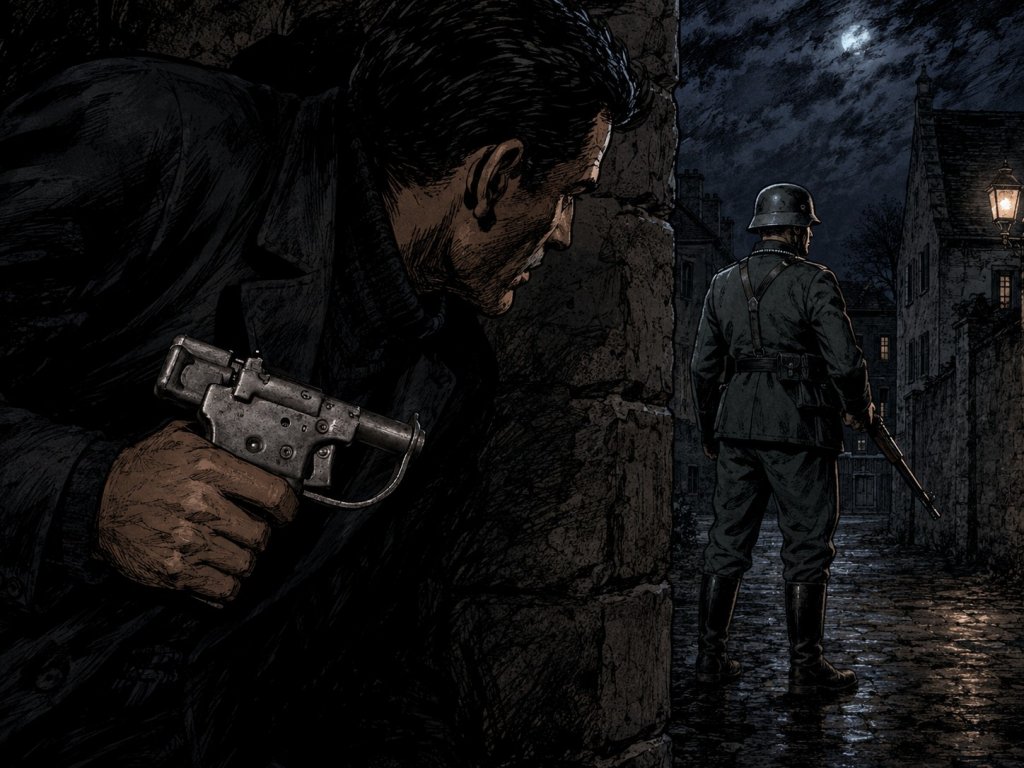
Designed to arm resistance fighters and undermine tyranny with a single shot, the FP-45 Liberator is one of the most fascinating and unconventional weapons of World War II—and we are incredibly proud to add this extraordinarily rare artifact of American ingenuity and psychological warfare to the Ghosts of the Battlefield collection.
When most people think of iconic American firearms of the Second World War, they picture the M1 Garand, the Thompson submachine gun, or the legendary Colt 1911. Few have ever heard of the FP-45 Liberator. Fewer still have ever seen one in person.
That is precisely what makes it so extraordinary.
We are immensely proud to announce the addition of an original FP-45 Liberator pistol to the Ghosts of the Battlefield collection. Though crude in appearance and often overlooked by history, the Liberator represents one of the boldest, most unconventional, and most ambitious weapons programs ever undertaken by the United States during wartime. It is a firearm born not only of necessity but of imagination—a weapon designed to inspire resistance, spread fear among occupying armies, and remind oppressed peoples that freedom might someday arrive in the palm of their hand.
 A Weapon of Psychological Warfare
 A Weapon of Psychological Warfare
The story of the Liberator begins in 1942, when much of Europe and large portions of Asia lay under Axis occupation. Resistance movements existed throughout occupied territories, but they often lacked something essential—arms.
A Polish military attaché proposed a simple but revolutionary concept to American planners: what if the United States could manufacture millions of extremely inexpensive pistols that could be secretly distributed to resistance fighters? The idea wasn't to provide them with a battlefield weapon. The idea was to give them an opportunity.
The United States Army's Joint Psychological Warfare Committee embraced the concept almost immediately. Their vision was astonishingly simple. A resistance fighter would use the pistol to eliminate an enemy sentry or isolated soldier, seize his rifle or submachine gun, and disappear back into the shadows. One shot could become many. One pistol could become a captured enemy weapon. Most importantly, one act of resistance could inspire countless others.
The psychological component of the project was equally important. Imagine being a German occupation soldier in France or Norway knowing that millions of cheap American pistols could potentially be hidden anywhere—in barns, attics, or beneath floorboards. The mere possibility that civilians might be armed was intended to complicate occupation efforts and force enemy forces to divert manpower and resources toward internal security.
In many ways, the FP-45 was less a firearm and more a tool of psychological warfare.
The Simplest American Military Firearm Ever Produced
The FP-45 Liberator may very well be the crudest firearm ever mass-produced by the United States military.
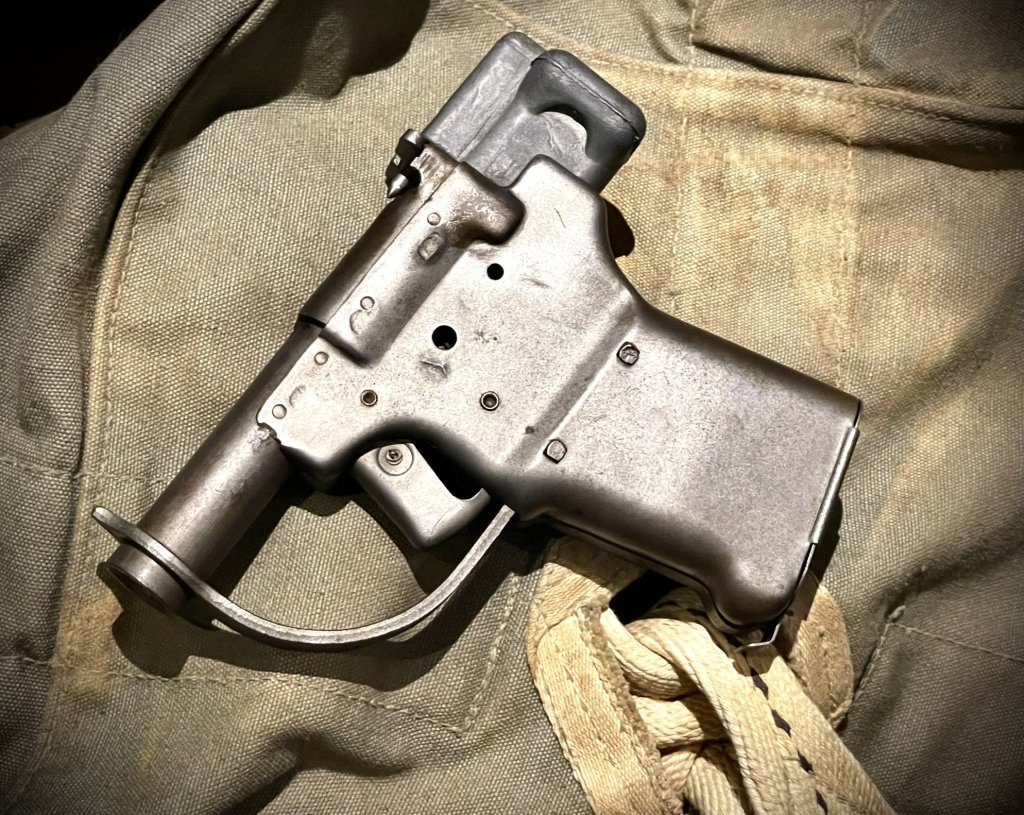
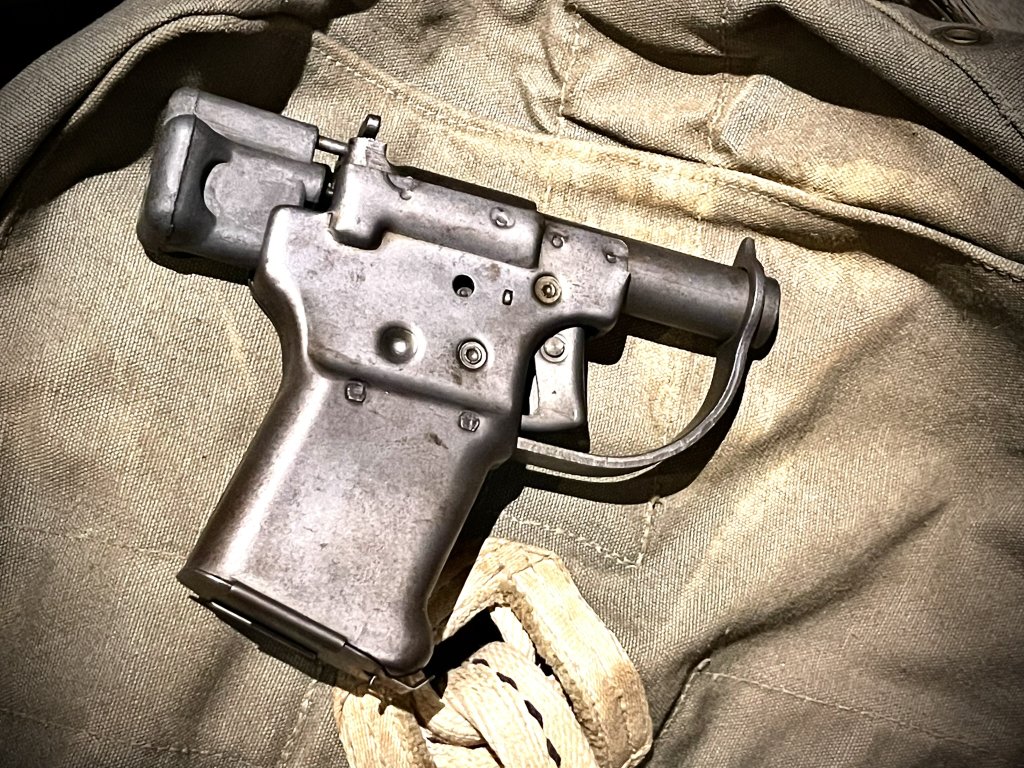
 At just over five and a half inches long and weighing approximately one pound, it was a single-shot .45 caliber pistol constructed primarily of stamped steel components. It contained only twenty-three parts and featured a smoothbore barrel rather than rifling. It was never intended to be accurate beyond a few feet. In fact, its intended effective range was measured in feet rather than yards.
The Liberator wasn't designed to win gunfights.
It was designed to win opportunities.
Loading the pistol was cumbersome. After firing, the spent cartridge case had to be pushed out using a wooden dowel included in the package. Five rounds of ammunition could be stored in a compartment within the grip, and each pistol was issued with ten rounds of .45 ACP ammunition and a comic strip-style instruction sheet designed to overcome language barriers among resistance fighters throughout Europe and Asia.
Even its official designation was intentionally misleading. The government designated it the "Flare Projector, Caliber .45" or FP-45 in an effort to disguise its true purpose. Engineering drawings referred to the barrel simply as a "tube," while other components received equally innocuous names to preserve secrecy during production.
American Manufacturing at Its Finest
Perhaps the most remarkable aspect of the Liberator program is not its design—but how quickly it became reality.
 General Motors' Guide Lamp Division in Anderson, Indiana, was selected to manufacture the pistol. The same American industrial machine that was building tanks, aircraft, and military vehicles turned its attention to producing one of history's most unusual firearms.
The results were astonishing.
Approximately one million FP-45 Liberators were produced in just eleven weeks during the summer of 1942 by roughly 300 workers. Each pistol cost the United States government approximately $2.10 to manufacture. The entire project, from concept to completion, took only a matter of months. In an era before computer-controlled manufacturing or modern logistics systems, it remains one of the most impressive examples of wartime industrial production ever accomplished.
American industry had demonstrated that it could build almost anything—and build it quickly.
Did It Actually Work?
Ironically, one of the most famous secret weapons of World War II was seldom used as originally intended.
While one million Liberators were manufactured, relatively few were ever distributed to resistance movements. Large quantities were shipped overseas, including approximately 100,000 sent to China, while others found their way to resistance organizations in Greece and the Philippines. Plans to blanket occupied Europe with the pistols never materialized on the scale originally envisioned.
Many military officials questioned whether the weapon justified the logistical effort required to distribute it. Others feared that if resistance fighters possessed firearms, German reprisals against civilians would be severe. By war's end, enormous quantities of Liberators remained undistributed.
The vast majority were destroyed, scrapped, or dumped into the ocean following the war. Millions of dollars' worth of wartime production quite literally disappeared forever.
 Why Is It So Rare Today?
 Why Is It So Rare Today?
This is perhaps the greatest irony of the FP-45 Liberator.
One million were produced, yet original examples are remarkably scarce today.
Because they were considered disposable weapons with virtually no military value after the war, few were preserved. They were never intended to become collectibles. They were never intended to sit in museum displays. They were never intended to survive.
Collectors often refer to the Liberator as one of the most difficult World War II American firearms to acquire in original condition. Complete examples that retain their original packaging, ammunition, and instruction sheets are particularly desirable and exceptionally uncommon.
Unlike an M1 Garand or Colt 1911—which were treasured and preserved by generations of veterans—the Liberator was viewed as an expendable tool of war. That expendability is precisely what has made surviving examples so historically significant today.
More Than a Gun
The FP-45 Liberator occupies a fascinating place in military history because it challenges our traditional understanding of what a weapon can be.
This was not a firearm designed to dominate a battlefield. It was designed to empower the powerless.
It represented an idea—that ordinary people living under occupation could resist tyranny. That freedom could begin with a single shot fired in a dark alley or on a lonely road somewhere in occupied Europe.
In many ways, the Liberator is a physical manifestation of one of America's greatest strengths during World War II: its ability to combine industrial might, strategic thinking, and unconventional warfare into something entirely unique.
The Liberator would also help establish concepts of clandestine weapons distribution and psychological warfare that would influence intelligence and special operations communities for decades to come.
A Crown Jewel of the Collection
Some artifacts are beautiful. Some are rare. Some tell extraordinary stories.
The FP-45 Liberator does all three.
At first glance, it is little more than stamped sheet metal—a crude, almost toy-like pistol that seems unworthy of the legends surrounding it. Yet within that unassuming appearance lies one of the most fascinating stories of World War II.
It is the story of resistance fighters waiting in occupied nations. It is the story of American factories accomplishing the impossible. It is the story of psychological warfare and unconventional thinking. Above all, it is the story of a nation determined to provide hope to those fighting for their freedom, even if that hope came packaged in a cardboard box with ten rounds of ammunition and a simple comic-strip instruction sheet.
We could not be more proud to welcome the FP-45 Liberator into the Ghosts of the Battlefield collection.
Some artifacts tell us how wars were fought.
Others tell us what free people were willing to do to help liberate the world.
The FP-45 Liberator tells both stories.
The Ghosts of the Battlefield Military Museum is honored to preserve this remarkable artifact of World War II history so that future generations may learn not only about the weapon itself, but about the ideas of resistance, ingenuity, and liberty that inspired its creation.
Every artifact has a story. Click here to help us save the next one.