Hidden in Plain Sight, A Vietnam War Booby Trap
A crude Vietnam War booby trap reveals how simple, hidden devices wounded soldiers and turned the jungle itself into a deadly weapon.
April 5, 2026


It is easy to walk past something like this without giving it a second thought. A rough block of wood. A cluster of crude metal spikes. No markings, serial numbers, or carefully manufactured parts—nothing that immediately suggests the danger it once represented. But once its purpose is understood, the object becomes something entirely different. This is a handmade spike-board booby trap, reportedly constructed by North Vietnamese forces during the Vietnam War and intended for use against American or allied troops moving through the jungle.
Spike boards, sometimes associated with punji traps, were simple devices built around a flat wooden or bamboo base fitted with sharpened spikes, nails, or pieces of metal. They could be placed in shallow holes, along trails, beneath vegetation, or in other locations where an unsuspecting soldier might step or fall. Leaves, soil, grass, and debris concealed the trap, allowing it to blend into the surrounding ground until someone placed weight upon it.
This example is roughly constructed from materials that were likely readily available. The wooden base appears to have been cut and assembled by hand, while the spikes may have been fashioned from scrap or repurposed metal. There is nothing refined about its appearance, but refinement was unnecessary. Devices such as this were meant to be inexpensive, easy to produce, difficult to detect, and capable of causing a serious wound with a single misplaced step.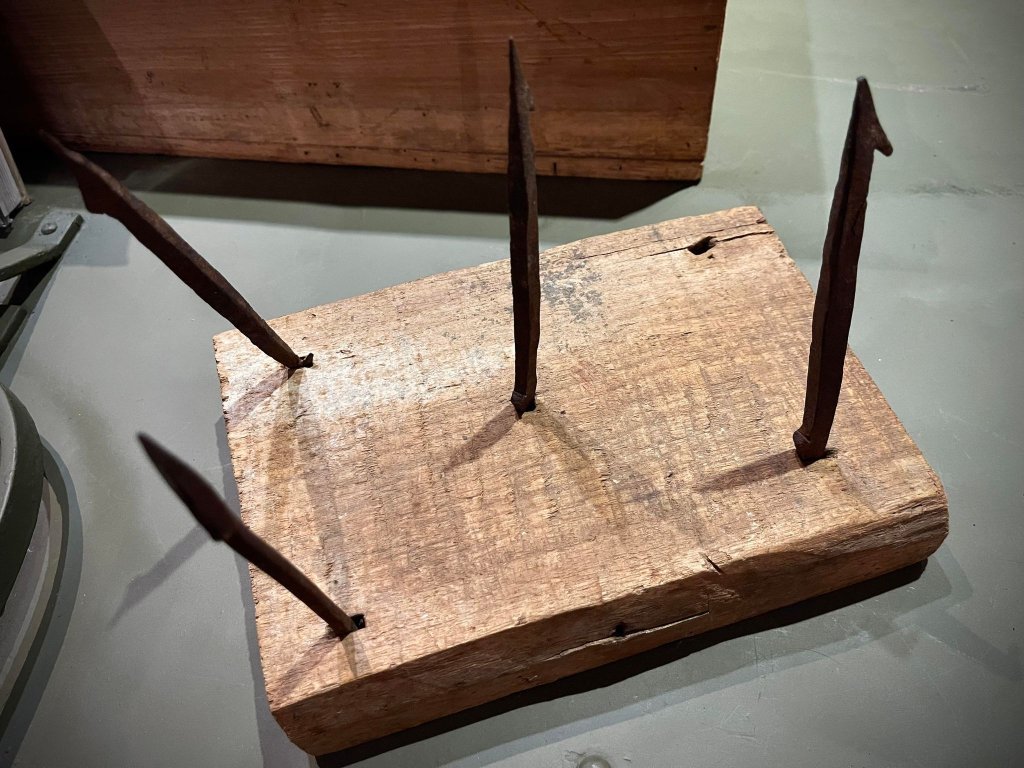
Booby traps have appeared in many conflicts, particularly in guerrilla and irregular warfare. Forces unable to match an opponent’s aircraft, artillery, vehicles, communications, or industrial capacity have often relied upon concealment, improvisation, and knowledge of the terrain. A crude device could remain in place long after the person who planted it had disappeared, forcing the opposing force to move more slowly and cautiously.
During the Vietnam War, booby traps became one of the most feared features of the ground war. The North Vietnamese Army and Viet Cong used a wide variety of improvised traps against American, South Vietnamese, and allied personnel. These devices could be hidden along trails, around defensive positions, inside abandoned structures, near supplies, or in areas soldiers might naturally choose for rest or cover.
They were not always intended to kill outright. A badly wounded soldier could require immediate treatment, evacuation, and the assistance of several other men. One casualty might slow an entire patrol, expose a unit during a rescue, or remove additional soldiers from the fight as they carried the wounded man to safety. In that way, a small trap made from wood and scrap metal could have an effect far greater than its size suggested.
 The psychological impact could be just as serious as the physical danger. For American troops moving through the jungle, every step could carry risk. A worn trail might offer easier movement, but it might also be watched or trapped. A clearing could appear safe while concealing hazards beneath the grass. An abandoned position, discarded object, doorway, or patch of disturbed earth might demand careful inspection before anyone approached.
The enemy did not have to be visible—or even nearby—for the threat to remain present. The landscape itself seemed capable of attacking. Jungle vegetation concealed movement, reduced visibility, and hid devices that could remain dangerous for days, weeks, or longer. Soldiers had to divide their attention between possible enemy fire and the ground directly beneath their boots.
Military forces developed countermeasures to locate and neutralize booby traps, including visual inspection, probing, mine-detection equipment, specialized training, and the use of engineers or explosive-ordnance personnel. Yet devices built largely from wood, bamboo, and other nonmetallic materials could be especially difficult to locate. Experience, patience, and constant awareness were often as important as technology.
Booby traps also created serious humanitarian and legal concerns. Devices that remain hidden or continue functioning after fighting has moved elsewhere may endanger civilians, children, returning residents, and anyone else who unknowingly enters the area. Their inability to distinguish between a soldier and a civilian has made certain forms of booby-trap warfare subject to international restrictions and widespread condemnation.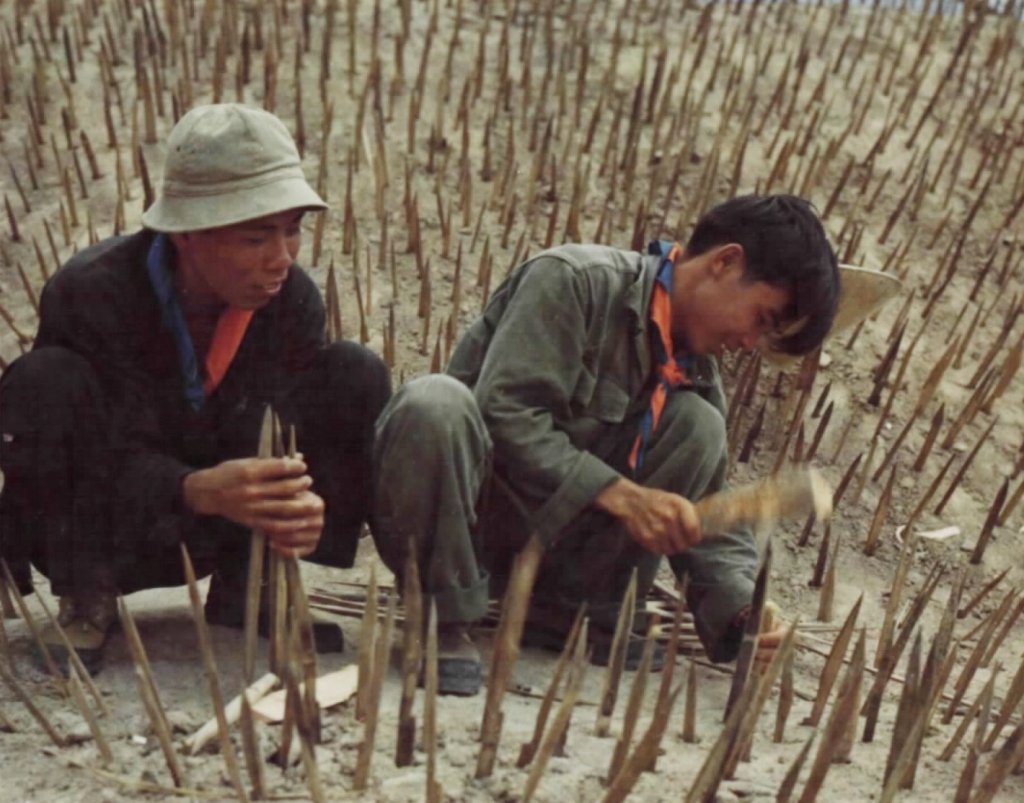
This particular spike board, brought home and eventually donated to Ghosts of the Battlefield, is a stark reminder of that hidden war. It was not produced in a large factory or issued through an established military supply chain. It was built by hand, likely from whatever materials were available, by someone adapting to the conditions of the battlefield.
Today, it no longer serves its original purpose. Behind glass and under the care of the museum, the object has been transformed from a concealed weapon into a historical witness. Visitors can examine the rough wood, the uneven construction, and the sharpened spikes without facing the danger once associated with them.
Its simplicity is what makes it so unsettling. It required no advanced technology, complicated machinery, or large investment of resources. It depended instead upon camouflage, patience, and the certainty that eventually someone might place a foot in the wrong location.
At Ghosts of the Battlefield, this artifact helps tell the story of a war defined not only by helicopters, artillery, rifles, and armored vehicles, but also by unseen dangers hidden beneath the jungle floor. It represents the ingenuity of irregular warfare, the vulnerability of soldiers moving on foot, and the constant strain placed upon men who knew that even apparently empty ground could be deadly.
What appears at first to be little more than a rough board and several spikes is therefore much more. It is evidence of how the Vietnam War was experienced at the individual level—one careful step at a time, in a landscape where danger could be everywhere and nowhere at once.