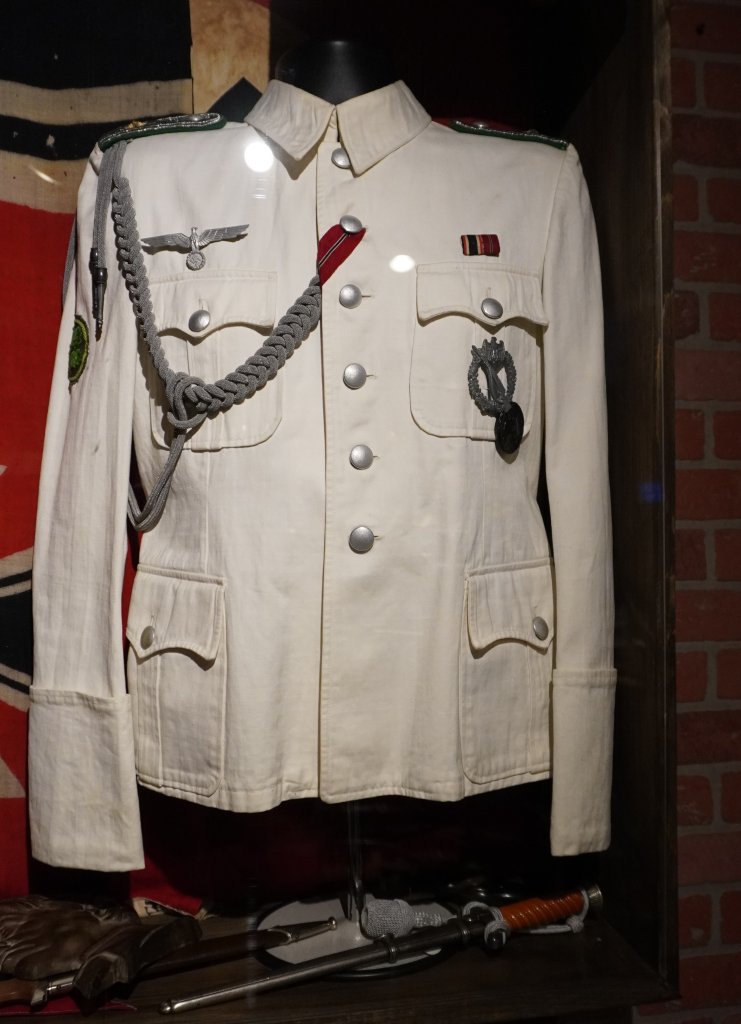
 War is often imagined in extremes—cold winters, muddy trenches, and shattered landscapes—but much of a soldier's experience is shaped by the ordinary conditions of daily service. Heat, dust, and long hours under the sun defined large portions of World War II, particularly in occupied Europe, the Mediterranean, and North Africa. The German summer service tunic reflects this reality, representing a practical adaptation to environment while maintaining the structure and identity of military uniform.
Introduced as part of the Wehrmacht's seasonal uniform system, the summer tunic was designed to replace the heavier wool garments worn in colder months. Constructed from lightweight cotton or linen-blend fabric, it provided increased breathability and comfort in warm climates, allowing soldiers to operate more effectively in heat without sacrificing durability. Its lighter color—typically field-gray with a faded or greenish tone—often appeared distinctly different from the darker wool uniforms associated with the German Army.
The design retained the formal elements of German military dress. The tunic featured a structured front with multiple pockets, a standing or lay-down collar, and shoulder boards indicating rank and unit affiliation. Insignia remained a central component, identifying the wearer's position within the military hierarchy. Even in a garment intended for practicality, the emphasis on order, uniformity, and visual distinction was preserved.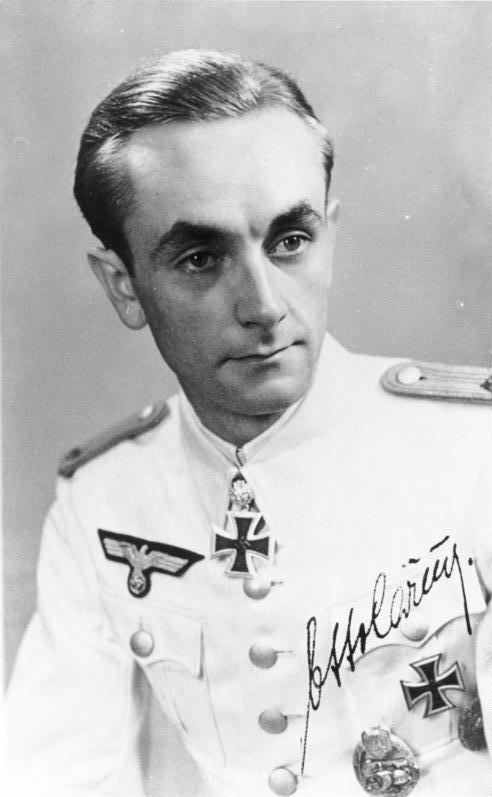
These tunics were worn across a range of roles, from frontline troops to administrative personnel, depending on climate and assignment. In regions such as North Africa, southern Europe, and the Eastern Front during warmer months, the summer tunic became a common sight. It was also used in garrison and rear-area settings, where maintaining a presentable appearance remained important.
Over time, the appearance of these tunics often changed with use. Exposure to sunlight, repeated washing, and field conditions could fade the fabric, soften its structure, and alter its original color. These variations reflect the lived experience of the soldier—an object shaped not only by its design, but by the environment in which it was worn.
From a historical perspective, the German summer service tunic illustrates the balance between regulation and adaptation. It demonstrates how military systems sought to maintain discipline and identity while responding to the practical demands of different climates and theaters of war.
As with all artifacts of this period, it must be understood within its broader context. The uniform represents the individual soldier and the daily realities of service, but it is also tied to the larger structure of the German military during World War II. Its preservation allows for examination and understanding, not endorsement.
Preserved within the collection of Ghosts of the Battlefield, this tunic serves as a tangible connection to the everyday experience of those who wore it. It reminds us that war is not only defined by moments of combat, but by the continuous, often overlooked conditions in which soldiers lived, worked, and endured.

 War is often imagined in extremes—cold winters, muddy trenches, and shattered landscapes—but much of a soldier's experience is shaped by the ordinary conditions of daily service. Heat, dust, and long hours under the sun defined large portions of World War II, particularly in occupied Europe, the Mediterranean, and North Africa. The German summer service tunic reflects this reality, representing a practical adaptation to environment while maintaining the structure and identity of military uniform.