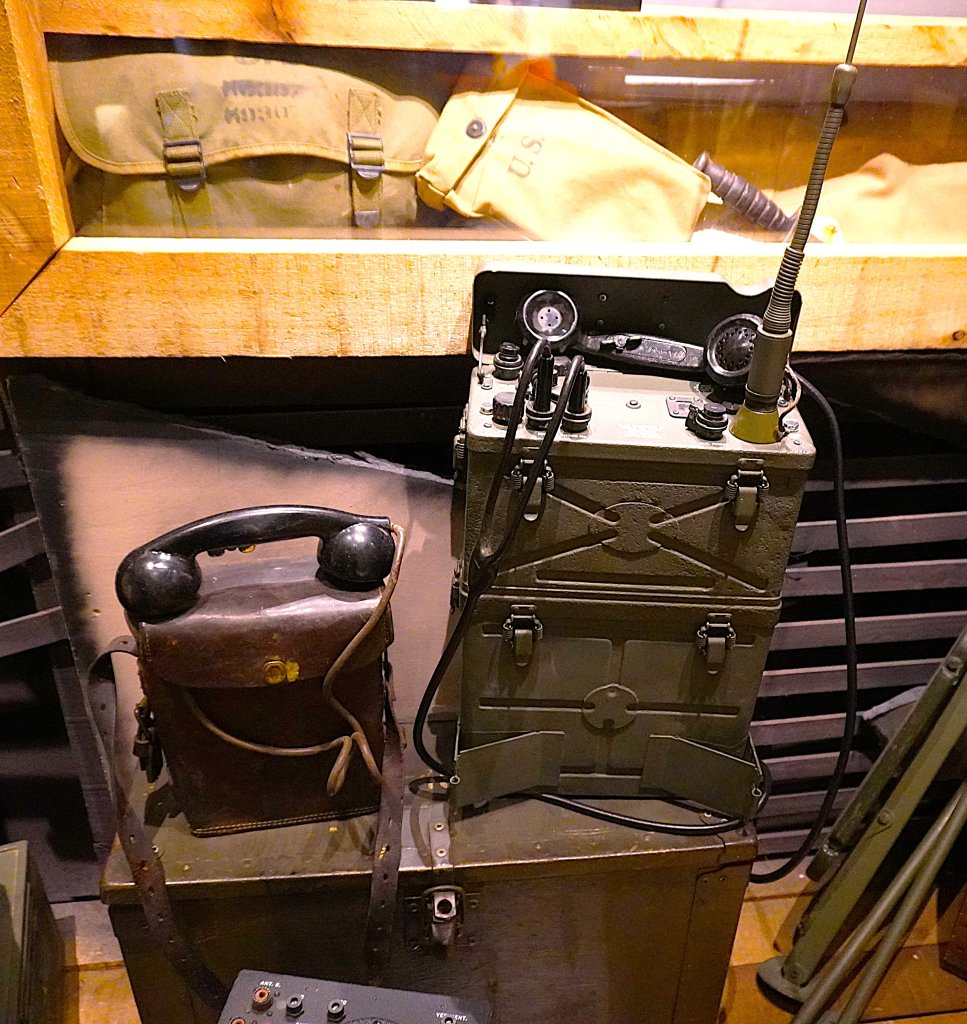
 By the time the United States entered the Second World War, one lesson had already become clear: victory would depend not only on firepower, but on communication. The ability to coordinate units across rapidly changing battlefields—through forests, across mountains, and under fire—required technology that could move with the soldier. The SCR-300 radio answered that need and, in doing so, transformed the way wars were fought.
Developed in the early 1940s, the SCR-300 was the first practical, mass-produced backpack radio system used by U.S. forces. Officially designated the Signal Corps Radio No. 300, it was a frequency-modulated (FM) radio, a significant advancement over earlier amplitude-modulated systems. This innovation provided clearer transmissions and reduced interference, allowing units to maintain reliable contact even in the chaos of combat.
Weighing approximately 35 pounds when fully equipped, the SCR-300 was carried by a dedicated radio operator, often moving alongside infantry units at the front. Housed in a rugged metal case and supported by a web harness, the radio included a handset, battery pack, and a long, flexible antenna that became a familiar silhouette on battlefields from Europe to the Pacific. Though heavy, it offered a level of mobility and reliability that had previously been unattainable.
In combat, the SCR-300 allowed commanders to maintain direct communication with forward elements, artillery units, and higher headquarters. This capability proved critical during operations where terrain or enemy action disrupted traditional lines of communication. Whether coordinating an advance, calling for support, or relaying intelligence, the radio operator became a vital link in the chain of command.
The system saw extensive use in campaigns such as the Italian Campaign, the Normandy invasion, and the push across Western Europe. It was equally valuable in the dense jungles of the Pacific, where terrain often isolated units and made wired communication impractical. In these environments, the SCR-300 helped ensure that units remained connected, even when separated by distance or obstacles.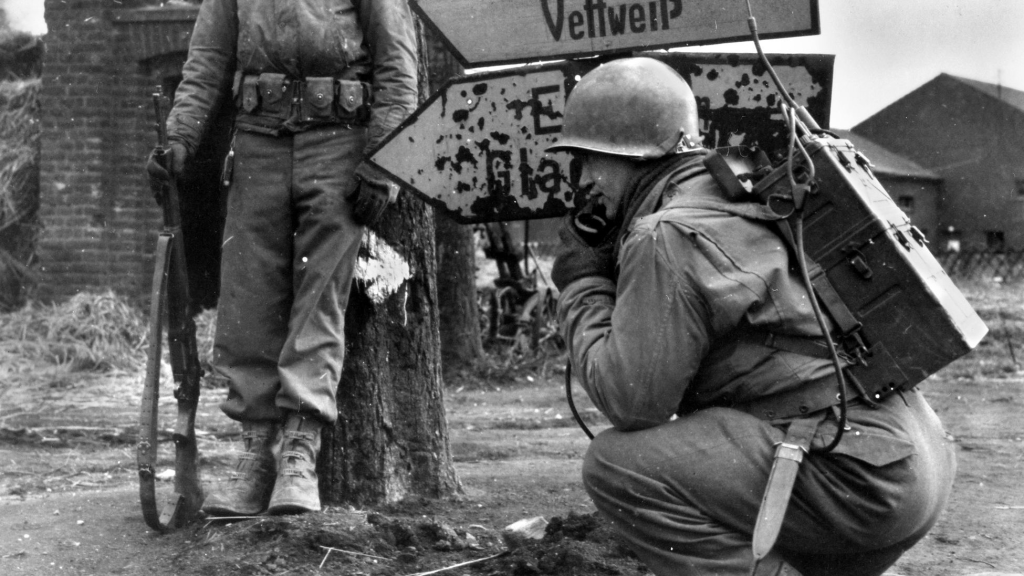
Beyond its technical capabilities, the SCR-300 represents a shift in the human experience of war. The radio operator carried not only equipment, but responsibility. He was often a primary target, as disrupting communication could cripple an entire unit's effectiveness. Despite this risk, these soldiers moved forward with the infantry, ensuring that orders, warnings, and calls for assistance could still be heard.
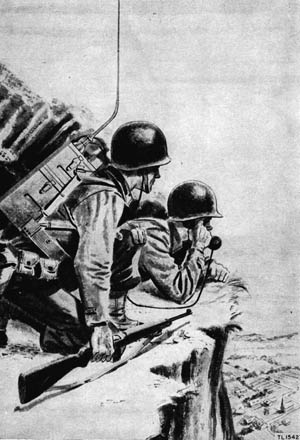 From a technological perspective, the SCR-300 marked a turning point in military communications. Its use of FM technology, combined with its portability, set the standard for future field radios. It demonstrated that effective communication could be maintained at the tactical level, fundamentally altering how units operated and coordinated in combat.
This artifact stands as a testament to the unseen dimension of warfare—the constant flow of information that underpins every movement, every decision, and every engagement. While weapons define the visible aspects of conflict, communication defines its outcome.
Preserved within the collection of Ghosts of the Battlefield, the SCR-300 serves as a reminder that even in the noise of battle, the ability to hear and be heard can mean the difference between confusion and coordination, isolation and unity, life and loss.

 By the time the United States entered the Second World War, one lesson had already become clear: victory would depend not only on firepower, but on communication. The ability to coordinate units across rapidly changing battlefields—through forests, across mountains, and under fire—required technology that could move with the soldier. The SCR-300 radio answered that need and, in doing so, transformed the way wars were fought.
 From a technological perspective, the SCR-300 marked a turning point in military communications. Its use of FM technology, combined with its portability, set the standard for future field radios. It demonstrated that effective communication could be maintained at the tactical level, fundamentally altering how units operated and coordinated in combat.