From Remagen to the Museum - The Field Jacket of T/3 Jack Headen
History is often preserved in steel — tanks, guns, and bridges that witnessed battle. But sometimes the most powerful artifacts are far more personal. A simple field jacket, worn by a soldier on a chaotic day in March 1945
March 13, 2026


History is often preserved in steel — tanks, guns, and bridges that witnessed battle. But sometimes the most powerful artifacts are far more personal. A simple field jacket, worn by a soldier on a chaotic day in March 1945, can carry with it the tension, courage, and even the humor of a moment that helped shape the final months of World War II.
Ghosts of the Battlefield is proud to announce the acquisition of an original M-1941 field jacket belonging to Technician Third Grade Jack Headen of the 811th Tank Destroyer Battalion, 9th Armored Division. The jacket was generously donated by Robert House, and has since been professionally cleaned and preserved to ensure that this remarkable artifact will endure for future generations.
What makes this jacket especially meaningful is the story behind the man who wore it — a soldier who found himself present during one of the most dramatic and decisive moments of the war in Europe: the capture and crossing of the Ludendorff Bridge at Remagen.
The Road to Remagen
By early March 1945, Allied forces had smashed through the German defenses along the western frontier and were pushing rapidly toward the Rhine River. For the Germans, the Rhine represented the last great natural barrier protecting the heart of the Reich. Every bridge across it was scheduled for destruction to slow the Allied advance.
On March 7, 1945, elements of the U.S. 9th Armored Division approached the small town of Remagen and made an astonishing discovery: the Ludendorff Bridge was still standing.
German engineers had attempted to destroy it, but the demolition charges failed to completely collapse the structure. The bridge was damaged and unstable, but it remained usable. American commanders immediately realized the opportunity before them — a chance to seize a crossing over the Rhine before the Germans could regroup.
What followed was one of the most daring and unexpected moments of the European war.
The 9th Armored Division Moves In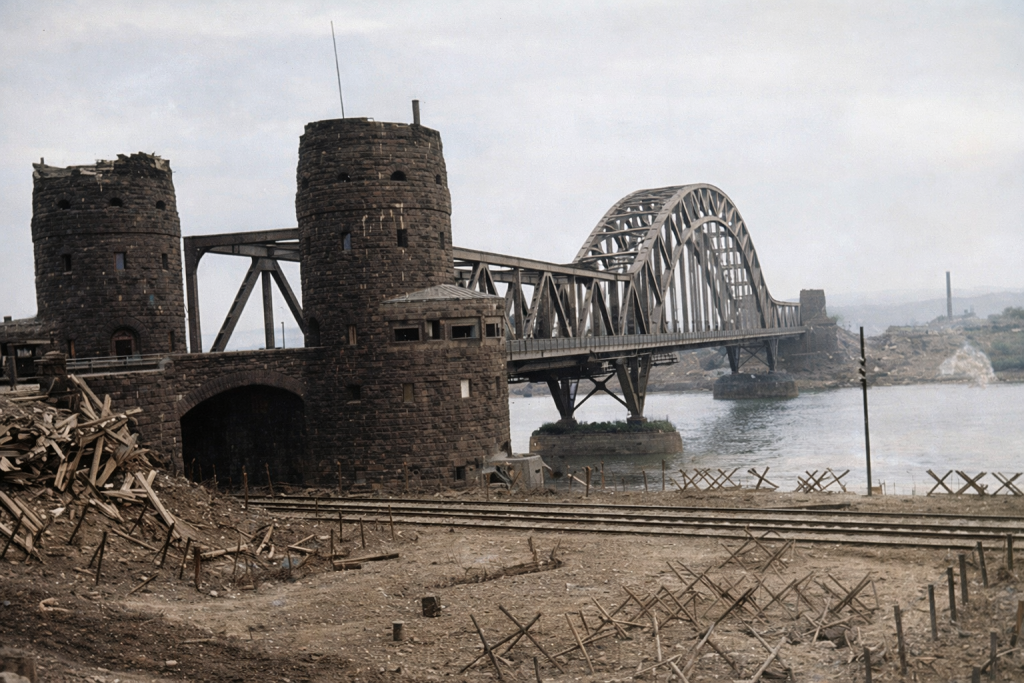
Units of the 9th Armored Division rushed forward to exploit the opportunity. Infantry from the 27th Armored Infantry Battalion sprinted across the bridge under fire, while engineers desperately worked to cut demolition wires and secure the structure before it could be destroyed.
Behind them came the armored vehicles that would reinforce the bridgehead and expand the Allied foothold east of the Rhine.
Among those vehicles were the M-10 tank destroyers of the 811th Tank Destroyer Battalion.
Tank destroyer units were designed to counter German armor, operating highly mobile vehicles equipped with powerful guns capable of destroying enemy tanks at long range. The M-10, armed with a 3-inch gun, was open-topped and lightly armored compared to standard tanks, but it was fast and deadly in experienced hands.
Technician Third Grade Jack Headen was one of the soldiers responsible for bringing one of those vehicles forward on that historic day.
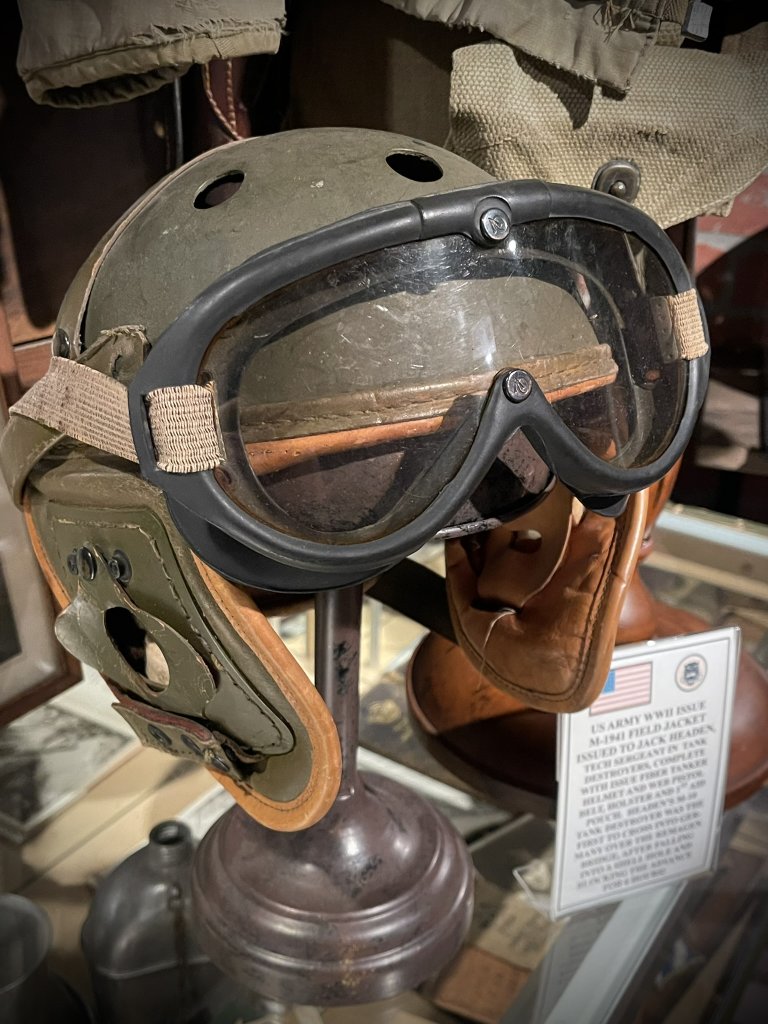 First Across — And Almost Stuck There
 First Across — And Almost Stuck There
The situation at Remagen was chaotic. Smoke filled the air, German artillery shells were crashing nearby, and the bridge itself had already been damaged by earlier demolition attempts. Vehicles crossing the narrow structure had to move carefully while under the constant threat of collapse or renewed enemy fire.
Headen's M-10 tank destroyer was among the first armored vehicles to approach the bridge.
What happened next has become one of those small, human moments in history that reveals just how unpredictable war can be.
As the column approached the entrance to the bridge, Headen skillfully — or perhaps not so skillfully, depending on how one tells the story — managed to drive his M-10 directly into a bomb crater at the approach.
The result was immediate.
The vehicle became stuck, temporarily blocking the path for the rest of the armored column attempting to reach the bridge.
For several tense minutes, traffic backed up behind the stranded tank destroyer while engineers, tank crews, and drivers worked frantically to clear the obstacle and keep the crossing moving. With German artillery falling in the area and the structural integrity of the bridge itself uncertain, those minutes must have felt far longer than they actually were.
Eventually, Headen managed to back the M-10 out of the crater and the column continued forward.
The crossing resumed.
And the Allied foothold east of the Rhine expanded.
In the grand scope of the war, the incident lasted only a few moments — but for the men waiting behind that stuck vehicle while enemy shells landed nearby, it was undoubtedly a memorable experience.
Today the story is often told with a touch of humor, the kind of dry, sarcastic storytelling that veterans frequently use to describe the unpredictable chaos of combat.

The Importance of Remagen
Despite the brief traffic jam caused by Headen's crater encounter, the capture of the Ludendorff Bridge proved to be one of the most significant operational breakthroughs of the war in Europe.
Within hours of its seizure, American engineers began reinforcing the damaged structure while troops poured across into Germany's industrial heartland.
Over the following days:
thousands of American soldiers crossed the Rhine
armored units established a major bridgehead
additional pontoon bridges were constructed nearby
German attempts to destroy the crossing failed
The unexpected success at Remagen shattered the German defensive strategy along the Rhine and accelerated the Allied advance into central Germany.
By the end of the month, American forces were spreading rapidly across the eastern bank of the river, collapsing organized German resistance and hastening the end of the war in Europe.
For the soldiers who were there that day, however, it was not yet history — it was simply another dangerous mission that had to be completed.
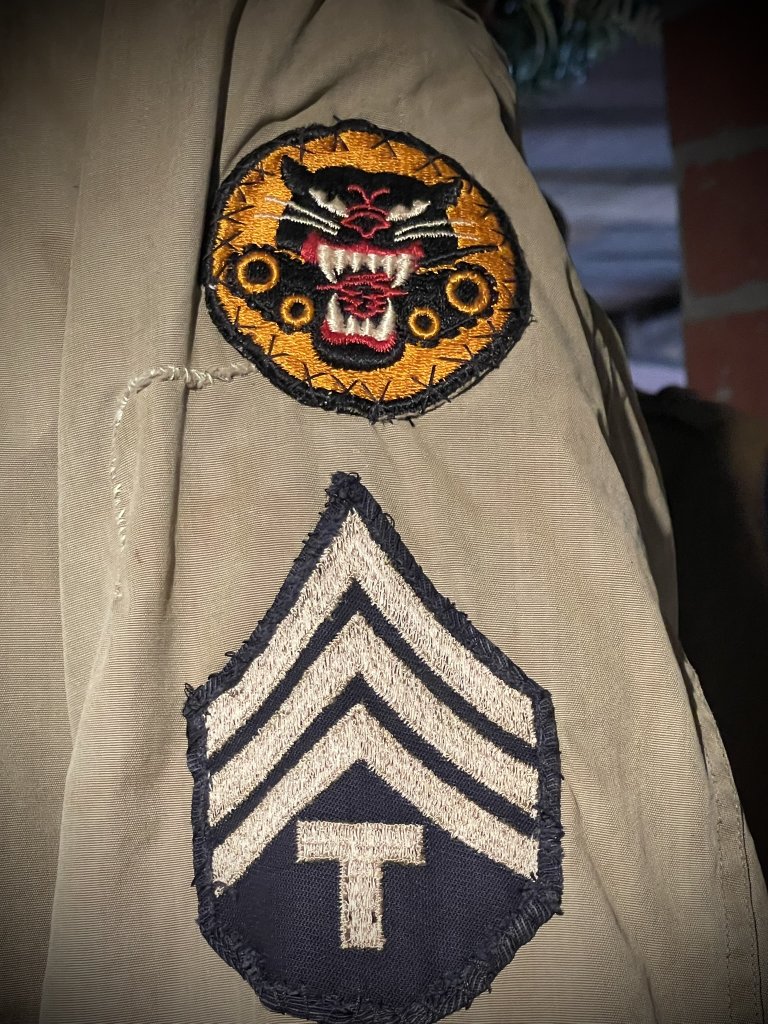 The M-1941 Field Jacket
 The M-1941 Field Jacket
The jacket now preserved in our collection is an M-1941 field jacket, one of the most recognizable American combat garments of World War II.
Originally issued widely to U.S. Army personnel beginning in 1941, the jacket became synonymous with the American soldier in the early years of the war. Made of cotton poplin with a wool lining, it was designed to provide lightweight protection against wind and mild cold while allowing freedom of movement for troops in the field.
Many soldiers wore the M-1941 jacket throughout the war, even after newer garments were introduced.
For tank destroyer crews like Jack Headen, the jacket would have been a familiar and practical part of daily life — worn while riding in vehicles, working on equipment, and enduring the unpredictable weather of the European campaign.
Unlike weapons or vehicles, clothing carries the physical imprint of the person who wore it. Folds in the fabric, wear patterns, and small imperfections become silent witnesses to the experiences of the soldier who depended on it.
This jacket once accompanied Headen through those tense moments in March 1945 when the Allied army surged across the Rhine.
Preserving the Artifact
The jacket was generously donated to Ghosts of the Battlefield by Robert House, ensuring that the story connected to it will remain accessible to the public.
Before entering the collection, the garment underwent professional conservation cleaning and stabilization. This process removed decades of accumulated contaminants while protecting the integrity of the original fabric and stitching.
Preserving textile artifacts requires careful handling and environmental control. Light exposure, humidity, and improper storage can degrade historic clothing rapidly. Through professional conservation, this jacket has been stabilized so that it can be safely displayed and interpreted for years to come.
A Personal Connection to a Historic Moment
Artifacts like Jack Headen's field jacket serve as powerful reminders that history is ultimately the story of individuals.
Behind every famous photograph or historic battlefield stands a collection of human experiences — moments of fear, tension, humor, and survival.
On March 7, 1945, Technician Third Grade Jack Headen found himself at the entrance to one of the most important bridges of World War II. His tank destroyer briefly — and rather memorably — blocked the path for several anxious minutes before the crossing resumed and history continued forward.
Today, his jacket allows us to connect directly with that moment.
It represents not only the soldier who wore it, but also the thousands of American servicemen who pushed across the Rhine and brought the war in Europe closer to its final conclusion.
Preserving Stories Before They Are Lost
At Ghosts of the Battlefield, our mission is not simply to collect objects, but to preserve the stories that live within them.
The M-1941 field jacket of T/3 Jack Headen is more than a piece of fabric. It is a witness to a moment when courage, urgency, and a bit of battlefield misadventure collided at one of the most important crossings of the Second World War.
Thanks to the generosity of Robert House and the work of professional conservation specialists, this artifact will now help tell that story to future visitors.
Because history is not just written in books.
Sometimes, it is worn on the shoulders of a soldier — and saved so that we may remember.
