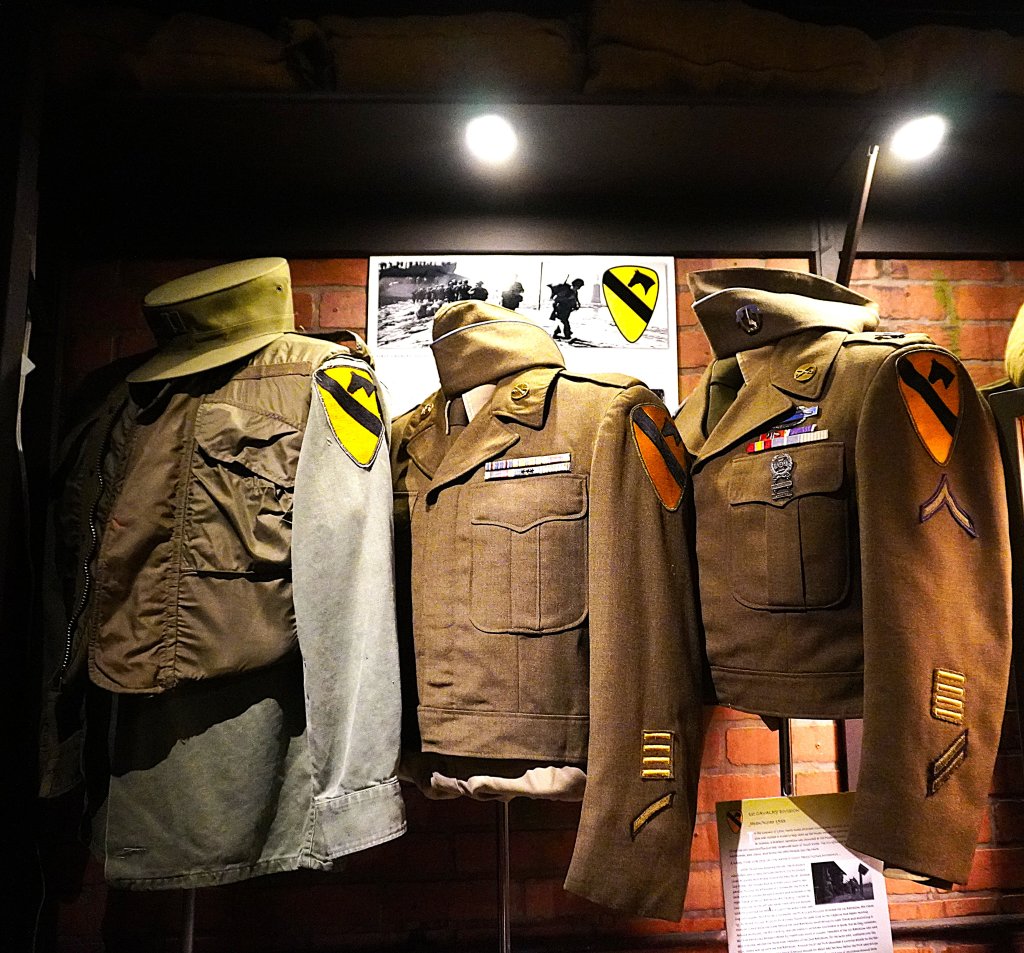
 When war broke out on the Korean Peninsula in June 1950, the 1st Cavalry Division was among the first American units committed to the fight. What followed was not a single kind of war, but several—rapid collapse and desperate defense, sweeping advances, sudden reversal, and finally a grinding stalemate. These uniforms represent the men who lived through each phase, and the division that carried its identity through them all.
In the opening months, the 1st Cavalry Division deployed into a collapsing front. North Korean forces pushed south with speed and momentum, forcing United Nations troops into a shrinking defensive perimeter around the port of Pusan. It was here, along the Pusan Perimeter, that the division fought to hold the line. Soldiers wearing uniforms like these dug in, endured artillery and infantry assaults, and stabilized a front that could not afford to break. The uniform in this phase was less about appearance and more about survival—sweat-soaked in summer heat, worn through constant movement and contact.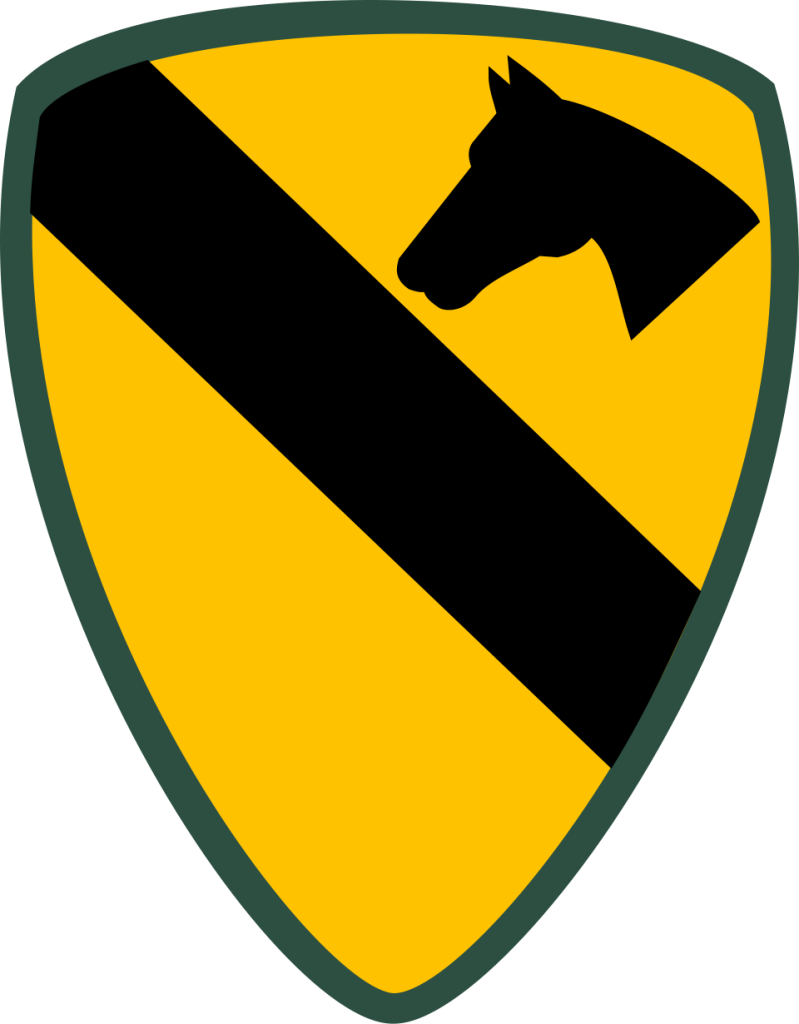
With the success of the Inchon landings in September 1950, the war shifted. The 1st Cavalry Division transitioned from defense to offense, advancing northward in a campaign that seemed to signal imminent victory. The same soldiers who had held ground at Pusan now moved rapidly across the Korean countryside. Their uniforms, still largely based on World War II patterns, accompanied them through this shift—carried from trench lines into maneuver warfare once again.
That momentum would not last.
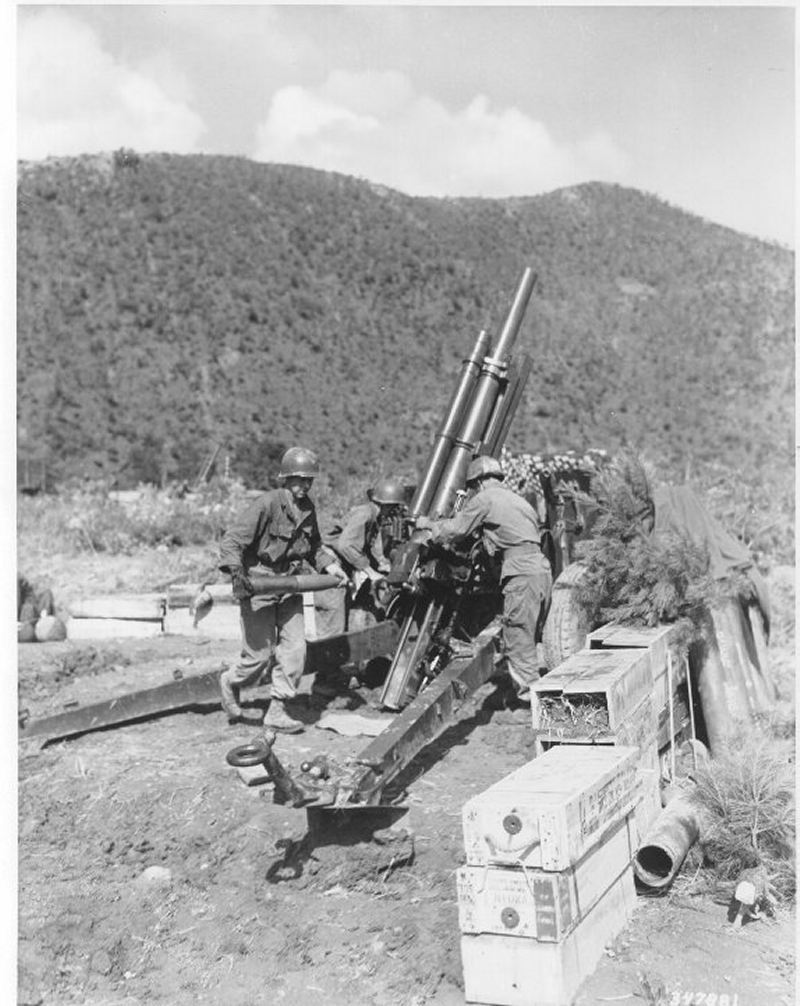 The entry of Chinese forces in late 1950 transformed the conflict almost overnight. The war returned with a new intensity, marked by massed attacks, sudden breakthroughs, and extreme environmental conditions. Winter descended with brutal force. Temperatures dropped well below freezing, and soldiers of the 1st Cavalry Division found themselves fighting not only an enemy, but the cold itself. It was during this phase that uniforms evolved most visibly. Heavy layering, field jackets, liners, and improvised cold-weather solutions became essential. The difference between life and death could rest as much on warmth as on firepower.
As the war settled into a prolonged stalemate along the 38th Parallel, the nature of combat changed again. The 1st Cavalry Division took part in holding key terrain—ridges, hills, and defensive positions that would be contested repeatedly. This was a soldier's war, fought at close range, often under artillery fire, with patrols, ambushes, and constant pressure. Uniforms in this phase reflected endurance. They were worn, repaired, layered, and adapted to conditions that demanded resilience over appearance.
Throughout all of this, one element remained unchanged—the division's identity. The yellow and black 1st Cavalry patch, visible on these uniforms, tied each soldier to a unit with deep roots in American military history. In Korea, that identity was carried into a new kind of conflict, one that required flexibility, determination, and the ability to adapt to rapidly changing conditions.
These uniforms reflect that journey.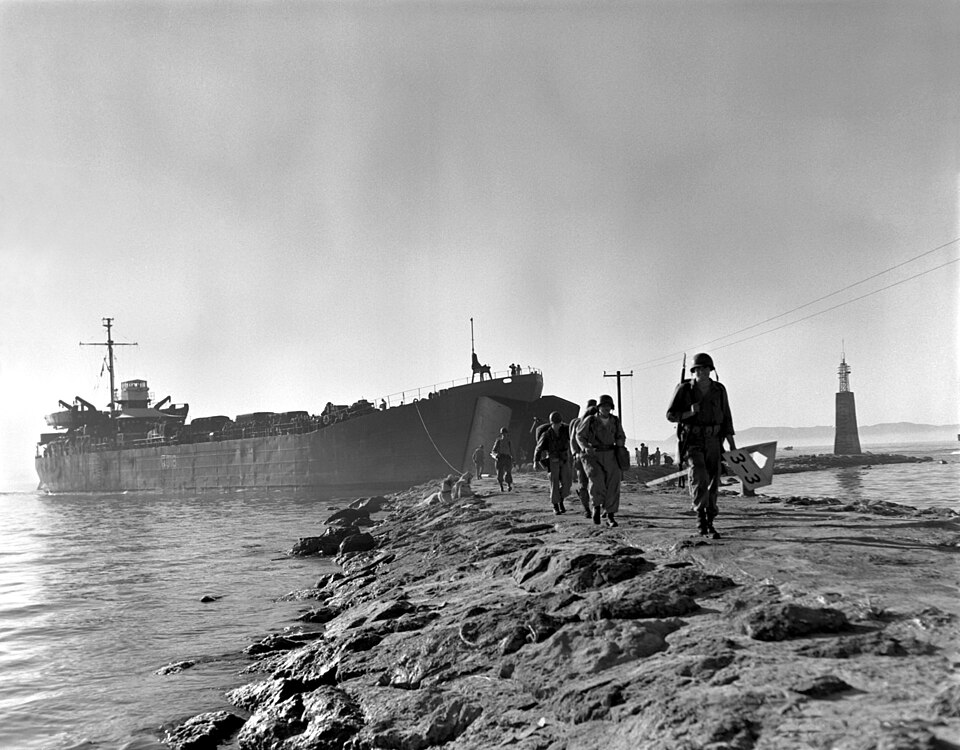
They were worn during the defense of Pusan, the advance north, the shock of Chinese intervention, and the long, grinding hold along the front. They represent soldiers who experienced the full arc of the Korean War—movement, collapse, recovery, and endurance.
Preserved within the collection of Ghosts of the Battlefield, these artifacts connect us directly to that experience. They remind us that the history of the 1st Cavalry Division in Korea is not defined by a single battle, but by its ability to adapt, to hold, and to continue forward in a war that demanded everything of those who fought it.

 When war broke out on the Korean Peninsula in June 1950, the 1st Cavalry Division was among the first American units committed to the fight. What followed was not a single kind of war, but several—rapid collapse and desperate defense, sweeping advances, sudden reversal, and finally a grinding stalemate. These uniforms represent the men who lived through each phase, and the division that carried its identity through them all.
 The entry of Chinese forces in late 1950 transformed the conflict almost overnight. The war returned with a new intensity, marked by massed attacks, sudden breakthroughs, and extreme environmental conditions. Winter descended with brutal force. Temperatures dropped well below freezing, and soldiers of the 1st Cavalry Division found themselves fighting not only an enemy, but the cold itself. It was during this phase that uniforms evolved most visibly. Heavy layering, field jackets, liners, and improvised cold-weather solutions became essential. The difference between life and death could rest as much on warmth as on firepower.