 Not all weapons are carried into battle. Some are carried long before war begins.
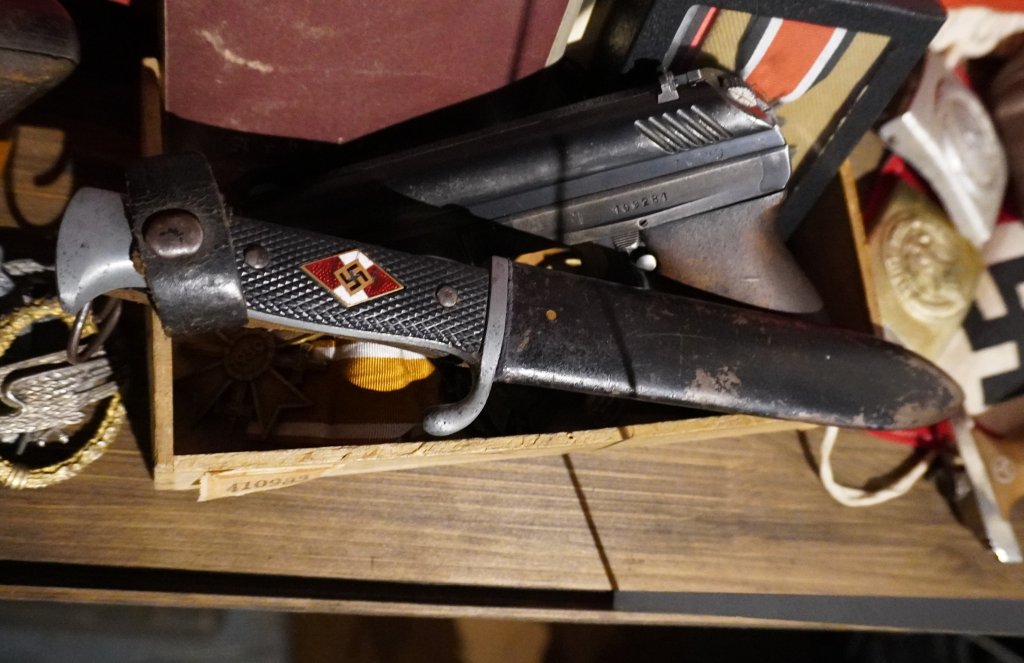
The Hitler Youth knife, issued to members of the Hitlerjugend (Hitler Youth), represents one of the most visible symbols of how Nazi Germany prepared its youngest generation for conflict. More than a simple utility blade, it was an object of identity—something earned, worn, and displayed as part of belonging to a state-driven movement that blurred the line between youth organization and military preparation.
Introduced in the mid-1930s, the knife was modeled in part on earlier German military designs, particularly bayonets of the First World War. It featured a single-edged blade, a simple crossguard, and a black grip inset with the distinctive diamond-shaped Hitler Youth insignia. Many blades were etched with the motto “Blut und Ehre†(“Blood and Honorâ€), reinforcing the ideological foundation of the organization.
To receive the knife, a member of the Hitler Youth was typically required to pass the Pimpf examination, a series of tests designed to instill physical fitness, discipline, and loyalty. The award of the knife marked a transition—an early step in a structured progression that would ultimately lead many of these boys into military service as they came of age during the war.
The knife's role was both practical and symbolic. It could be used as a tool in field exercises and outdoor activities, but its greater purpose was to reinforce belonging and commitment. Worn on the belt as part of the uniform, it served as a constant visual reminder of participation in the organization and the ideals it promoted.
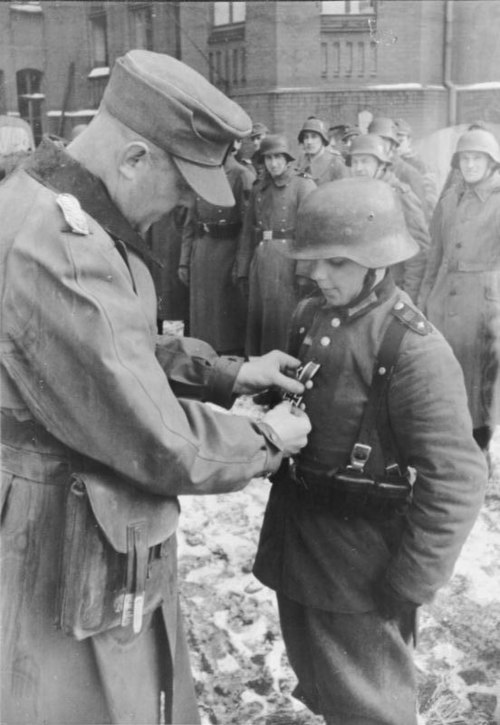
As the war progressed and Germany's situation deteriorated, members of the Hitler Youth were increasingly drawn into direct involvement in the conflict. In the final stages of World War II, some were issued weapons and sent into combat roles, defending cities and infrastructure in a desperate attempt to resist advancing Allied forces. For many, the transition from youth organization to battlefield was abrupt and unforgiving.
 From a historical perspective, the Hitler Youth knife reflects the broader system through which Nazi Germany sought to shape and control its population. It is an artifact not only of war, but of indoctrination—evidence of how ideology was introduced early, reinforced through structure and symbolism, and ultimately connected to military service.
This object must be understood within that context. It does not represent honor in the traditional military sense, but rather a period in history where youth were systematically prepared for conflict under an authoritarian regime. Its presence in a collection serves as a reminder of the consequences of that system.
Preserved within the collection of Ghosts of the Battlefield, the Hitler Youth knife stands as a tangible connection to this complex and troubling chapter of history. It invites reflection not only on the war itself, but on the processes that led individuals—especially the young—toward it.

 Not all weapons are carried into battle. Some are carried long before war begins.
 From a historical perspective, the Hitler Youth knife reflects the broader system through which Nazi Germany sought to shape and control its population. It is an artifact not only of war, but of indoctrination—evidence of how ideology was introduced early, reinforced through structure and symbolism, and ultimately connected to military service.