From the Empire of Japan Collection, Type 44 Cavalry Carbine
Imperial Japanese Army
April 14, 2026

 The Type 44 Cavalry Carbine was adopted by the Imperial Japanese Army in 1911 (the 44th year of Emperor Meiji's reign, which gives the weapon its name). It was developed specifically for mounted troops, based on the earlier Type 38 rifle, and chambered for the 6.5×50mm Arisaka cartridge.
The most distinctive and defining feature of the Type 44 is its permanently attached folding spike bayonet. Mounted beneath the barrel, the bayonet could be swung forward and locked into place when needed. This design eliminated the need for a separate bayonet and scabbard, reducing the number of items a cavalryman had to manage while mounted.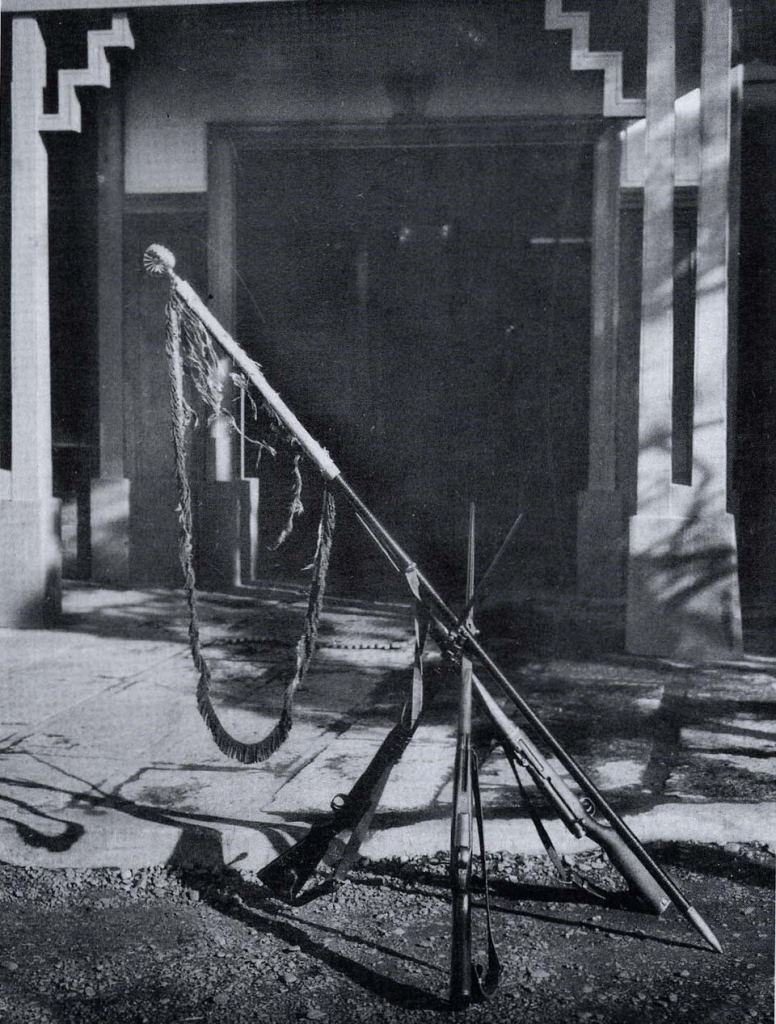
The rifle itself is shorter than the standard Type 38, making it easier to handle on horseback and in confined conditions. Like other Arisaka rifles, it uses a bolt-action system known for its strength and reliability.
Production of the Type 44 was limited compared to standard infantry rifles, and it was issued primarily to cavalry units, though it saw wider use over time. While designed in an era when cavalry still played a role in warfare, the carbine remained in service into the Second World War, even as the importance of mounted troops declined.
The Type 44 reflects a specific military need at a specific time—mobility combined with self-contained equipment. Its integrated bayonet is not an experimental feature, but a practical solution to the realities faced by the soldiers it was issued to.
Preserved within the collection of Ghosts of the Battlefield, this carbine represents a weapon built for movement, designed with purpose, and carried into a rapidly changing kind of war.