Firepower on the Move: The Military Mule and the M40 Recoilless Rifle
In war, mobility can be as important as firepower.
May 27, 2026

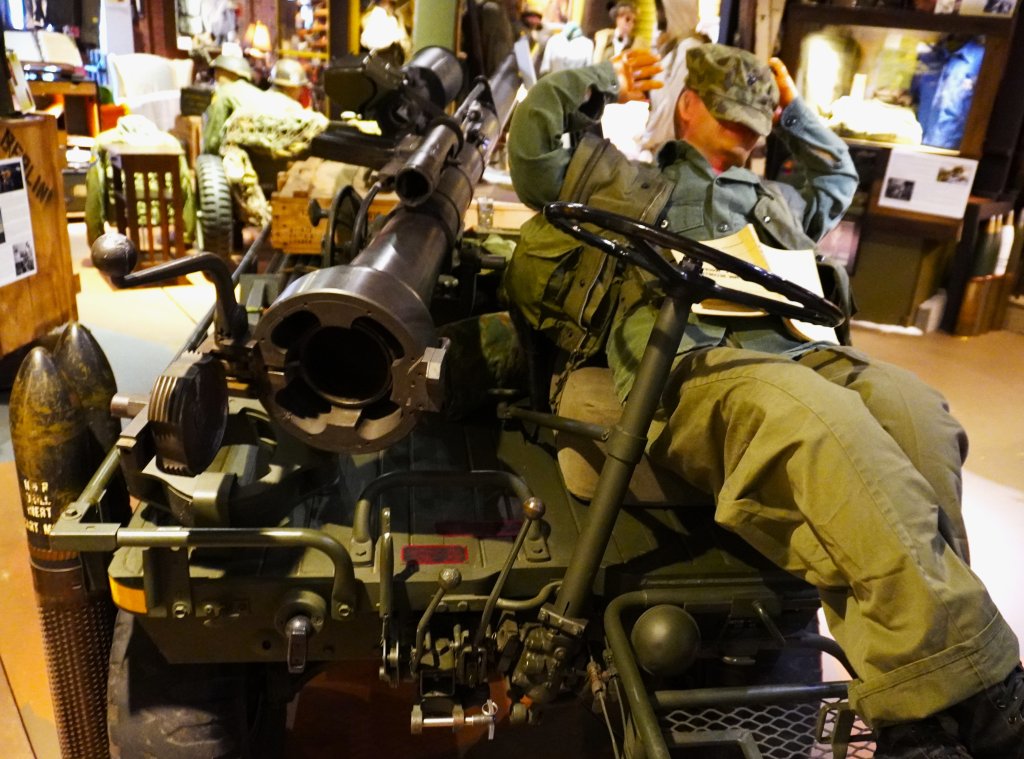 The military vehicle displayed here—commonly known as the “Military Mule”—was designed to solve a difficult battlefield problem: how to move men, ammunition, and heavy weapons across terrain where larger vehicles could not operate. Small, lightweight, and mechanically simple, the Mule became an important utility vehicle for the United States military during the Cold War and the Vietnam War.
Mounted on this platform is the 106mm M40 recoilless rifle, one of the most recognizable anti-armor and fire support weapons of its era.
 Despite its appearance, the M40 was not a conventional artillery piece. It was a recoilless rifle, meaning that gases were vented rearward when fired to reduce recoil, allowing a large-caliber weapon to be mounted on relatively light vehicles or fired from portable ground mounts. This gave infantry and airborne units the ability to deploy significant firepower without the need for heavy tanks or artillery systems.
The combination of the Mule and the M40 created a highly mobile weapons platform.
Light enough to travel over rough terrain and narrow trails, the Mule could carry the recoilless rifle, ammunition, and crew into positions inaccessible to larger vehicles. Airborne and special operations forces valued this capability, particularly in environments where mobility and rapid deployment were critical.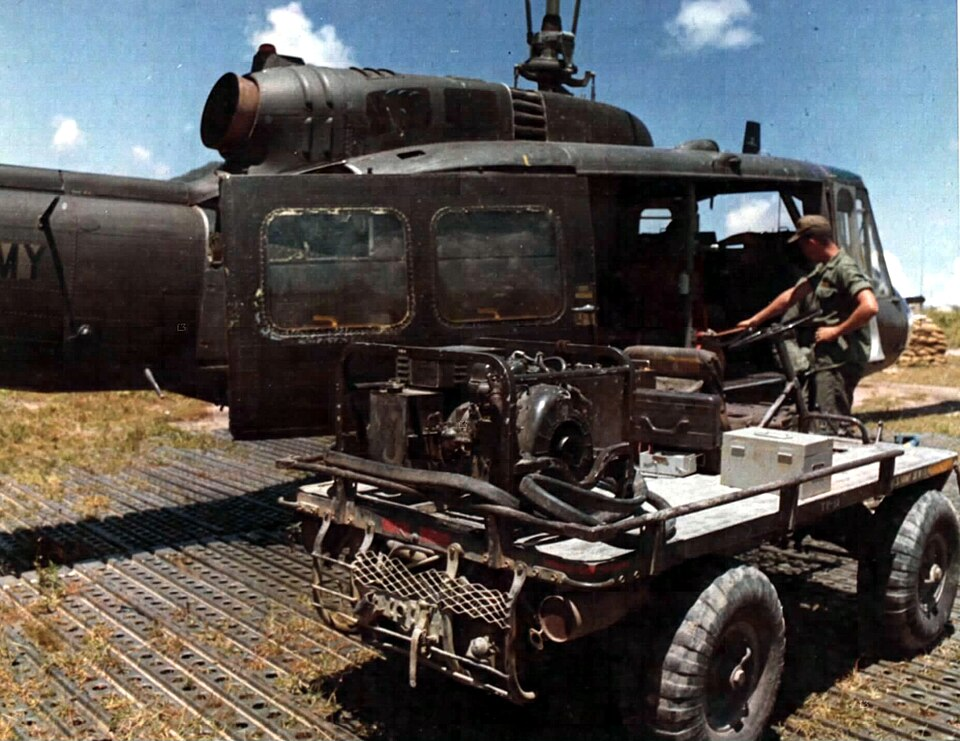
The M40 itself was designed primarily for anti-tank use, but in practice it proved effective against a wide range of targets, including bunkers, fortified positions, and troop concentrations. Its large high-explosive rounds gave infantry units immediate direct-fire support in situations where artillery or air support might not be available.
One of the weapon’s defining features was its spotting rifle, mounted above the main barrel. This smaller-caliber rifle fired tracer rounds with a trajectory similar to the main gun, allowing the crew to confirm their aim before firing the much larger and more powerful 106mm round.
In Vietnam, systems like this reflected the changing realities of warfare. Dense jungle, poor roads, and difficult terrain often limited the use of heavier armored vehicles. Lightweight, adaptable platforms became increasingly valuable, especially for units operating in remote or rapidly changing combat environments.
 But the Mule itself tells another story.
It was not armored. It offered little protection to its crew. Soldiers riding or operating these vehicles depended on speed, terrain, and tactical positioning rather than heavy defense. In many ways, it embodied a broader military philosophy of the era: mobility first.
Look closely at the vehicle and weapon together.
They represent a balance between portability and destructive capability—a way of bringing heavy firepower into places where conventional systems could not easily go.
Preserved within the collection of Ghosts of the Battlefield, this display reflects the constant military challenge of adapting weapons to terrain, technology, and the demands of modern war. It is a reminder that sometimes battlefield effectiveness does not come from the largest machine, but from the ability to place firepower exactly where it is needed most.