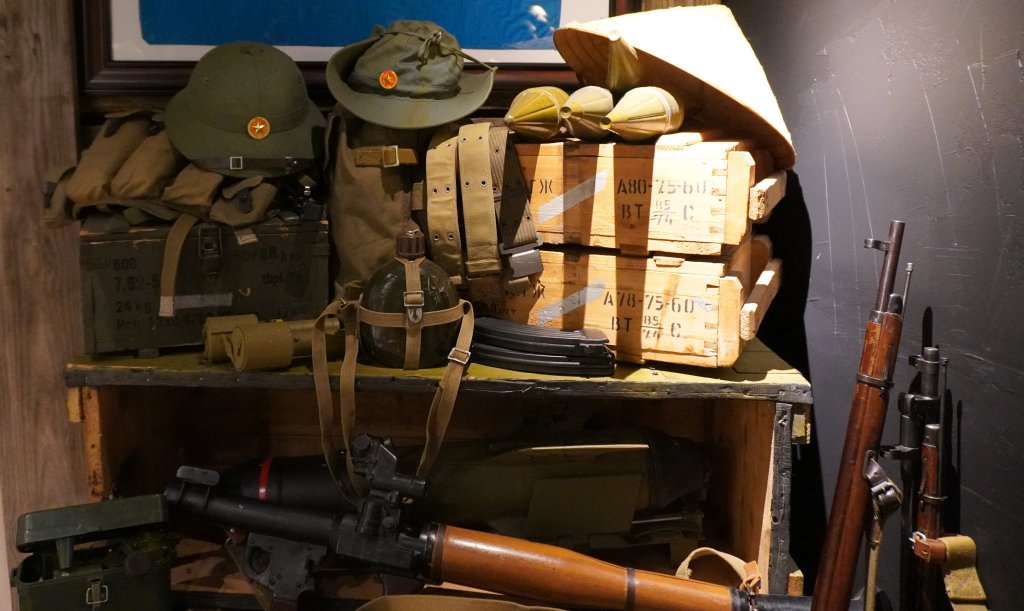
 The Vietnam War was not fought with excess.
It was fought with what could be carried.
The equipment displayed here reflects the reality of the North Vietnamese Army (NVA) soldier and Viet Cong fighter—men who moved through dense jungle, along narrow trails, and across vast distances with everything they needed strapped to their bodies or carried on their backs. There were no guarantees of resupply. No certainty of rest. What they had with them was often all they would have.
At first glance, the gear appears simple. But simplicity was the strength.
The pith helmet, lightweight and practical, provided protection from the relentless sun and rain of Southeast Asia. Beside it, the soft field hat offered flexibility and comfort, easily worn for long movements through jungle terrain. These were not symbols of ceremony—they were tools of survival.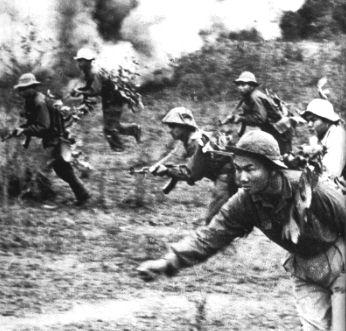
The canteen, worn and secured with cloth straps, reflects one of the most critical needs of the soldier: water. In the heat and humidity of Vietnam, dehydration could weaken a man as quickly as combat. Like many items in this display, it was carried constantly, relied upon daily, and rarely replaced.
Ammunition crates and magazines tell another part of the story. Supplies moved along the Ho Chi Minh Trail, often by foot, bicycle, or simple transport methods, across difficult and dangerous terrain. Every round, every piece of equipment, had to survive that journey. Once issued, it had to last.
Look closer at the web gear and pouches.
There is nothing unnecessary. Every item serves a purpose—ammunition, food, tools, or personal survival items. Weight mattered. Mobility mattered. The ability to move quietly, quickly, and continuously through the jungle mattered more than anything else.
Below, the RPG launcher represents a shift in battlefield capability. Simple, effective, and portable, it gave lightly equipped forces the ability to engage vehicles, fortified positions, and even aircraft. It reflects a broader reality of the war—where ingenuity and adaptability allowed smaller, less mechanized forces to challenge a technologically superior opponent.
Leaning nearby are rifles—tools of the individual soldier. Durable, reliable, and designed to function in mud, rain, and constant use, these weapons became extensions of the men who carried them. In the close confines of jungle warfare, engagements were often sudden and violent, fought at short range where reaction time and familiarity with one's weapon were critical.
But beyond the equipment is the deeper truth.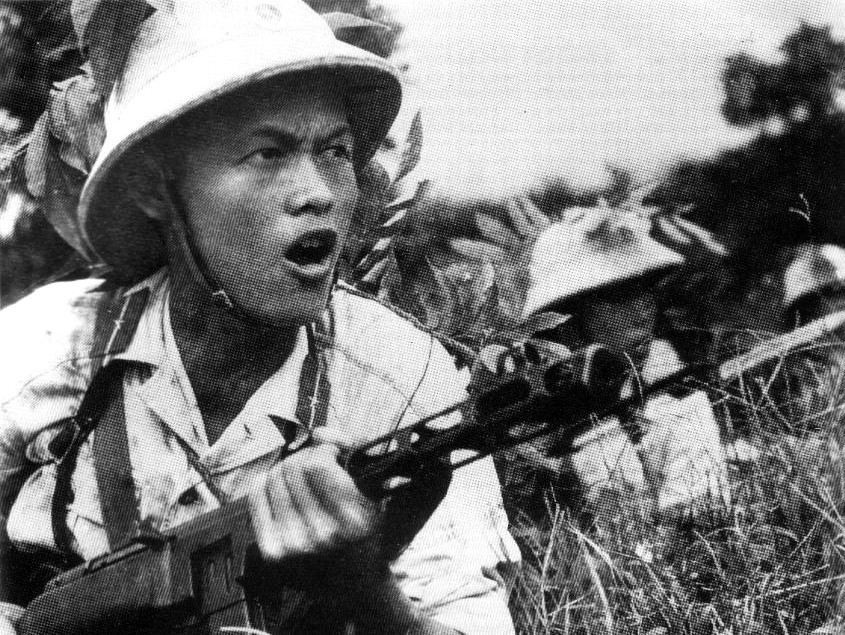
This gear was carried over miles—sometimes hundreds of miles—through terrain that tested the limits of human endurance. Soldiers moved at night, rested when they could, and adapted constantly to both the environment and the enemy. Supply lines were not just roads or vehicles—they were people.
Men carried the war forward.
This display represents that reality. Not excess. Not comfort. But persistence.
Preserved within the collection of Ghosts of the Battlefield, these artifacts connect us to the experience of those who fought on the other side of the conflict. It reminds us that in Vietnam, victory and survival were often shaped not by what a soldier had—but by how far he could carry it, and how long he could endure.

 The Vietnam War was not fought with excess.
