From Empire of Japan, Arisaka Type 99 Rifle
Empire, Industry, and the Soldier of the Pacific War
March 26, 2026

 When Japan entered the Second World War, its soldiers carried a rifle that reflected both tradition and modern industrial ambition. The Arisaka Type 99, adopted in 1939, was designed to replace the earlier Type 38 and to provide increased firepower for the Imperial Japanese Army. Chambered in the more powerful 7.7×58mm cartridge, it marked a shift toward greater stopping power while maintaining the strength and reliability for which Arisaka rifles were known.
Built around a robust bolt-action system, the Type 99 was widely regarded as one of the strongest service rifle actions of the war. Its design emphasized durability—an essential quality for soldiers operating in the harsh environments of the Pacific, from dense jungles to remote island outposts. The rifle’s long barrel and solid construction provided accuracy and dependability, even under difficult conditions.
The Type 99 also incorporated features that reflected both innovation and the unique priorities of the Japanese military. Early models included a folding anti-aircraft sight, intended to assist soldiers in engaging low-flying aircraft, as well as a monopod for added stability when firing from prone positions. While these features were not always practical in combat, they illustrate the experimental approach taken during the rifle’s development.
As the war progressed and Japan’s industrial capacity came under increasing strain, the quality of Type 99 production began to change. Early-war rifles were finely machined and well finished, while later examples—often referred to as “last ditch” rifles—show visible simplifications. Rougher machining, fixed rear sights, and the elimination of non-essential features reflect a nation struggling to maintain production as resources dwindled and the war turned against it.
One of the most distinctive elements of the Type 99 is the chrysanthemum stamp, or “mum,” found on the receiver of many rifles. This symbol represented the authority of the Emperor and signified that the rifle was imperial property. In many surrendered rifles, this marking was intentionally defaced, reflecting the cultural and political significance attached to the weapon.
In the Pacific War, the Type 99 was carried by Japanese soldiers fighting in some of the most challenging conditions of the conflict. Battles were often fought at close range, in dense terrain, and under extreme environmental stress. The rifle became part of that experience—used in defensive positions, jungle engagements, and the often desperate fighting that characterized the later stages of the war.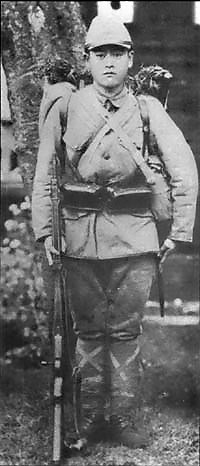
This artifact represents more than a military weapon. It reflects the intersection of culture, industry, and warfare within Imperial Japan. It speaks to the soldiers who carried it, the system that produced it, and the conditions under which it was used.
Preserved within the collection of Ghosts of the Battlefield, the Arisaka Type 99 stands as a tangible connection to the Pacific Theater. It reminds us that even in a global conflict defined by vast strategy and industrial scale, war was ultimately experienced at the level of the individual—one rifle, one soldier, and one moment at a time.