"They Are Just Marines" the Women's Marine Corps Reserve
During WWII, female Marines joined the Corps , serving in vital support roles to free men for combat, marking a major step in women's military history.
April 9, 2025

 During World War II, every branch of the American military faced the same enormous problem: millions of men were needed overseas, but thousands of essential military jobs still had to be performed at home. Women became part of the answer. They joined the Army, Navy, Coast Guard and Marine Corps in unprecedented numbers, learning jobs that ranged from administration and communications to aviation maintenance and transportation.
But something unusual happened in the Marine Corps.
The women who entered the Corps were officially members of the Marine Corps Women’s Reserve, established on February 13, 1943. Nearly 20,000 women would serve during World War II, eventually filling more than 225 occupational specialties. By the end of the war, women held approximately 85 percent of the enlisted positions at Headquarters Marine Corps and made up as much as two-thirds of the permanent personnel at some major Marine installations. Every Marine they replaced in one of those stateside positions was another Marine available for service overseas.
Their wartime recruiting message was straightforward: “Free a Marine to Fight.” Yet the significance of what happened went deeper than simply replacing men in offices, motor pools, communications centers and aviation facilities. The Marine Corps was being forced to answer a much more fundamental question. What were these women?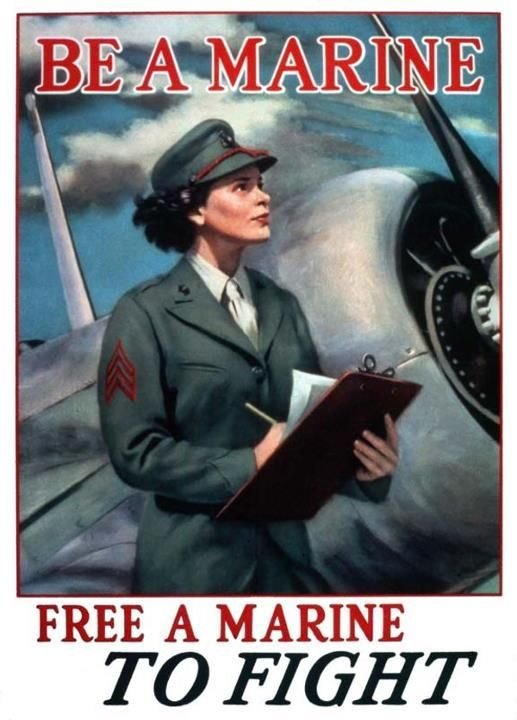
Other services developed names that became famous in their own right. Women in the Navy’s reserve became the WAVES. The Army initially created the Women’s Army Auxiliary Corps, or WAAC, which became the Women’s Army Corps, or WAC, with full military status in 1943. The Coast Guard had the SPARS. Those women were unquestionably serving their country, and many held genuine military status. The difference was not that women in the other branches somehow “weren’t really” members of the military. It was what the Marine Corps chose to do with the identity of its own women.
The Corps never gave them an official nickname.
That decision is particularly striking because the Commandant who ultimately defended it, Lieutenant General Thomas Holcomb, had initially been strongly opposed to women entering the Marine Corps at all. Holcomb believed the character of the Corps depended upon its traditional composition and resisted the idea when legislation establishing a women’s reserve was being considered. Yet the women who subsequently entered the Corps changed the reality in front of him.
 By 1943 and 1944, Holcomb was publicly making a very different argument.
Asked why Marine women had not been given a special nickname like the WAVES or WACs, he explained that they did not need one. They trained in a Marine environment, inherited Marine Corps traditions, and, as he put it simply:
“They are Marines.” Those three words may be the most important part of their World War II story.
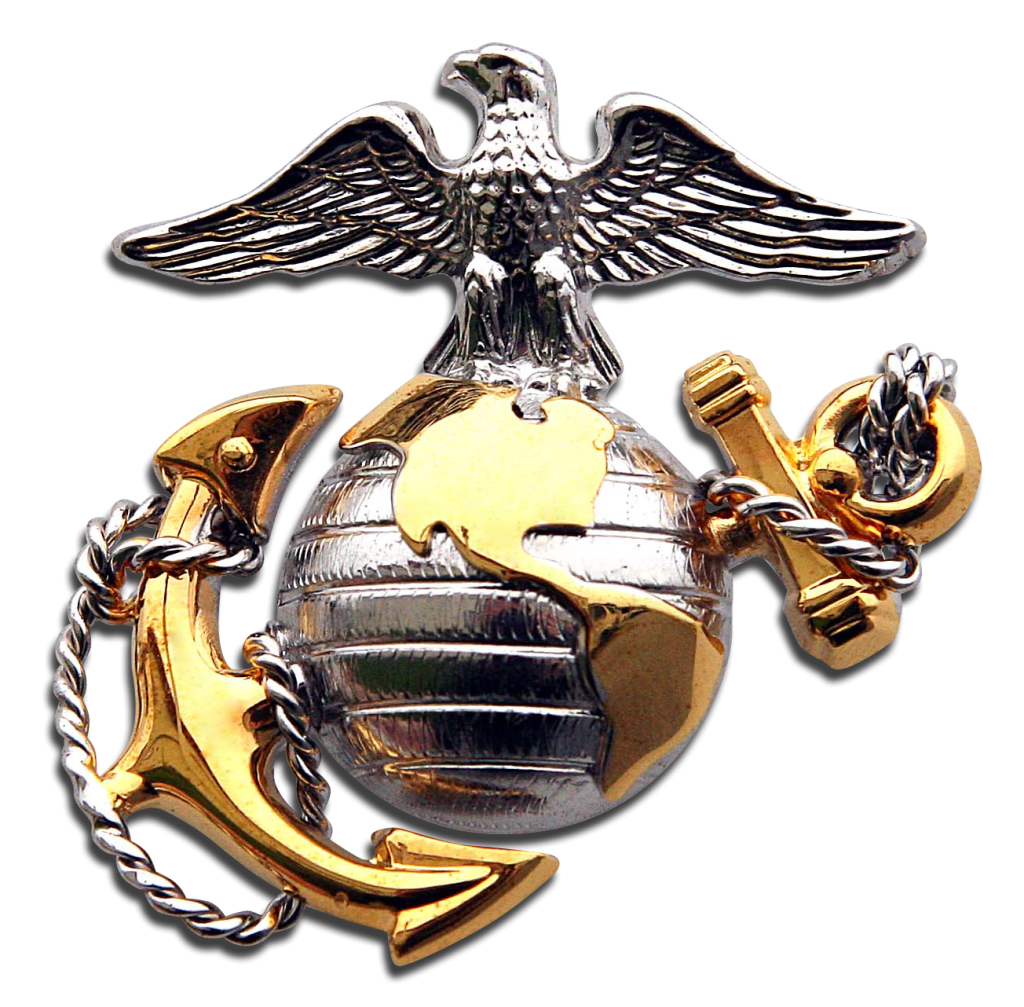
The distinction seems small until you understand the Marine Corps. The title Marine has always carried unusual weight inside the service. A recruit does not simply join an organization and receive a uniform. The Corps builds much of its culture around the idea that the title itself must be earned. Marines inherit the history of everyone who wore the Eagle, Globe and Anchor before them, and that shared identity is deliberately reinforced from recruit training onward. Holcomb was saying that the women belonged inside that tradition.
They were not merely civilian workers wearing Marine-style uniforms. They were not an auxiliary attached to the Marine Corps. They were not women performing Marine jobs while the “real Marines” went overseas. They were Marines.
That did not mean equality had suddenly arrived. Far from it. Women were restricted primarily to stateside duty and barred from combat assignments. Their wartime service was initially considered temporary, and after victory most were discharged as the Corps rapidly demobilized. Women would not gain a permanent place in the regular armed forces until Congress passed the Women’s Armed Services Integration Act in 1948. Even then, restrictions on the jobs and opportunities open to women would remain for decades.
Nor did Holcomb's declaration magically erase prejudice. These women entered an institution whose senior leadership had initially questioned whether women belonged there at all. They had to prove themselves inside one of the most fiercely traditional military cultures in the United States.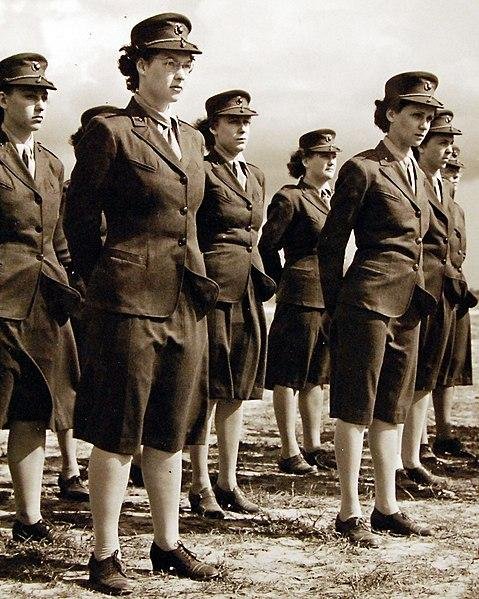
And they did. They became aircraft mechanics, radio operators, parachute riggers, drivers, clerks, photographers, quartermasters, instructors and specialists in hundreds of other jobs. Nearly all of the World War II Women’s Reserve received their Marine training at Camp Lejeune, where they learned not merely how to perform a wartime occupation but how to function inside the traditions and discipline of the Corps.
Their contribution can certainly be measured in manpower. Thousands of male Marines were released from stateside billets for assignment elsewhere because women had taken their places. That was the practical reason the Women’s Reserve existed.
But manpower figures alone miss what happened.
The Corps had invited women in because it needed them temporarily.
The women proved they belonged permanently.
Only a few years after World War II ended, the Marine Corps would begin the transition from a temporary Women’s Reserve created by wartime necessity toward women serving as a permanent part of the Corps. The 1948 legislation that gave women permanent status in the armed services made that possible, but the groundwork had already been laid by the women who had reported for duty beginning in 1943.
That is why the wording matters.
It would have been easy to remember them simply as the Women Marines of World War II. It would have been easy to create another acronym, another nickname, another category that subtly separated them from everyone else wearing the Eagle, Globe and Anchor.
The Marine Corps chose something different.
A woman could be a clerk or a mechanic. She could be an officer or an enlisted Marine. She could serve at Headquarters Marine Corps, on an air station or at one of the great training bases feeding men into the Pacific War.
 But her gender did not require another word in front of the title she had earned.
More than 20,000 women helped establish that principle during World War II. Their opportunities were limited by the era in which they served, and generations of women Marines after them would still have barriers left to break. Yet those first wartime Marines established something far more enduring than the jobs they performed between 1943 and 1945.
They established their claim to the title.
Not auxiliaries.
Not a nickname.
Not something almost Marine.
Marines.
And perhaps no one summarized their legacy better than the Commandant who had once doubted whether they should be there at all.
They are Marines.