The Forgotten Lifeline: Why the Merchant Marine Matters
They move fuel, troops, and war materiel across oceans ”quietly sustaining America's military power in every major conflict.
April 19, 2026

 When people picture military power, they often think of tanks advancing, aircraft overhead, or warships cutting through heavy seas. What is rarely considered is the system that keeps all of it operating. Fuel, ammunition, food, spare parts, vehicles, medicine, and reinforcements do not appear on their own. They must be moved often across vast oceans.
That is where the United States Merchant Marine becomes one of the most important, and most overlooked, parts of national defense.
Many assume the military fully resupplies itself using only its own ships, aircraft, and trucks. In reality, it is a partnership. The U.S. military has a powerful logistics network, but large-scale overseas sustainment depends heavily on Merchant Mariners, commercial shipping, and civilian maritime support.
The United States Army moves supplies over land. The United States Air Force provides rapid airlift. The United States Navy sustains forces at sea. The United States Marine Corps operates forward in difficult environments. But when heavy equipment, fuel, and massive amounts of cargo must cross oceans, ships carry the burden.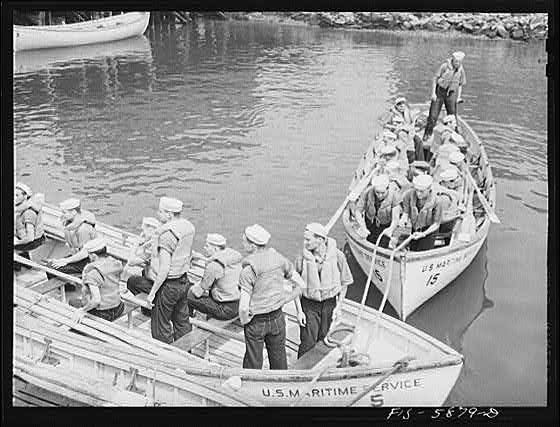
A tank built in America has no value overseas if it never arrives. Aircraft cannot fly without fuel. Troops cannot fight without ammunition, food, water, and medical supplies. Merchant Mariners help deliver all of it.
This has been true in every major conflict. During World War II, Merchant Mariners crossed submarine-infested waters carrying the cargo that sustained Allied armies. In the Korean War, Vietnam War, Gulf War, and modern deployments, sealift remained essential. Airlift gets forces there quickly. Sealift keeps them there.
So why are they often overlooked?
Because their victories happen quietly. People remember the battle, not always the convoy that made it possible. They remember the fighter jet, not the ship that delivered its fuel. They remember the tank in combat, not the vessel that brought it across the sea.
 Many Merchant Mariners are civilians rather than traditional uniformed service members, which leads some to underestimate their role. Yet they sail into dangerous waters, support military operations, and keep supply lines alive when it matters most.
The truth is simple: military strength is not measured only by weapons at the front. It is also measured by the ability to sustain forces thousands of miles from home.
The Merchant Marine may work in the background, but it has long helped carry the weight of victory.
Support the preservation of America's military history