Lt. Mary Kraus - A Nurse in the Forgotten Theater
From Bombay to China, Across the Hump, and Around the World: The Wartime Journey of an Army Nurse Who Would Not Be Forgotten.
December 5, 2025

 Lt. Mary Kraus - A Nurse in the Forgotten Theater

From Bombay to China, Across the Hump, and Around the World: The Wartime Journey of an Army Nurse Who Would Not Be Forgotten
Some stories emerge from the archives fully intact. Others must be pieced together from fragments—newspaper clippings, faded photographs, and the artifacts that remain. The story of Lieutenant Mary Kraus, United States Army Nurse Corps, is the latter. Her exact enlistment date is unknown, much like so many women whose service records were lost, destroyed, or never properly preserved. But the pieces that are known form a remarkable portrait of courage in one of World War II’s harshest and most overlooked battlegrounds: the China-Burma-India Theater.
Her journey began with an arrival.
In April 1943, Lt. Kraus stepped off a transport ship into the heat, chaos, and dust of Bombay, India, beginning nearly three continuous years of service in a region where disease, isolation, monsoons, and enemy action killed more Americans than bullets.
This was no stateside hospital.
This was the CBI—the forgotten theater.
 The Hard Reality of the CBI
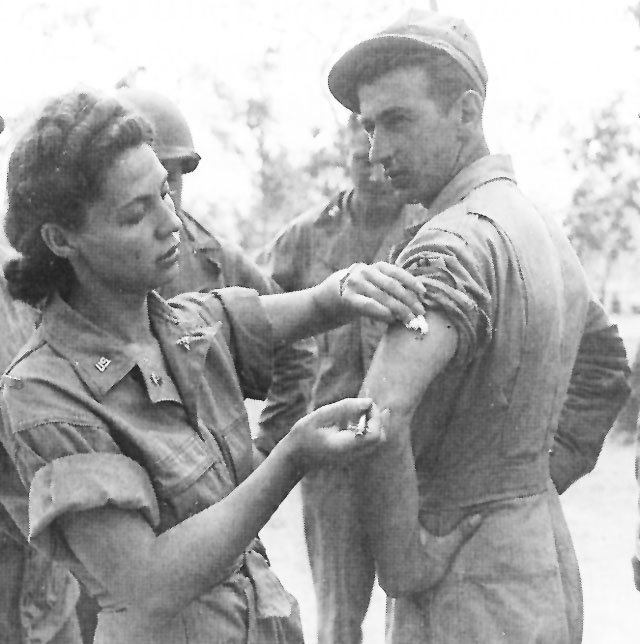
To understand Lt. Kraus’s experience, one must first understand the environment she was thrust into. The China-Burma-India Theater, stretching from India to the Himalayas to the jungles of Burma, was one of the most inhospitable regions ever assigned to American forces.
The heat was suffocating. The monsoons endless.
Flies, mosquitoes, dysentery, dengue, malaria, typhus, and cholera were constant.
Supplies were scarce.
Hospitals were often tents—if they existed at all.
Army nurses sent to the CBI faced:
• Disease rates higher than any other American theater
• Limited medical equipment and chronic shortages of medicine
• Makeshift wards built from bamboo, tar paper, or scavenged materials
• 18-20 hour shifts treating hundreds of patients at a time
• The psychological strain of serving in total isolation from home
But the most dangerous aspect was simple: The front was everywhere.
There were no clean lines, no safe rear area. Japanese aircraft raided hospitals. Enemy patrols struck supply lines. Nurses in the CBI were closer to combat than almost any other American medical personnel in the war.
Lt. Mary Kraus stepped into this world willingly.
Bombay and the Long War Ahead
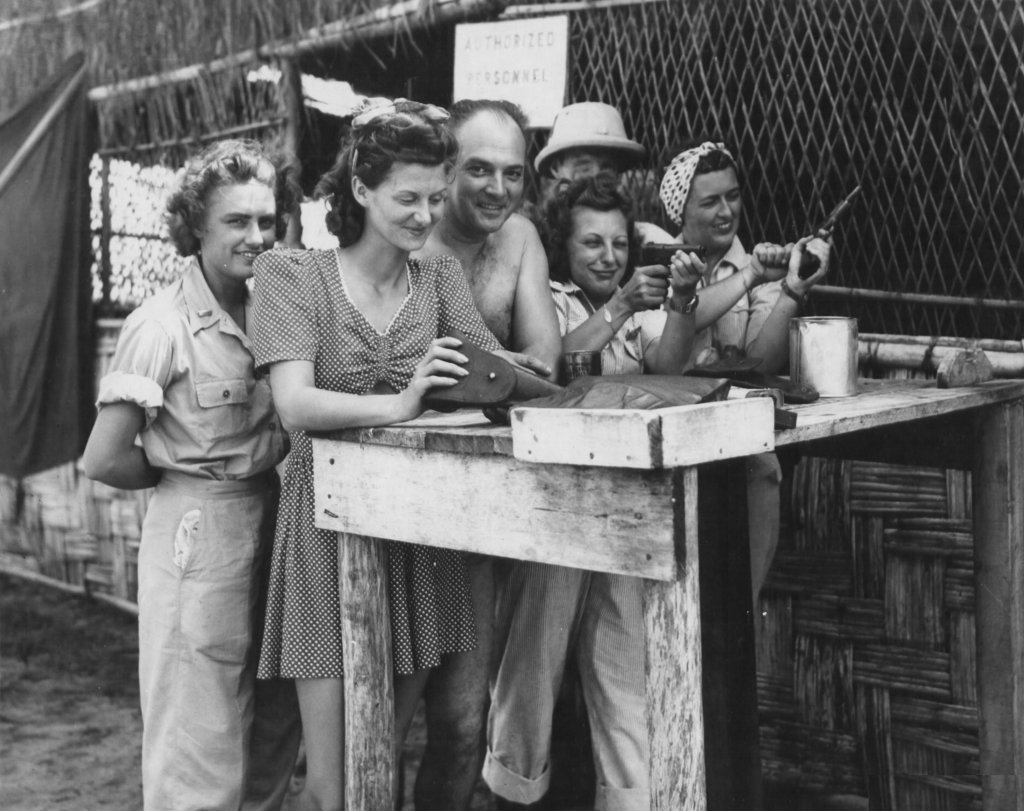
When she arrived in Bombay in April 1943, she was part of a critical wave of nurses brought in to stabilize the region’s collapsing medical infrastructure. Troops were pouring into India faster than hospitals could be built. Evacuee transports from Burma arrived full of fever-stricken survivors of the Japanese advance. And everywhere she looked, the sick and wounded lay on cots, floors, porches—anywhere there was space.
But Lt. Kraus adapted. She healed. She endured.
In a rare surviving news interview, she would later sum up her surroundings with a line that perfectly captured her sense of humor in the face of misery:
“The beautiful bougainvillea and hibiscus grow everywhere—beautifying this horrible dump.â€
It was a truth only a CBI veteran could express. India’s natural splendor existed in sharp and painful contrast to the wartime suffering unfolding around her.
 Forward to China, 1944
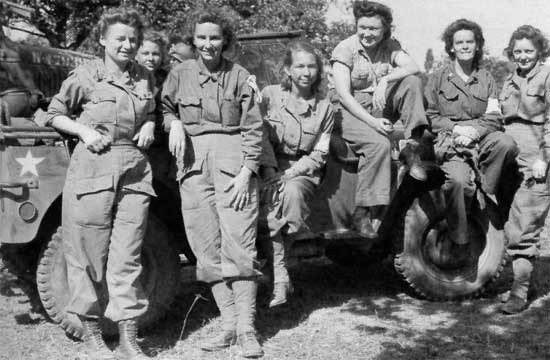
In 1944, Lt. Kraus moved into China itself—where the Army Air Forces operated forward hospitals for pilots flying combat missions, engineers building bases, and the Chinese forces fighting along the Salween and in the interior provinces.
Conditions there were even more dangerous:
• Japanese forces still controlled large sections of the country
• Air raids were frequent
• Medical facilities were primitive
• Supplies were flown in—when weather permitted
• Nurses were constantly on the move
There are references suggesting that Lt. Kraus was often close to the fighting, working in forward hospitals that handled both battle casualties and the endless stream of men ravaged by disease.
Yet she stayed.
Through 1944.
Through 1945.
Through the long, grinding slog of the Chinese campaign.
And she was there on September 2, 1945, when Japan officially surrendered.
The Flight Over the Hump
With the war finally over, thousands of American personnel needed to be evacuated from China—a process complicated by geography. The only route out was the infamous Hump, a high-altitude airlift path over the Himalayas. Even after the war, flying it was perilous. Weather was unpredictable, aircraft were overloaded, and mountain winds routinely tore planes apart.
Lt. Kraus boarded one of those transports.
She survived the same journey that had cost more than 1,000 American aircrew their lives during the war. The flight delivered her to India, where she and her fellow nurses waited for transportation home.
But nurses could not simply be placed on any troopship.
They needed proper berthing and sanitation arrangements—something not all ships could provide.
So Lt. Kraus waited in Calcutta, watching ship after ship load and depart without her.
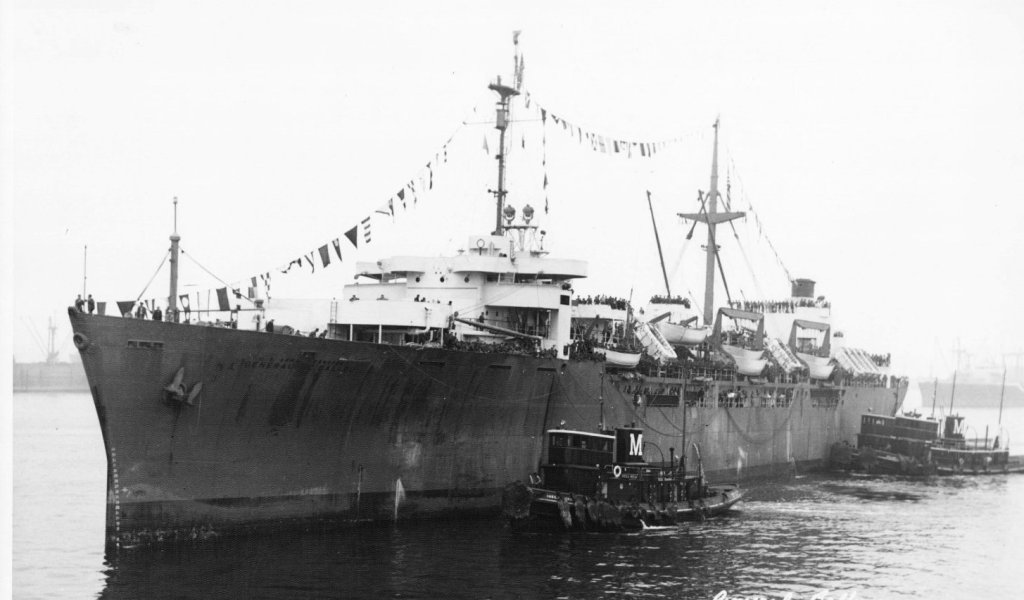
USS General C. C. Ballou — The Voyage Home
At last, a suitable vessel arrived: the USS General C. C. Ballou, a transport designed to move troops and medical personnel.
The ship would not take the direct route.
Instead, it carried its passengers all the way around the world to reach New York—one of the longest troopship voyages of the postwar return.
Along the way they encountered:
• Violent storms in the North Atlantic
• Heavy seas that battered the ship for days
• Long, rolling swells that turned the Ballou into a pendulum
Many passengers were miserably seasick.
But Lt. Mary Kraus, as the story goes, never missed a single meal.
For a woman who had endured monsoons in India, sandstorms in China, and Himalayan turbulence, a little rough water was nothing.
She landed in New York a seasoned veteran of one of the most demanding assignments in the entire U.S. Army Nurse Corps.
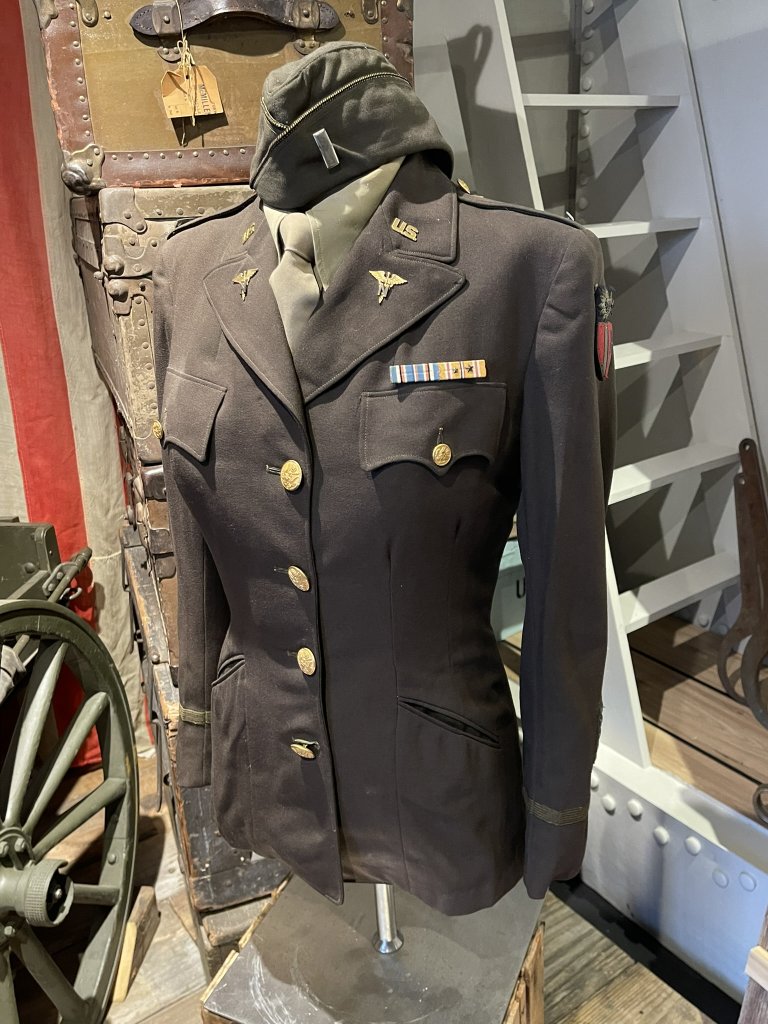 The Lost Footlocker and the Story It Told
After the war, her footlocker and uniforms survived—but her story nearly didn’t.
Her family entrusted her artifacts to a museum, believing they would be preserved and displayed with respect. Instead, they were neglected, left to rot, and eventually discarded into an online auction.
By the time Ghosts of the Battlefield discovered her footlocker, the sight was heartbreaking:
• Dirt embedded in every fiber
• Staining from years of improper storage
• Water damage
• Crumpled, distorted fabric
• Tarnished insignia, loose buttons, and failing seams
It was a veteran’s story tossed aside.
But not on our watch.
Using delicate, museum-grade conservation techniques, her uniforms were cleaned, restored, stabilized, and preserved. The objects she carried through three years of service in India and China were saved from irreversible decay. Her memory—and her wartime journey—were protected.
The CBI has long been overshadowed by the more famous theaters of Europe and the Pacific. Yet the nurses who served there endured some of the harshest conditions of the entire war. They worked without glory, without attention, and often without adequate resources. They saved thousands of lives in environments few Americans today can comprehend.
And Lt. Mary Kraus was one of them.
She crossed oceans, mountains, disease-ridden plains, and wartime China.
She survived the Hump.
She circled the globe to come home.
And she did her duty every single day, even as the world forgot the theater she served in.
Thanks to the recovery of her footlocker—and the restoration of her uniforms—her story can now be told, preserved, and honored.
She Lives On
History does not survive by accident. It survives because someone decides it matters.
Lt. Mary Kraus mattered.
Her service mattered.
Her endurance mattered.
Her story matters still.
And now, through the efforts of Ghosts of the Battlefield, her memory will live on—not as a forgotten artifact sold at auction, but as a warrior of compassion who carried the weight of the CBI and helped bring American soldiers home.