K-74 and the Night a Navy Blimp Fought a U-Boat
In July 1943, Navy blimp K-74 attacked a German U-boat off Florida, was shot down, and lost one sailor while its crew awaited rescue in the open seas.
July 18, 2026

 On the night of July 18, 1943, one of the strangest battles of World War II unfolded in the darkness above the Straits of Florida. It was not a clash between warships or a duel between fighter aircraft. It was a fight between a German submarine and a United States Navy blimp.
The Navy airship K-74 was conducting an antisubmarine patrol when its crew detected the German submarine U-134 traveling on the surface. German U-boats operating near the American coast threatened tankers, cargo vessels and the shipping lanes that supplied the Allied war effort. Navy blimps helped guard those routes by using radar to locate submarines and directing ships or aircraft toward them.
K-74’s crew chose to attack.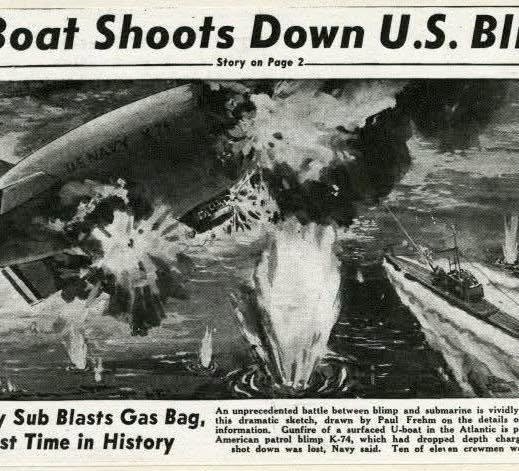
The image is almost difficult to imagine today. A slow-moving airship filled with helium and carrying ten young American sailors descended toward an armed German submarine in the darkness. The blimp carried a .50-caliber machine gun and depth charges, but U-134 was equipped with antiaircraft weapons capable of tearing through the airship’s gondola and control surfaces.
As K-74 approached, the submarine opened fire. The blimp returned fire with its machine gun while attempting to pass over U-134 and release its depth charges. German cannon fire struck K-74 repeatedly, damaging the airship and taking away the crew’s ability to remain airborne.
The crippled blimp eventually descended into the sea.
Remarkably, all ten men survived the enemy fire and the crash. K-74 remained partially afloat for hours, but the crew moved away from the wreck because they feared its depth charges might explode as it sank. The men were left scattered in the open water through the night, waiting and hoping that rescuers would find them.
 Help finally arrived on July 19. The destroyer USS Dahlgren and other American forces reached the area and rescued nine members of the crew. Sailors aboard the rescue vessels reportedly fired into the water to drive away sharks gathering near the survivors.
One man did not make it home.
Aviation Machinist’s Mate Second Class Isadore Stessel disappeared shortly before the rescue. According to the Navy’s historical account, he was killed after being attacked by sharks. After surviving German gunfire, the destruction of his aircraft and hours in the open ocean, Stessel was lost within sight of rescue.
K-74 became the only United States Navy airship lost to enemy action during World War II. Although U-134 escaped the immediate encounter, the submarine’s survival was brief. On August 27, 1943, the British frigate HMS Rother located U-134 in the Bay of Biscay and sank it with depth charges. All 48 members of the submarine’s crew were lost.
The Battle of the Atlantic is usually remembered through convoys, merchant ships, destroyers, submarines and long-range patrol aircraft. Yet blimps also played an important role, quietly patrolling thousands of miles of coastline and escorting vulnerable ships through waters where German submarines might be waiting.
For a few violent minutes in July 1943, that largely forgotten mission became a direct battle between an airship and a submarine.
The crew of K-74 entered the fight knowing that their blimp was slow, vulnerable and exposed. They attacked anyway. Their actions may have forced U-134 away from nearby Allied shipping and prevented the submarine from reaching other potential targets.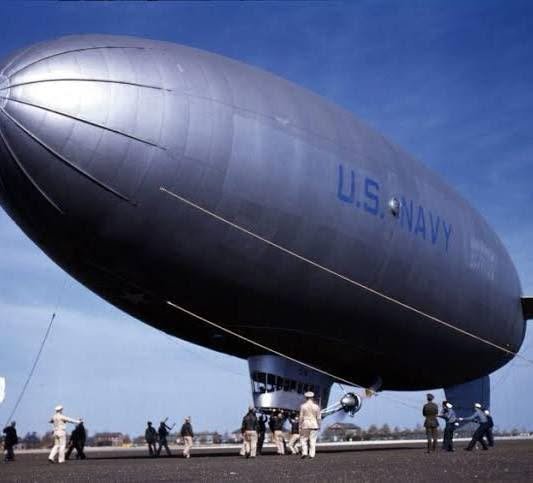
Today, K-74 is remembered not simply because it was the only American blimp shot down by enemy fire. It is remembered because of the courage of the ten men aboard, the long hours they endured in the sea and the tragic loss of Isadore Stessel.
It remains one of the most unusual and unforgettable encounters of World War II.