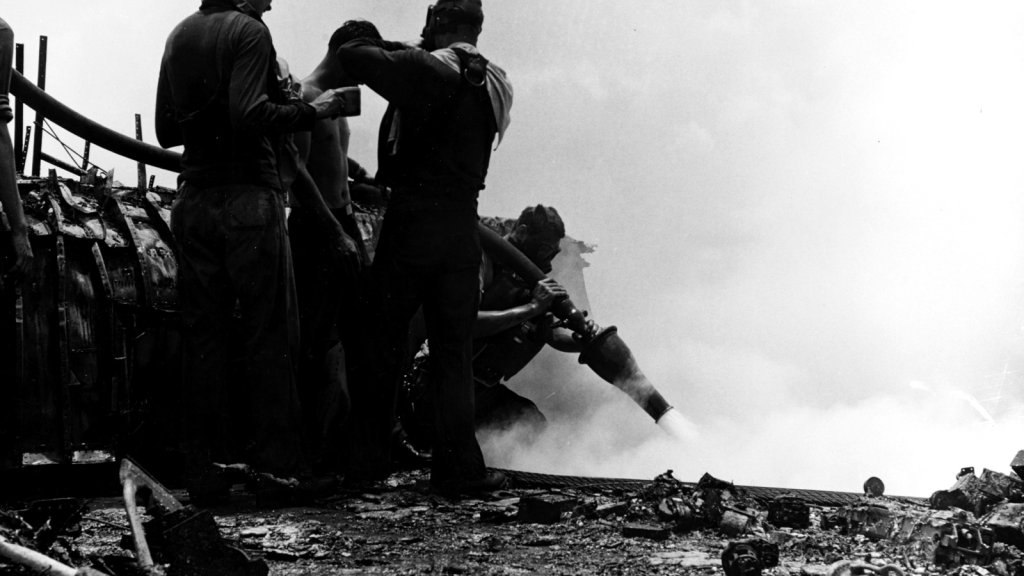
Fire on the Flight Deck
The USS Forrestal fire killed 134 sailors, tested a crew’s courage, and reshaped Navy damage-control training for generations to come.
July 29, 2026

 On July 29, 1967, USS Forrestal was conducting combat operations off the coast of Vietnam when a 5-inch Zuni rocket accidentally fired across the carrier’s crowded flight deck.
The rocket struck an armed aircraft and ruptured its fuel tank, spreading burning fuel among rows of fully loaded and heavily armed jets. Almost immediately, the flight deck became an inferno. Bombs, rockets, and ammunition began cooking off as sailors rushed toward the flames rather than away from them.
The situation quickly grew worse when older bombs exposed to the intense heat detonated far sooner than expected. The explosions tore holes through the flight deck, killed members of the firefighting teams, and allowed burning fuel to pour into spaces below. Men who had moments earlier been preparing aircraft for combat suddenly found themselves fighting to save the ship.
Despite the chaos, sailors continued battling the fire, rescuing the wounded, moving aircraft, and flooding magazines to prevent an even greater disaster. Their actions kept Forrestal afloat, but the cost was devastating.
The fire killed 134 men and injured 161 more. It became one of the deadliest accidents in the history of the United States Navy.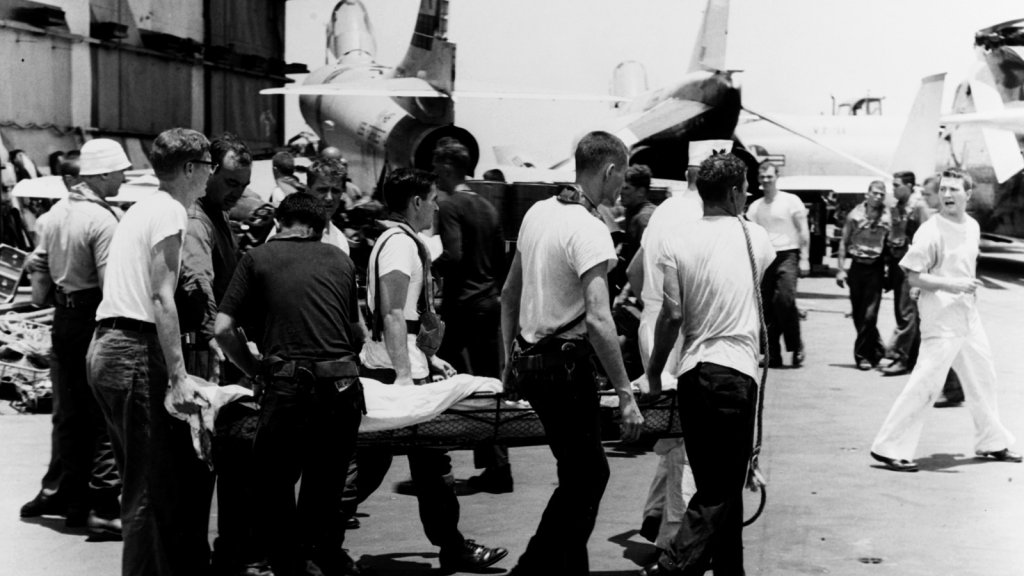
The disaster also exposed serious problems in ammunition handling, firefighting equipment, training, and flight-deck procedures. The lessons learned from Forrestal led to major changes in Navy damage-control training and carrier safety practices.
Today, the tragedy remains a powerful reminder of the dangers faced aboard an aircraft carrier. In an environment filled with fuel, explosives, machinery, and tightly packed aircraft, a single malfunction can become catastrophic within seconds. The courage shown by the crew of USS Forrestal ensured that the ship survived—and that the men who were lost would not be forgotten.