Casablanca A Love Story Forged by War
A classic love story that lasts because it tells the truth about war, sacrifice, and choosing duty over desire.
February 14, 2026

 Casablanca is often described as one of the greatest love stories ever filmed. That’s true—but it’s also incomplete. Casablanca endures because it is just as much a story about withdrawal, moral exhaustion, and the slow, painful return to responsibility. This is not a film about a man discovering ideals., It’s about a man who already had them—and lost faith.
When we meet Rick Blaine, he is determinedly uninvolved. He runs his café, profits from neutrality, and insists he “sticks his neck out for nobody.” He avoids politics unless there is something in it for him. Papers, money, leverage—those are risks he’ll accept. Causes? Not anymore. That posture isn’t cowardice. It’s damage. The film makes it clear—quietly—that Rick was once deeply involved. Before Casablanca, he fought fascism in Ethiopia and supported the Loyalists in Spain. He believed. And those beliefs cost him. Combined with Ilsa’s unexplained disappearance, Rick doesn’t just lose love—he loses faith in commitment itself. Neutrality becomes emotional armor.
From a Ghosts of the Battlefield perspective, this feels painfully real. Burnout doesn’t look like fear. It looks like detachment. It looks like someone who has already paid the price for caring and decided it won’t happen again.
Casablanca itself mirrors Rick’s state of mind. It’s a place of waiting and transit, full of refugees trapped between past and future. Everyone is stalled. Everyone is compromised. Rick’s Café becomes neutral ground not because Rick believes in neutrality, but because it protects him from having to choose.
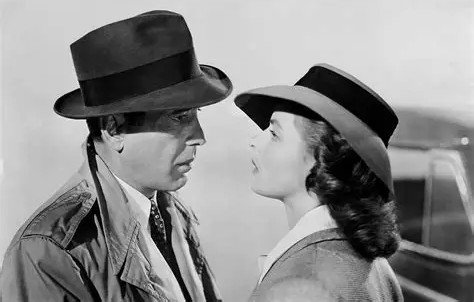
Ilsa’s return shatters that equilibrium. She doesn’t just reopen an old wound—she forces Rick to confront who he used to be. Their relationship is handled with restraint and maturity. There are no grand declarations, only glances, pauses, and regret. Love here isn’t romanticized—it’s unfinished business.
Crucially, Rick doesn’t immediately change. He resists involvement at every step. Even late in the film, he seriously considers escaping with Ilsa. His transformation isn’t a sudden moral awakening—it’s reluctant, pressured, and earned.
The turning point comes when Rick realizes that living only for personal gain has hollowed him out. If he chooses himself again, he won’t just lose Ilsa—he’ll confirm the lie he’s been telling himself. That he never cared. That none of it mattered. He acts against his personal interest. He helps the cause without reward. He gives up what he wants most—with full awareness of the cost. This isn’t naïve idealism returning. Its deliberate responsibility reclaimed.
What makes Casablanca especially powerful is its restraint. There are no battlefield scenes, yet the war is present in every decision. Papers matter more than weapons. Timing is everything. Survival hinges on quiet choices made in dimly lit rooms. Even Captain Renault’s moral shift mirrors Rick’s—compromise gives way to commitment, not through speeches, but through action.
That’s why Casablanca remains such a powerful Valentine’s Day war film. It understands a hard truth: love and duty are not opposites. Sometimes they are the same choice—viewed from different angles. Rick didn’t start neutral., He retreated into neutrality., And Casablanca is the story of what finally pulls him back out., Not because it was easy., But because it was necessary.
The film ends not with victory, but with continuity. Rick doesn’t get the girl—but he gets his integrity back. He steps out of emotional exile and reenters the fight, knowing exactly what it costs to care again. The famous airport ending works because it violates Rick’s own rules.
What makes Casablanca endure is not that it promises love will conquer all, but that it tells the truth about love under pressure. It understands that real love doesn’t always end with togetherness—it ends with choice. Rick and Ilsa’s story lasts because it respects sacrifice, maturity, and the kind of affection that doesn’t demand possession. The film asks us to accept that sometimes loving someone means letting them go so they can do what matters most. In that honesty—quiet, restrained, and painfully human—Casablanca remains timeless.